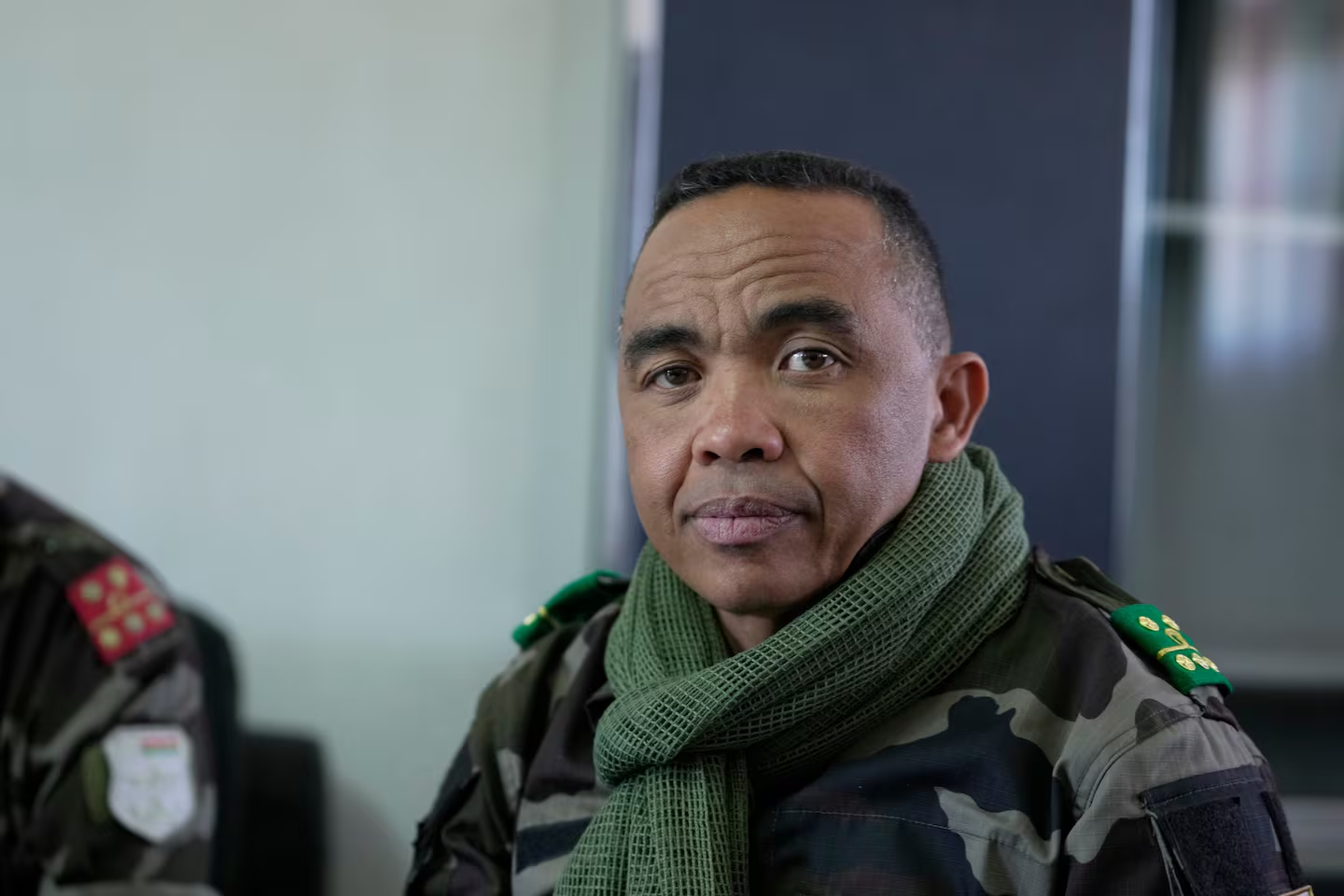
On October 20, 2025, Colonel Michael Randrianirina, who seized power in Madagascar six days earlier, appointed Herintsalama Rajaonarivelo as the country’s new prime minister. The decision is a major step in forming a civilian-led government amid ongoing political turmoil. It also signals the administration’s attempt to merge military authority with civilian expertise to steer Madagascar through uncertainty and restore both public and international confidence.
Background of the Coup
Madagascar’s political scene was upended on October 14, 2025, when President Andry Rajoelina was ousted in what the military called a “necessary intervention” to restore order. The coup followed months of protests across urban and rural areas. Citizens expressed frustrations over poverty, rising costs of living, inadequate public services, and widespread dissatisfaction with government management.
Youth groups led most protests. While initially peaceful, clashes with security forces escalated tensions. Parliament later voted to impeach Rajoelina, who fled the country fearing for his safety. Colonel Randrianirina, commander of the elite CAPSAT unit, declared that the armed forces had assumed temporary control, suspended the constitution, and promised a return to civilian rule through elections and a national referendum within two years. He was officially sworn in on October 17, 2025 (AP News).
The military defended its intervention as a necessary measure to prevent further unrest, combat systemic corruption, and stabilize the economy. Critics warned, however, that the takeover set a dangerous precedent. They argued it could undermine democratic institutions and erode public trust in governance.
Appointment of Herintsalama Rajaonarivelo
Randrianirina’s first major executive decision was appointing Herintsalama Rajaonarivelo as Madagascar’s prime minister. Rajaonarivelo is a well-known businessman and economist. He previously led BNI Madagascar, one of the nation’s largest banks. His expertise in finance and economic planning makes him a strategic choice, signaling a focus on economic stability alongside political restructuring.
The military leader emphasized Rajaonarivelo’s economic management experience, knowledge of international finance, and strong ties to multilateral institutions. The president stated that the prime minister would lead a government balancing civilian oversight with military support while tackling urgent socio-economic challenges (Al Jazeera).
The appointment also aims to reassure the international community. By placing a civilian with strong economic credentials in a key role, the administration signals its commitment to reform, transparency, and foreign engagement. Observers hope this civilian-military partnership can stabilize Madagascar’s political environment and attract investment after months of uncertainty.
Political Context and International Reactions
International reactions were cautious. Many countries condemned the coup, emphasizing the importance of constitutional governance and democracy. Meanwhile, international organizations and African states cautiously welcomed the appointment of a civilian prime minister as a possible step toward normalcy.
Analysts noted that Rajaonarivelo’s presence could ease tensions with donors, financial institutions, and regional organizations like the African Union (AU). The AU had suspended Madagascar’s membership after the coup, citing the unconstitutional power shift. Appointing a respected civilian could help reopen dialogue and potentially restore membership if credible steps toward elections and constitutional reform are taken.
Domestically, reactions remain mixed. Some citizens see the appointment as a positive gesture, showing the military’s willingness to incorporate civilian expertise. Others remain skeptical, fearing it is an effort to legitimize military rule while keeping real power behind the scenes. Public trust remains fragile, and Rajaonarivelo faces the challenge of addressing both political skepticism and economic instability.
Economic Challenges Ahead
Madagascar faces immediate economic pressures. Years of weak governance, combined with global market fluctuations, have left the country with high inflation, food insecurity, and limited foreign investment. Recent reports indicate that nearly 70% of the population lives below the poverty line, and youth unemployment remains high.
Rajaonarivelo’s appointment reflects the administration’s recognition that economic recovery is central to political stability. His banking and economic background may help stabilize the currency, boost investor confidence, and secure international aid. He is expected to prioritize programs in infrastructure, healthcare, and education, areas that contributed to unrest leading up to the coup.
The new prime minister will also negotiate with foreign creditors, multilateral institutions, and donors. Securing funding for social welfare and economic development projects will be critical to support vulnerable populations and displaced communities.
Civilian-Military Balance
The Randrianirina administration faces the delicate task of balancing military authority with civilian governance. While the military remains influential, integrating a civilian prime minister shows an intent to transition toward broader reforms.
Observers note that this balance will be tested as the administration enacts policies, pursues judicial reforms, and prepares for elections within the promised two-year timeline. Ensuring the civilian government can operate independently while maintaining military support is key to long-term stability.
International Implications
Madagascar’s crisis has regional and international ramifications. Neighboring countries and global partners monitor developments closely, concerned that instability could spread or encourage unconstitutional power grabs elsewhere. Regional organizations like the Southern African Development Community (SADC) stress upholding democratic norms while encouraging dialogue between the military and civilian leadership.
Investors and aid organizations have expressed interest in the new government’s plans for economic reform. Rajaonarivelo’s involvement is expected to facilitate engagements, though trust-building will require transparency and tangible policy outcomes.
Public Expectations and Social Reconciliation
Citizens, especially protest participants, demand accountability, reform, and improved living conditions. They expect the government to combat corruption, enhance service delivery, and implement policies reducing inequality.
Public confidence will hinge on the administration delivering tangible results. Rajaonarivelo’s leadership will serve as a measure of the government’s seriousness in addressing both immediate socio-economic issues and long-term institutional reform.
The Road Ahead
Madagascar’s path forward depends on several factors:
- Implementation of Reforms: Governance, judicial, and economic reforms must be executed effectively.
- Economic Recovery: Stabilizing the economy, attracting investment, and reducing poverty are essential.
- Civil-Military Cooperation: Balancing military influence with civilian authority prevents future unrest.
- International Engagement: Rebuilding relationships with donors, regional organizations, and financial institutions is vital.
- Public Trust: Delivering visible improvements and maintaining transparency will determine citizen support.
Conclusion
Rajaonarivelo’s appointment marks a pivotal moment in Madagascar’s political evolution following the coup. Integrating a civilian leader with economic expertise into a military-led government seeks to stabilize the nation and restore confidence.
The next months will be decisive. Success depends on implementing reforms, managing economic recovery, balancing military and civilian roles, and delivering benefits to citizens. For Madagascar’s people, hope rests on transforming uncertainty into stability, growth, and meaningful democratic governance.