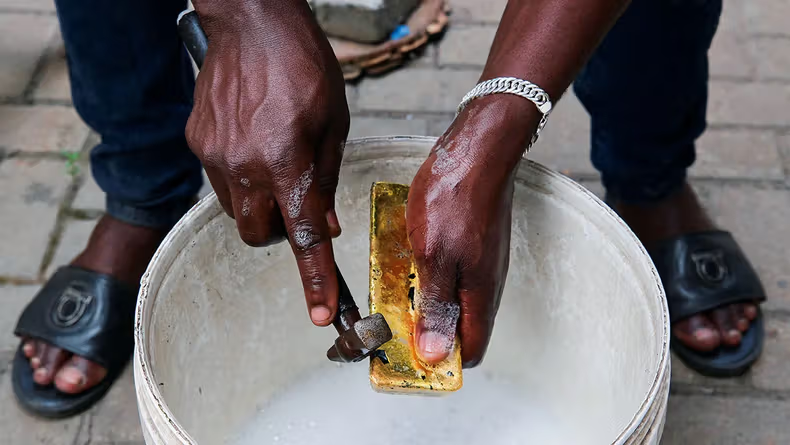
DRC Gold Reforms are gaining momentum as authorities in Kinshasa move to tighten control over a sector long affected by smuggling and weak oversight. At the same time, the government has outlined a strategy that improves traceability, formalises gold flows, and strengthens enforcement.
Prime Minister Judith Suminwa presented the reforms during a Council of Ministers meeting on April 5. Notably, she highlighted urgent gaps that allow informal networks and cross-border trade to dominate gold exports. As a result, officials believe these weaknesses continue to drain national revenue.
At the centre of the DRC Gold Reforms, the government has created a multi-ministerial working group. In particular, this team will design practical solutions to long-standing monitoring challenges. Moreover, authorities want a system that tracks gold from extraction sites to export points. In doing so, the system will ensure accurate reporting and proper taxation.
The government also plans to revise the traceability manual for mineral products. Specifically, the new framework will cover every stage of the value chain, from artisanal mining to export. Consequently, tighter traceability should reduce illegal trade and improve accountability across the sector.
In addition, authorities will restructure the Specialized Center for the Purchase, Marketing, and Export of Gold from Artisanal Mining. This institution manages gold flows across the country. Therefore, strengthening its mandate will help bring more transactions into the formal economy.
The urgency behind DRC Gold Reforms continues to grow. For instance, reports show that Africa loses massive revenue due to unreported gold exports. According to the Canadian Mining Journal, up to 35 billion dollars’ worth of gold from artisanal mining goes unrecorded each year. As a result, smugglers move much of this gold through informal cross-border networks.
Meanwhile, Kinshasa’s strategy reflects a wider continental shift. Across Africa, governments now seek greater control over natural resources. At the same time, rising global demand has increased pressure on countries to secure more value from exports.
Several countries have already taken decisive action. For example, in Tanzania, former President John Magufuli pushed reforms that increased state participation in mining. In addition, his administration renegotiated contracts with multinational firms to secure better terms.
Similarly, in Ghana, the government has expanded its role in gold trading through initiatives such as Gold for Oil. As a result, this policy strengthens foreign exchange reserves and reduces leakages in the gold trade.
Likewise, governments in Mali and Burkina Faso have revised mining codes. In particular, they increased state stakes and tightened oversight in artisanal zones. Consequently, these measures aim to reduce smuggling and improve revenue collection.
Within the Democratic Republic of the Congo, authorities plan deeper structural changes. First, they will integrate mining cooperatives and traders into the formal banking system. As a result, this step will improve transparency and reduce cash-based transactions that often support illicit trade.
Furthermore, officials will deploy technical agencies at border points. These teams will monitor exports and enforce compliance. Therefore, stronger border oversight should reduce the amount of gold leaving the country without proper documentation.
Next, the government will launch a pilot phase of the DRC Gold Reforms in Haut-Uélé province. This region produces large volumes of gold and offers a strong test case. After that, authorities will refine the system before expanding it nationwide.
If these reforms succeed, they could increase government revenue significantly. At the same time, they could strengthen the country’s position in global markets. Increasingly, international buyers demand transparency and ethical sourcing. Therefore, compliance with certification standards will help the DRC attract reliable partners.
Gold remains one of the country’s most valuable resources. However, informal trade has limited its full potential. Through DRC Gold Reforms, the government aims to capture more value and strengthen economic control.
Ultimately, these efforts signal a shift toward accountability and economic sovereignty. As global competition for minerals grows, countries that manage resources effectively will gain a competitive edge. For now, the DRC faces the challenge of execution.
In the coming months, the effectiveness of these reforms will become clear. If authorities implement them well, they could transform the gold sector and set a new benchmark for resource management across Africa.