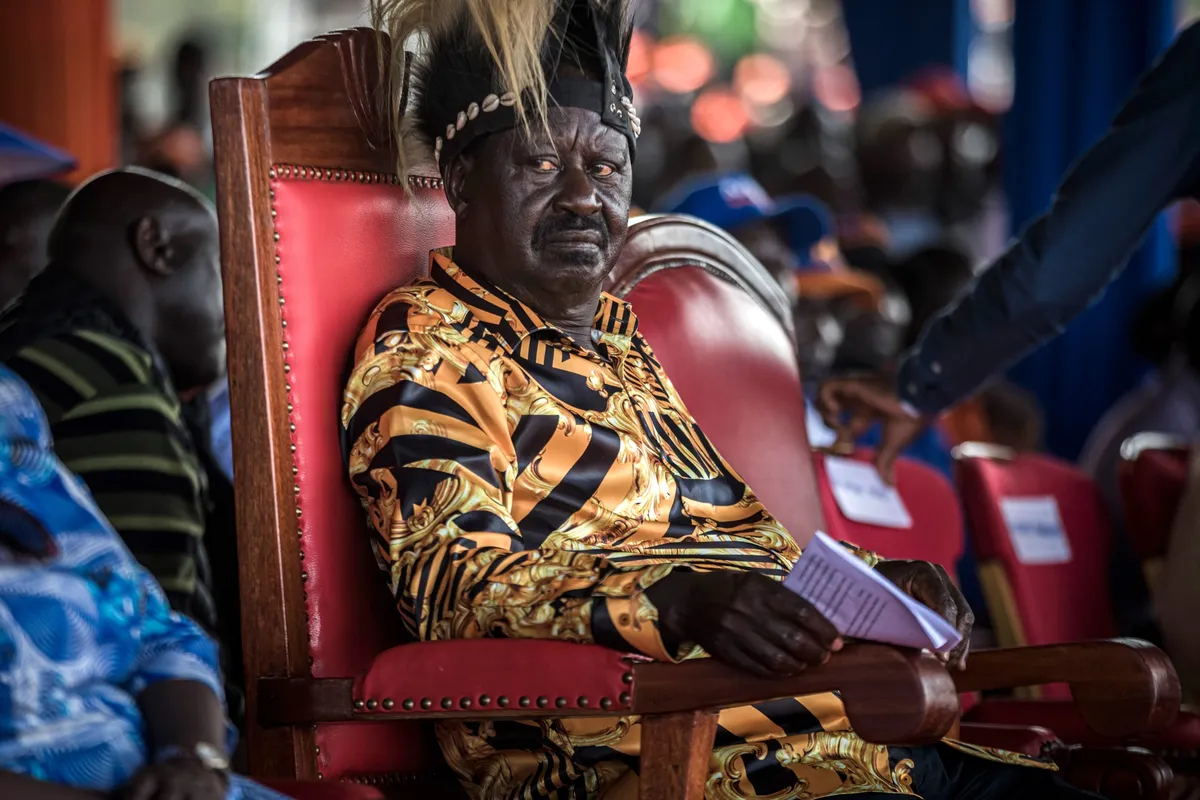
Raila Amolo Odinga, Kenya’s most influential and veteran politician, has passed away at the age of 80. The former Prime Minister and long-time advocate for democracy and electoral reforms died on the morning of October 15, 2025, while undergoing treatment at an Ayurvedic hospital in Koothattukulam, Kochi, India. Known as “Baba” by his supporters, Odinga was a towering figure in Kenya’s political landscape. His passing marks the end of an era for the country, as Odinga’s dedication to political change, multi-party democracy, and social justice has left an indelible mark on the nation.
Raila Odinga’s Last Moments:
Reports indicate that Odinga collapsed during a morning walk at Devamatha Hospital in Koothattukulam, where he had been receiving treatment for an undisclosed health condition. Doctors at the facility confirmed that he suffered a cardiac arrest, and despite efforts to revive him, he was pronounced dead at 9:52 a.m. local time.
Odinga had traveled to India with his daughter, Rosemary Odinga, who had been receiving Ayurvedic treatment at Sreedhareeyam Hospital, a facility that had previously helped her regain partial sight. The death of the former Prime Minister has sent shockwaves throughout Kenya, with many political figures and ordinary citizens expressing their grief over the loss of the man who fought tirelessly for the country’s democracy and social justice.
Political Legacy and Contributions:
Born on January 7, 1945, in Maseno, Kisumu District, Raila Odinga’s life and career were defined by his commitment to fighting for democracy and governance reforms. He became a prominent figure in the opposition, challenging the status quo and leading Kenya’s political discourse for decades. Odinga served as the Prime Minister of Kenya from 2008 to 2013, during which he played a pivotal role in fostering national unity after the 2007-2008 post-election violence.
His role in the Orange Democratic Movement (ODM) and his lifelong struggle for electoral reforms set him apart from many politicians. Odinga’s dedication to multi-party democracy led him to run for President of Kenya five times (1997, 2007, 2013, 2017, and 2022). Although he never won the presidency, his influence was undeniable, as he was always at the heart of the country’s most critical political moments.
Despite his unsuccessful presidential bids, Odinga’s legacy lives on through his advocacy for the Building Bridges Initiative (BBI), a push for constitutional reforms, and his role in the devolution of Kenya’s political and administrative structures. His influence was also felt beyond the political arena as he contributed to regional peace efforts and served as a diplomatic representative on various African Union missions.
The Road to Political Power:
Odinga’s political journey began with the formation of the Forum for the Restoration of Democracy (FORD) in the early 1990s, a movement that championed the return to multi-party democracy in Kenya. In 1992, Odinga was elected Member of Parliament for Lang’ata, and he became a vocal opponent of then-President Daniel arap Moi’s regime. His push for political change, however, came at a great personal cost, as he was arrested multiple times, including during the failed 1982 coup attempt, after which he spent several years in detention.
His commitment to democracy was unwavering, and even after his 2007 electoral loss to President Mwai Kibaki, Odinga continued to fight for fair elections. The 2007 post-election violence, which led to the deaths of over a thousand Kenyans, is a dark chapter in the country’s history, but Odinga’s negotiation of the 2008 power-sharing agreement, brokered by the United Nations, brought peace to Kenya.
Raila Odinga’s Unwavering Fight for Democracy:
Odinga’s political career was shaped by the belief that Kenya needed reforms. His Orange Democratic Movement (ODM) was not just a political party but a movement that represented millions of ordinary Kenyans who believed in the promise of a fairer, more democratic country. He was instrumental in ensuring that the 2010 Kenyan Constitution included devolution and an expanded bill of rights.
His multiple candidacies for the presidency, though unsuccessful, were a testament to his enduring influence. He was a candidate in 1997, 2007, 2013, 2017, and 2022, but each time, he alleged that electoral fraud had undermined his chances. Despite these setbacks, Odinga’s tenacity in advocating for free, fair, and credible elections shaped Kenya’s political landscape and made him a figure of inspiration for many.
Personal Life and Final Years:
Odinga was born to Jaramogi Oginga Odinga, Kenya’s first Vice President, and Mary Juma Odinga, in the Luo community. Throughout his life, Raila was known for his strong family bonds, and his wife Ida Odinga and children, including his daughter Rosemary, who had been his closest companion during his health struggles, played important roles in his life. His son, Fidel Odinga, tragically passed away in 2015, a personal loss that affected him deeply.
In his later years, Odinga shifted his focus from direct political engagement to a role of elder statesman, striving for reconciliation in Kenya. His 2018 handshake with President Uhuru Kenyatta was a historic moment, seen by many as a turning point in the country’s political division.
Global Impact and Final Days:
In February 2024, Odinga announced his bid to chair the African Union Commission, but was defeated in February 2025, signaling the end of his bid for continental leadership. His last public statement in October 2025 hinted at the future of his political vision, but little did anyone know that his death would mark the end of a remarkable life.
His final moments in Kochi, India, surrounded by his family, have left the country mourning the loss of a political giant, whose contributions to Kenya and Africa will be remembered for generations.
Remembering Raila Odinga: A Life of Struggle and Sacrifice
As Kenya grapples with the news of Raila Odinga’s death, tributes have poured in from across the world, celebrating his life’s work. His political journey, shaped by struggle and resilience, has left a profound impact on the nation and the continent. Whether or not he ever became President, his legacy as a champion of democracy, freedom, and justice remains his greatest achievement.
Raila Odinga’s death leaves a void in Kenyan politics that will be hard to fill, but his principles and beliefs will continue to inspire future generations. The country will forever remember the man they called “Baba,” a leader who fought for the rights of the people and for a better future for Kenya.