Understanding Transition Finance
“Transition finance” refers to funding designed to help economies shift from high-carbon, unsustainable systems toward low-carbon, resilient ones. It includes investments in clean energy, green infrastructure, sustainable agriculture, and fair energy-transition policies. Importantly, it supports emission reduction while ensuring that no one is left behind socially or economically.
In Africa, transition finance is especially crucial because it must strike a balance between climate goals and development needs. The continent faces the twin challenge of expanding energy access for millions of people while avoiding the trap of high-emission growth. Consequently, this kind of financing becomes a bridge between sustainability and human development.
Why Africa Needs Transition Finance
Energy and Climate Imperatives
Many African nations still struggle with unreliable or limited electricity access. Moreover, climate change continues to intensify droughts, floods, and heatwaves across the region. To avoid locking in polluting energy systems, transition finance encourages countries to invest in renewables, energy efficiency, and grid modernization. For example, shifting from diesel generators to solar or hydropower can dramatically cut emissions while improving energy reliability.
Development and Job Growth
Transition finance also has a major social dimension. Investments in green infrastructure, sustainable land use, and clean technology create new jobs and industries. Since Africa has one of the world’s youngest populations, providing employment is essential. With the right support, projects like renewable energy manufacturing and green industrial zones can generate millions of decent jobs. Additionally, retraining programs can help workers move from fossil-fuel industries into sustainable sectors.
Avoiding Debt and Financial Risks
However, transition finance must be carefully structured. Many African countries already carry heavy debt burdens, so poorly designed high-interest loans could worsen financial stress. Therefore, concessional financing, blended finance, and risk-sharing models are needed to prevent debt crises while enabling sustainable development.
Key Recent Developments and Examples
AfDB’s Just Transition and Financing Reform
At the 2025 Finance in Common Summit (FICS), the African Development Bank (AfDB) reaffirmed its commitment to a just energy transition. Through its Jobs for Youth in Africa strategy, AfDB aims to create 25 million jobs and equip 50 million young Africans with green skills by 2025. It also partnered with the Climate Investment Funds to train policymakers from Ghana, Kenya, Uganda, and Namibia on fair transition planning.
Solar Power Projects Driving Change
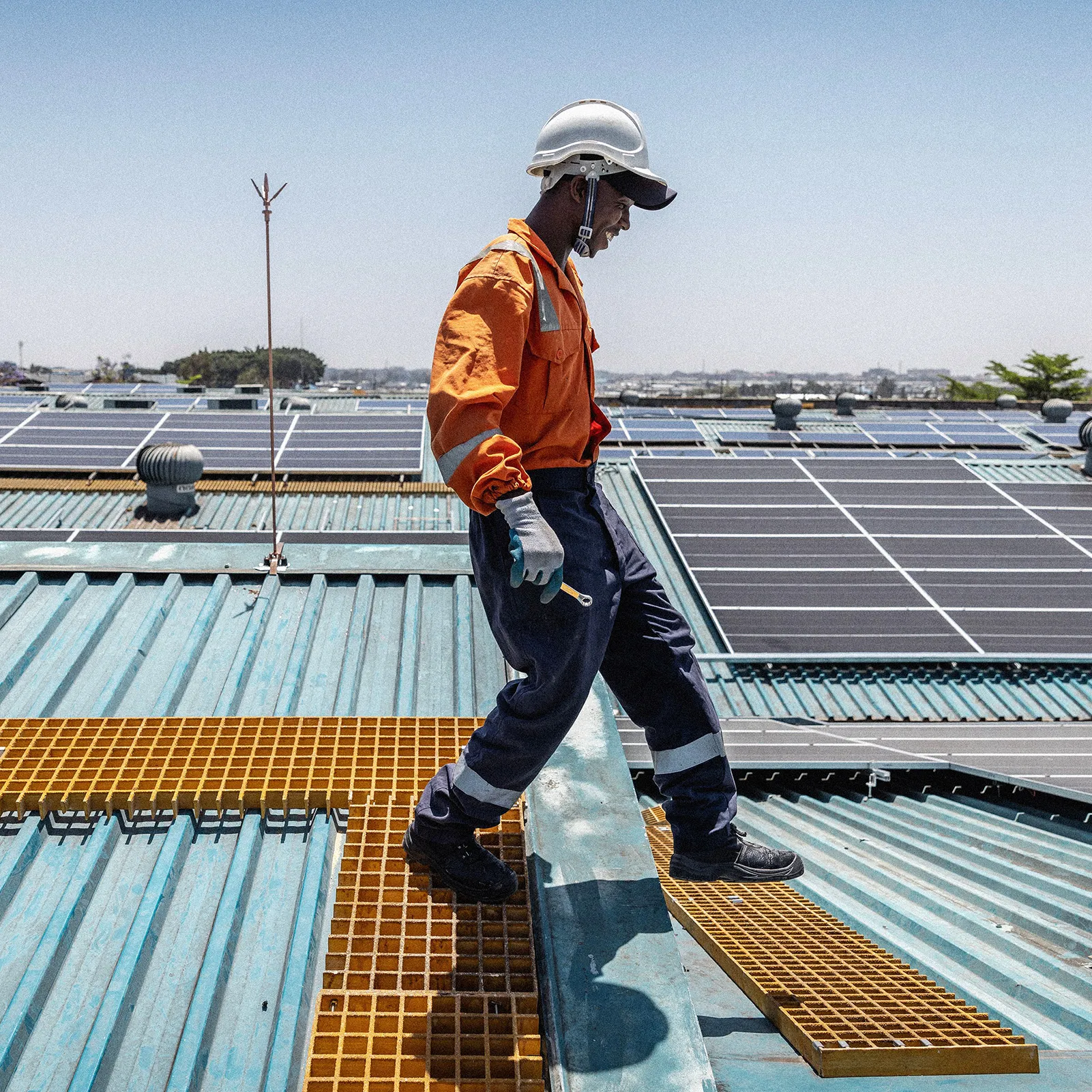
Across the continent, solar power is rapidly expanding. The Nkhotakota Solar Power Station in Malawi began operations in 2023 with 21 MW and is being expanded to 38 MW. In Burkina Faso, the Tenkodogo Solar Power Station now supplies around 24 MW, improving grid stability and rural access. Nigeria has also advanced solar projects, including the Abiba Solar Power Station (50 MW), supported by both Nigerian and European firms. These examples highlight how transition finance directly enhances energy security.
Green Hydrogen and Blended Finance
In Southern Africa, blended finance is emerging as a promising model. The SA-H2 fund, launched in 2023, seeks to raise USD 1 billion to support green hydrogen development. By blending public and private capital, this fund aims to reduce investor risk while accelerating renewable innovation.
Major Challenges Slowing Progress
Knowledge and Disclosure Gaps
Despite growing momentum, many governments and investors lack clear transition plans or climate-risk disclosures. Without reliable data, it becomes difficult to measure emission reductions or track the social impact of investments.
Lack of Global Alignment and Standards
Another barrier is the absence of a universal transition-finance taxonomy. Unlike green bonds, transition finance still lacks global labelling standards, making it harder for investors to evaluate risk. Consequently, many potential financiers remain hesitant.
High Risk and Unequal Distribution
Because some African economies are smaller or politically fragile, investors often perceive them as too risky. As a result, funds flow mainly to larger economies like South Africa, Egypt, or Kenya, while poorer nations—though equally in need—receive less support.
What’s Needed to Scale Transition Finance
Stronger Policy and Regulatory Support
Governments must provide clear transition roadmaps and stable climate policies to attract investors. Well-structured power-purchase agreements, tax incentives, and transparent regulation can lower risks and encourage long-term investment.
Concessional and Blended Finance Instruments
To make green projects financially viable, Africa needs grants, low-interest loans, and guarantees. Innovative tools like green bonds or risk-mitigation facilities can attract private capital that otherwise avoids climate-related ventures.
Capacity Building and Knowledge Sharing
Building local expertise is equally important. Training programs for officials, bankers, and entrepreneurs on climate finance, ESG reporting, and project planning can strengthen regional capacity. The AfDB masterclass in Nairobi is an excellent example of such capacity development.
Debt Management and Reform
To avoid debt crises, countries must adopt transparent reporting, renegotiate unsustainable loans, and align borrowing with climate goals. This ensures that transition finance promotes long-term stability instead of creating new fiscal risks.
Case Study: South Africa’s Just Energy Transition Plan
One of Africa’s most notable examples is South Africa’s Just Energy Transition Investment Plan (JET-IP)—an $8.5-billion agreement formed during COP26. Supported by the EU, UK, US, France, and Germany, this initiative aims to retire coal plants, expand renewables, and protect workers affected by the transition.
The JET-IP showcases how transition finance can combine ambitious climate targets with social justice. By engaging local communities, unions, and industry, the plan ensures that no one is left behind. It also demonstrates the importance of strong governance and international cooperation.
Outlook: The Future of Transition Finance in Africa
Looking ahead, Africa’s transition-finance landscape is likely to evolve rapidly. We can expect:
- Regional financial tools such as pooled risk facilities or local-currency green bonds.
- Expanded investment in hydrogen, battery storage, and smart grids as costs fall.
- Digital innovation, like pay-as-you-go solar systems, helping rural electrification.
- New financial products, including ESG-linked bonds and impact funds tailored for African contexts.
- Increased accountability, as investors demand measurable climate results.
Nevertheless, risks remain. Excessive debt, political instability, or weak project governance could undermine progress. Moreover, if global climate finance commitments are not fulfilled, Africa’s transition may face significant funding gaps.
Conclusion
Transition finance represents Africa’s opportunity to redefine development—to grow without repeating the high-carbon mistakes of the past. With strategic planning, equitable policies, and strong international cooperation, the continent can achieve both economic prosperity and climate resilience.
As global partners align behind Africa’s ambitions, transition finance can serve not just as a tool for decarbonization—but as a pathway toward inclusive, green, and sustainable growth for generations to come.