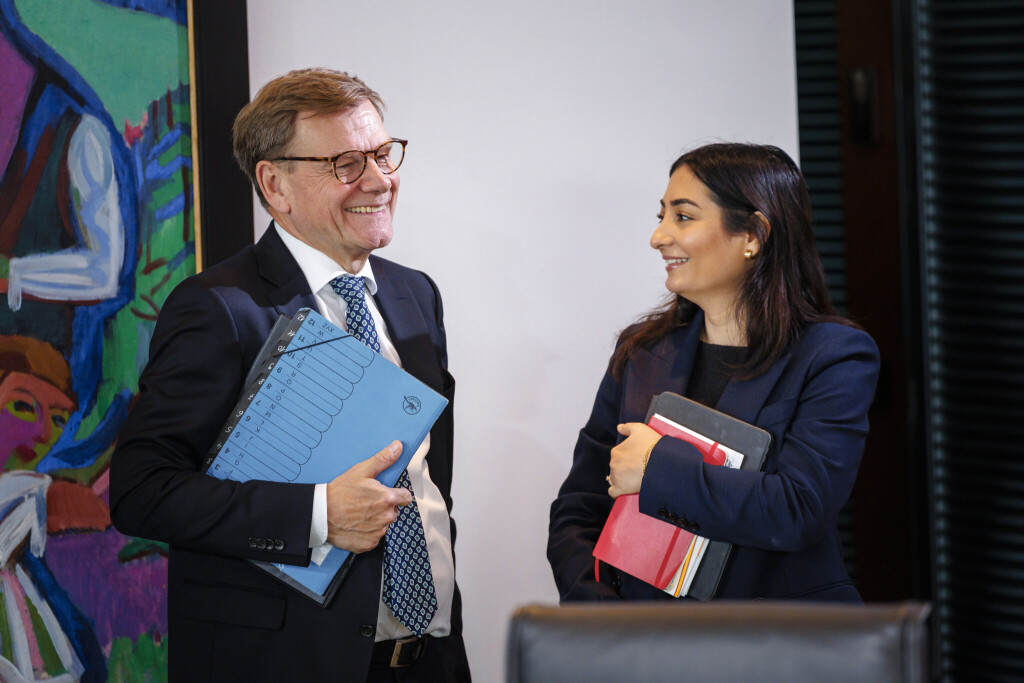
This week, two senior German officials are making high-level visits across Africa as part of a coordinated diplomatic push. The German ministers visit Africa at a time when Berlin seeks to deepen partnerships on migration, regional security, and food security. Foreign Minister Johann Wadephul and Development Minister Reem Alabali Radovan will travel to East and West Africa respectively, each with distinct but complementary agendas.
Foreign Minister Johann Wadephul begins his trip on Tuesday evening with a stop in Nairobi, Kenya. He travels with a German business delegation to underscore economic cooperation. In Kenya, he will hold bilateral talks with his counterpart, Musalia Mudavadi, and meet President William Ruto. According to the Federal Foreign Office, these discussions will reinforce political and trade ties. Moreover, both sides will review the implementation of their landmark migration agreement.
That agreement, signed in September 2024 by Mudavadi and then-Interior Minister Nancy Faeser, remains a priority for Kenya. “It gives qualified Kenyan specialists access to Germany,” Mudavadi emphasized after meeting German Ambassador Sebastian Groth last week. The deal represents a model of legal, skills-based migration that Germany hopes to replicate with other African partners. Therefore, Wadephul’s visit aims not only to sustain this partnership but also to explore its expansion.
From Kenya, Wadephul will travel to Ethiopia on Thursday. There, he plans to meet Ethiopian Foreign Minister Gedion Timothewos and Mahamoud Ali Youssouf, Chairperson of the African Union Commission. These talks will address bilateral relations, but they will also focus heavily on regional and international security issues. Given Ethiopia’s strategic role in the Horn of Africa and its proximity to ongoing conflicts, Germany views Addis Ababa as a key interlocutor on peace and stability. Consequently, the German ministers visit Africa with an eye toward strengthening multilateral coordination on crises from Sudan to the Sahel.
Meanwhile, Development Minister Reem Alabali Radovan departs for Sierra Leone on Wednesday. Her trip aligns with the new strategy of the Federal Ministry for Economic Cooperation and Development (BMZ), which prioritizes the fight against global hunger. During her two-day stay, she will visit projects run by the UN World Food Programme and Welthungerhilfe. These field visits will allow her to assess how German development aid translates into tangible improvements in food security and rural resilience. She will remain in Sierra Leone through Thursday before returning to Berlin.
Together, these parallel missions reflect Germany’s evolving approach to Africa. Rather than treating the continent as a monolith, Berlin now tailors its engagement to specific regional needs—whether through skilled migration pathways with Kenya, security dialogue with Ethiopia, or targeted anti-hunger programs in Sierra Leone. As a result, the German ministers visit Africa not just to reaffirm old ties, but to build responsive, issue-based partnerships for the future.
In sum, this week’s diplomatic activity signals Germany’s commitment to a more proactive and diversified Africa policy. By combining foreign policy, economic outreach, and development action, the government aims to foster mutual benefit and long-term stability. The German ministers visit Africa at a pivotal moment—and their engagements could shape the next chapter of Europe-Africa cooperation.
READ: Trade and Labour in Africa: Shaping Inclusive Global Integration