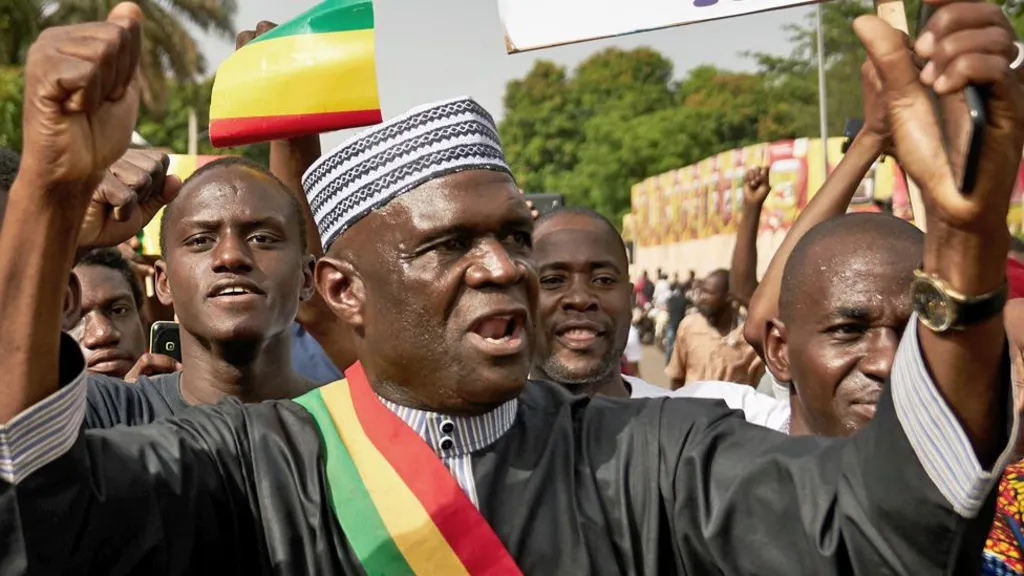
In a development that has sent ripples through West African politics, Mamadou Hawa Gassama, a prominent Malian lawmaker, has been sentenced to three years in prison in Ivory Coast for insulting the country’s president, Alassane Ouattara. Gassama, a member of Mali’s transitional parliament formed after a military coup in 2020, was arrested last July while visiting Ivory Coast. His comments, which included calling President Ouattara a “tyrant” and an “enemy of Mali,” have ignited tensions between the two neighboring countries, which have seen strained relations since Mali’s military junta took power.
The Arrest of Mamadou Hawa Gassama
Mamadou Hawa Gassama, known for his outspoken and often controversial political views, has long been an advocate for the current military government in Mali. Gassama’s arrest followed a series of interviews and social media posts in which he harshly criticized the leadership of President Ouattara, particularly his extended rule and policies that Gassama described as oppressive. In his interviews, Gassama openly accused the Ivorian leader of being a “tyrant” and repeatedly labeled him as “an enemy of Mali.”
The charges against Gassama were significant: the authorities in Ivory Coast accused him of deliberately attempting to destabilize the country and undermine Ivorian political institutions. Prosecutors argued that his statements were not just ordinary political criticism but a concerted effort to create friction between Ivory Coast and Mali, especially in light of the ongoing tensions between the two nations.
Gassama’s arrest came at a time when relations between Mali and Ivory Coast were already on a knife’s edge. Mali’s military rulers have been openly critical of the French-aligned West African powers, and Gassama’s comments were seen by some as exacerbating an already fragile diplomatic situation. Gassama’s lawyer, Mamadou Ismaila Konate, expressed disbelief at the harshness of the sentence, calling it “excessive” and “very severe,” especially given the nature of the remarks.
The Strained Relations Between Mali and Ivory Coast
The relationship between Mali and Ivory Coast has been marked by increasing tension since the 2020 military coup in Mali, which ousted the democratically elected government. Mali’s new military rulers have sought to distance themselves from France and Western influences, opting instead to foster closer ties with countries like Russia. This pivot has included the hiring of Russian mercenaries to combat jihadist insurgents in the Sahel region, a decision that has sparked controversy and concern among Mali’s neighbors.
Alassane Ouattara, the Ivorian president, has been a staunch critic of the military takeovers in West Africa, including Mali’s 2020 coup. Ouattara, an ally of France and a leader who has maintained close ties with Western powers, has strongly opposed the erosion of democratic norms in the region. His criticism of the Malian junta’s actions has only deepened the rift between the two countries.
One of the most notable events in the diplomatic fallout came two years ago, when 49 Ivorian soldiers were sentenced to 20 years in prison in Mali on charges of attempting to undermine the country’s security. The soldiers had been accused of entering Mali without proper authorization and were arrested shortly after their arrival. The Ivorian government, however, claimed that they had been sent to Mali as part of a United Nations mission to combat militant Islamists. The soldiers were eventually released after mediation efforts by Togo, but the incident underscored the volatility of relations between the two nations.
The tensions between Mali and Ivory Coast have only worsened since then, with the military government in Mali expelling French forces from the country and forcing the withdrawal of the United Nations peacekeeping mission. These moves, coupled with Mali’s growing ties to Russia, have made the Malian government a pariah in the eyes of many in the West African community.
Gassama’s Remarks and Their Impact on Regional Diplomacy
Gassama’s comments about President Ouattara were more than just an individual grievance—they were part of a larger narrative of political upheaval in West Africa. Since Mali’s 2020 coup, several other countries in the region, including Guinea and Burkina Faso, have experienced military takeovers. This wave of coups has drawn significant international condemnation, but it has also led to a growing sense of solidarity between the military-led governments in the Sahel and West Africa.
For Mali, Gassama’s words represent a defiant stance against what the junta sees as the undemocratic and foreign-backed leadership of President Ouattara. However, his statements also reflect broader discontent within Mali, where many view Ouattara’s rule as a symbol of a political system that has failed to address the needs and aspirations of the region’s population.
Gassama’s imprisonment serves as a reminder of the sharp divide in the region between those who support military regimes and those who advocate for democratic governance. It also highlights the risks faced by political dissidents in a region where freedom of expression is often stifled by authoritarian leaders or military juntas.
Mali’s Transitional Government and the Future of West African Politics
Mali’s transitional government, which took power following the 2020 coup, faces significant challenges. The junta’s decision to align itself more closely with Russia, coupled with its reluctance to engage with Western powers, has left the country isolated diplomatically. Furthermore, the junta’s grip on power has been marred by allegations of human rights abuses and repression of opposition voices.
While the military government has promised to hold elections and return to civilian rule, its actions have been criticized both domestically and internationally. The recent imprisonment of Gassama is a stark reminder that Mali’s political crisis is far from resolved. It also raises questions about the country’s future direction—will Mali continue to move towards authoritarianism, or will it be able to chart a course back to democracy?
For President Ouattara and Ivory Coast, the situation presents a complex diplomatic challenge. While the Ivorian leader has long been a symbol of stability in West Africa, his government must now navigate the delicate task of managing relations with Mali and other military-led regimes in the region. The decision to imprison Gassama, a prominent political figure, is likely to exacerbate tensions in the region, especially given the larger geopolitical stakes involved.
A Divided West Africa
The conviction of Mamadou Hawa Gassama marks a new chapter in the increasingly contentious relationship between Mali and Ivory Coast. As tensions continue to rise between the military regimes and the democratically elected governments in West Africa, it remains to be seen whether diplomacy can prevail or whether the region will be further entrenched in political division.
For now, the situation serves as a potent reminder of the fragile state of democracy in the region, where political dissent is often met with harsh punishment, and where the struggle for power is playing out on both the streets and in the courts. As Mali’s junta tightens its grip on power and Ivory Coast stands firm against the growing wave of military influence, the future of West African politics hangs in the balance.