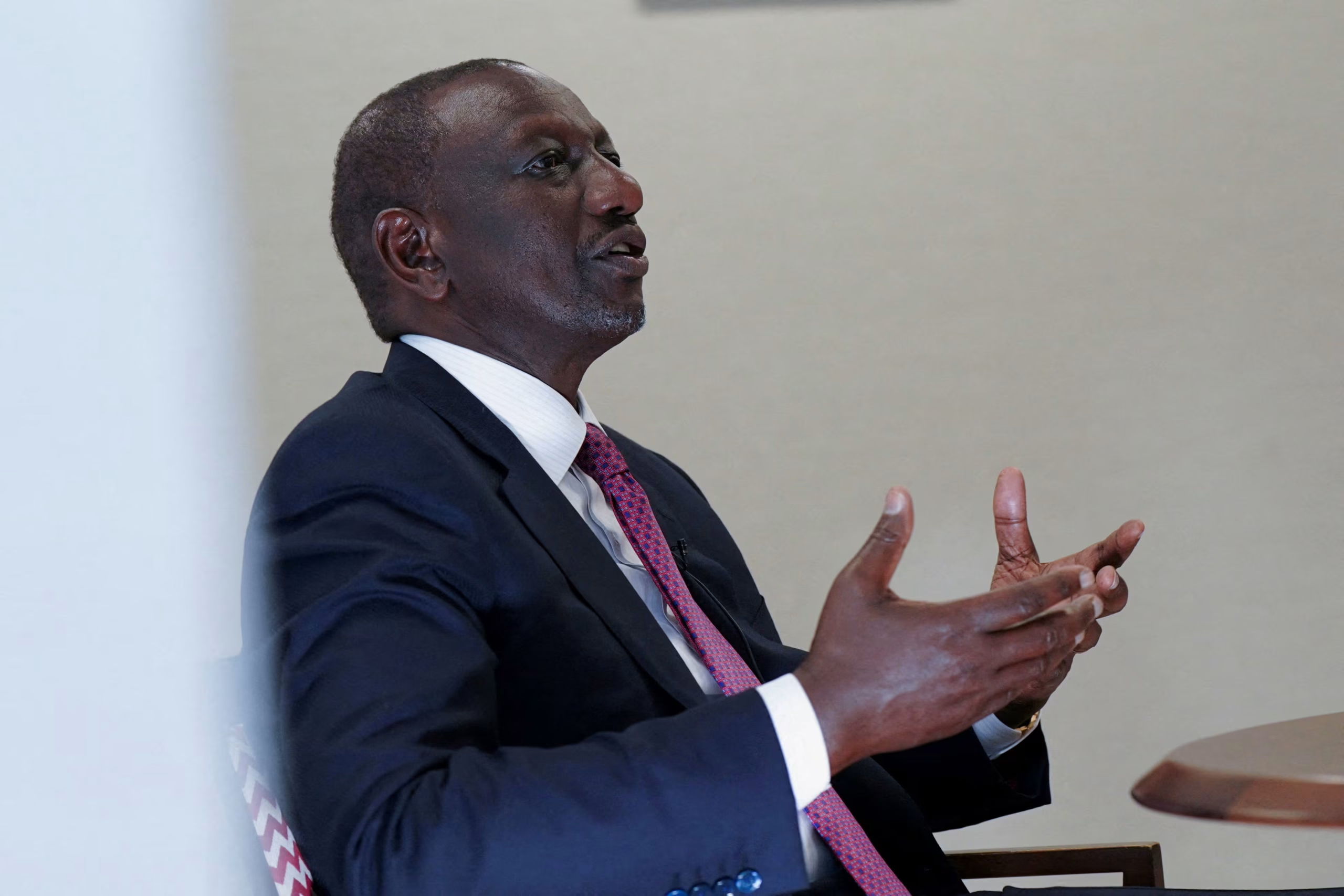
Kenya’s government is rolling out a strategic plan to transform its economic landscape by establishing two major financial vehicles — a Sovereign Wealth Fund (SWF) and an Infrastructure Fund. These funds aim to stimulate investment in key sectors such as agriculture, energy, and industry while easing pressure on public borrowing.
President William Ruto announced the initiative, framing it as a shift from debt-fueled development toward more sustainable, locally driven financing. Over the past decade, Kenya has relied heavily on external loans to fund major projects, which pushed the country’s debt-to-revenue ratio to concerning levels. The president stressed that the new funds will help the nation reclaim fiscal stability and secure long-term prosperity.
Under the recently enacted Privatization Act, the government will mobilize capital by selling shares in selected state-owned enterprises. One of the first candidates for partial privatization is the Kenya Pipeline Company (KPC), a crucial player in fuel transportation. The sale could generate as much as 130 billion Kenyan shillings (about $1.01 billion), which will serve as seed capital for the funds.
The Infrastructure Fund will target sectors with the greatest multiplier effect. Agriculture, a cornerstone of Kenya’s economy, will receive significant support to boost crop exports and enhance food security. The fund will also channel investment into energy generation, a vital enabler of industrial growth. Kenya currently produces around 2,300 MW of electricity, but the government estimates that the economy requires at least 10,000 MW to fully realize its industrialization goals.
Ruto highlighted that these funds will not only stimulate economic activity but also benefit future generations through better infrastructure, job creation, and sustainable growth. He framed the move as part of Kenya’s journey toward self-reliance, where economic expansion is anchored in domestic resources rather than external debt.
While the announcement sparked optimism among investors, questions remain about timelines and governance. The president did not specify when the funds will become fully operational, leaving analysts eager for more details about management structures and investment strategies.
Economists view this move as a strategic pivot toward sustainable financing. By raising funds domestically, Kenya can limit its exposure to foreign debt and cushion itself against global interest rate shocks. Instead of seeking loans from international lenders, the government plans to reinvest proceeds from privatization into productive sectors that generate jobs and revenue.
For the plan to succeed, transparency and governance must remain at the forefront. Experts warn that poor oversight or political interference could erode public trust. The government must ensure these funds operate with clear mandates, audited accounts, and independent boards. Ruto’s administration is under pressure to demonstrate that these funds will deliver measurable impact rather than becoming vehicles for patronage.
Another key challenge lies in asset valuation and market timing. If the initial privatizations underperform, the capital raised may fall short of expectations. Furthermore, the funds must complement Kenya’s debt management strategy. Misalignment could create hidden liabilities or new fiscal risks if the funds take on commitments that burden future budgets.
Still, the potential upside is significant. Well-structured funds could attract co-investment from private investors, especially in infrastructure projects such as roads, renewable energy plants, irrigation systems, and industrial parks. By linking infrastructure to export-oriented agriculture and manufacturing, Kenya could accelerate economic diversification and raise its export earnings.
Long-term, a successful sovereign wealth fund can help Kenya stabilize its budget, cushion against economic shocks, and build reserves for future generations. Similar models in countries like Botswana and Norway have shown how disciplined investment can transform public wealth into national prosperity.
The government also intends to use the funds to support green growth and climate-resilient projects. Investments in renewable energy, sustainable agriculture, and environmental restoration align with global trends toward ESG (Environmental, Social, and Governance) standards, making Kenya an attractive destination for impact investors.
In the coming months, observers will watch how the government finalizes the legal framework, selects management teams, and identifies priority projects. Early wins — such as financing a major power project or export corridor — could boost confidence and attract more investors.
However, the road ahead is not without obstacles. Kenya must balance short-term fiscal pressures with long-term development goals. Political will, institutional capacity, and public accountability will determine whether these funds deliver their promise.
If managed well, the Sovereign Wealth Fund and Infrastructure Fund could mark a turning point in Kenya’s fiscal story — transforming the country from a debt-reliant borrower into a self-financing growth hub. Success could also inspire other African nations to pursue similar models, strengthening the continent’s push for economic independence.