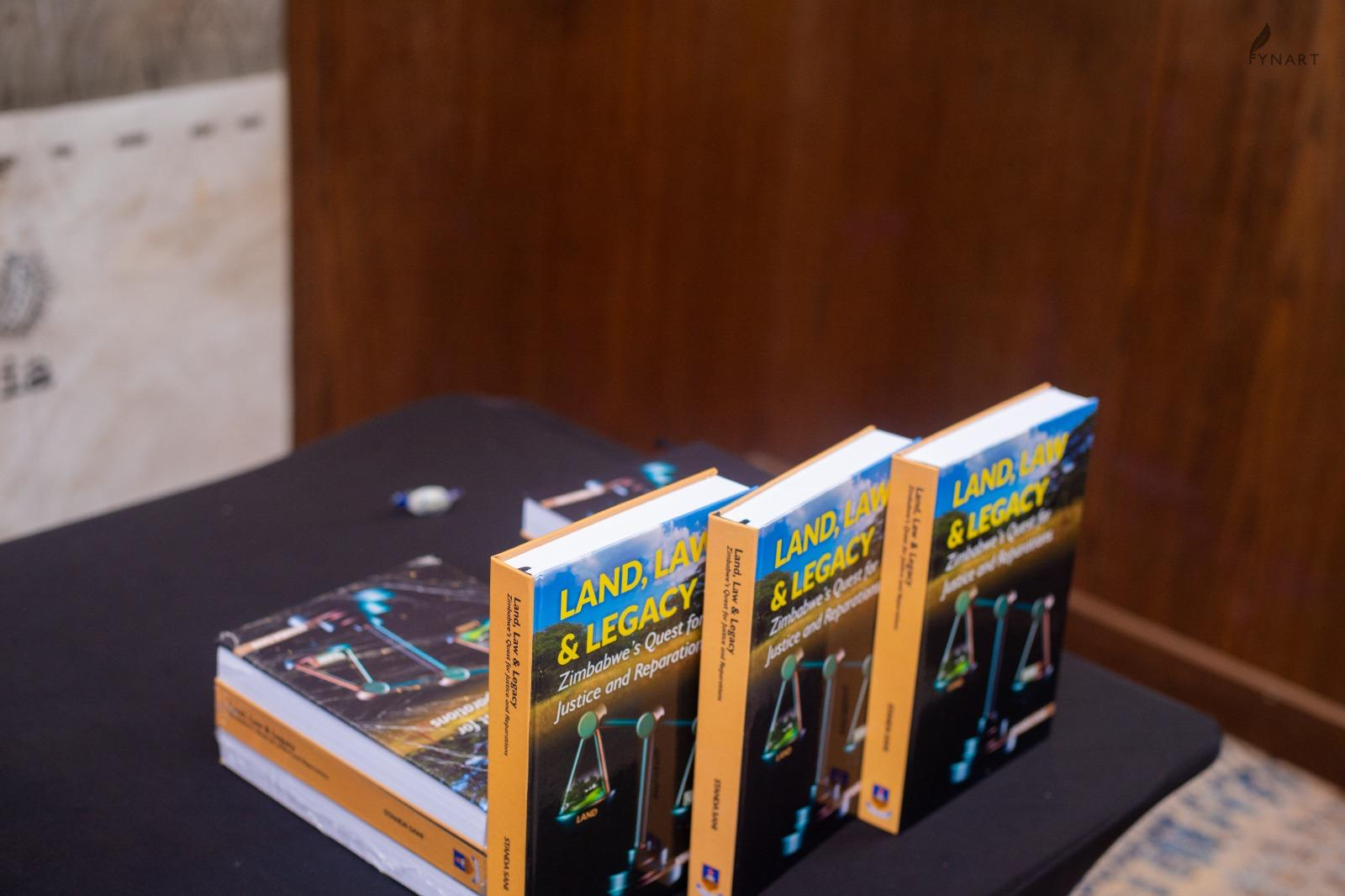
Zimbabwe land question remains one of the country’s most sensitive and defining national issues. A new book by Zimbabwean legal scholar and author Standa Sani now revisits the subject through a detailed study of law, colonial history, justice, reparations and national reconciliation.
The book, titled Land, Law & Legacy: Zimbabwe’s Quest for Justice and Reparations, offers a comprehensive examination of how land dispossession shaped Zimbabwe’s past and continues to influence the country’s present. It traces the land question from colonial conquest to modern land reform debates, placing legal history at the centre of the national conversation.
“Where law has been used to create injustice, justice must begin by questioning the law. Historical injustice is not erased by time; it is either confronted through justice or preserved through legality. Reparations are not about the past alone, but about the future that becomes possible when the past is no longer denied.” — Standa Sani.
Sani’s work argues that land in Zimbabwe cannot be understood only as property. It is also connected to identity, dignity, historical memory, sovereignty and economic justice. By examining the legal foundations of dispossession, the book seeks to explain why land remains central to Zimbabwe’s search for equity and national healing.
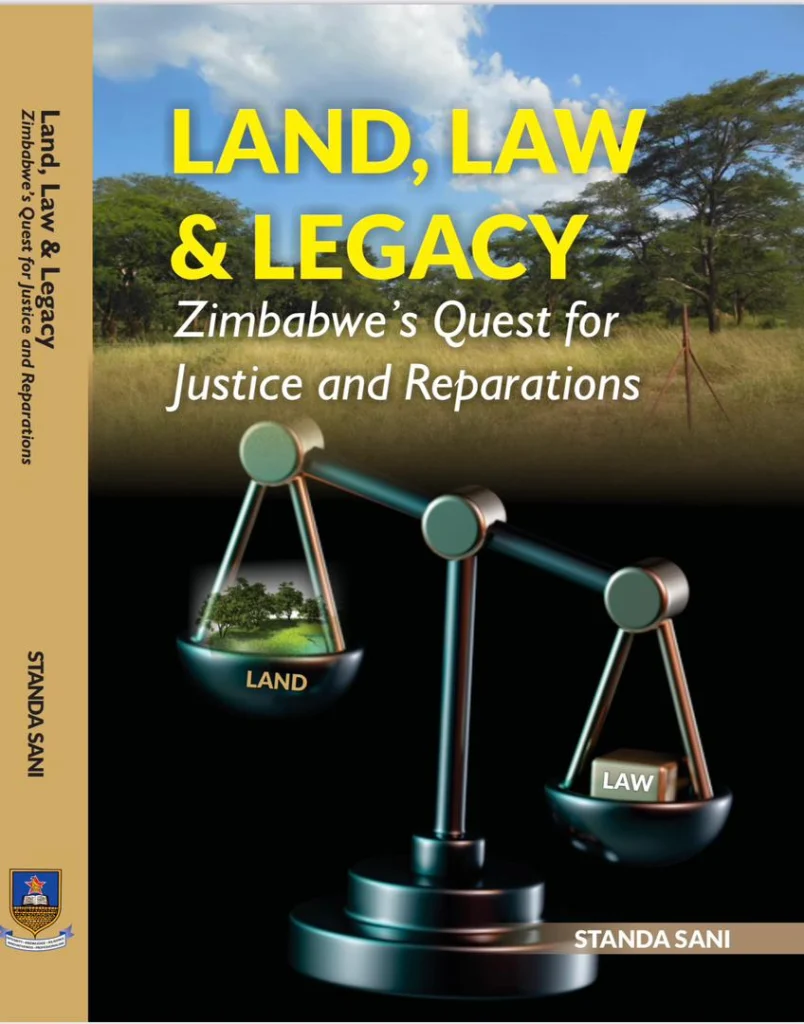
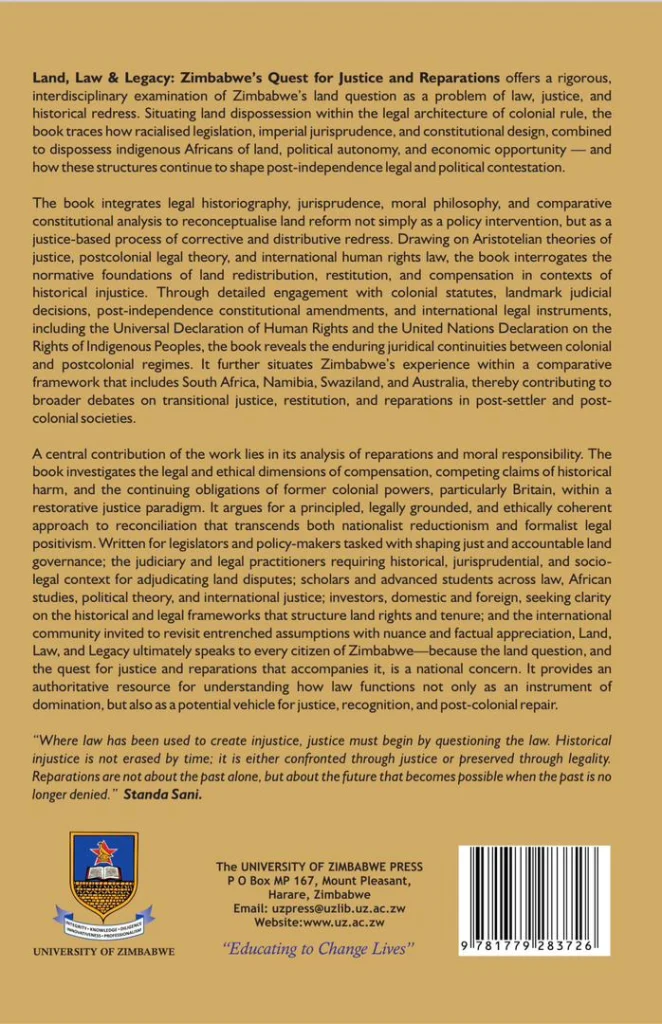
The publication arrives at a time when many African countries continue to debate colonial legacies, reparations and fair land ownership. For Zimbabwe, those debates are especially important because land reform has shaped politics, agriculture, law, diplomacy and social relations for decades.
A Book Rooted in Law and Historical Memory
Land, Law & Legacy explores the legal systems that enabled colonial land dispossession in Zimbabwe.
The book examines major colonial laws, including the Land Apportionment Act of 1930, the Native Land Husbandry Act of 1951 and the Land Tenure Act of 1969. These laws played a central role in formalising racial separation and unequal access to land.
Through these legal instruments, indigenous Zimbabweans were pushed into restricted areas while settler communities gained access to larger and more productive land. The book presents this as a deliberate legal and political process, not simply an accident of history.
Sani’s analysis shows how law can be used both as a tool of injustice and as a framework for redress. By revisiting these statutes, the book encourages readers to understand the land question as a legal issue with deep historical roots.
The work also examines key legal developments, including the significance of the Privy Council judgment and its role in shaping land tenure debates. This gives the book value not only as a historical account but also as a legal resource for readers seeking to understand the foundations of Zimbabwe’s land system.
Why Land Remains Central to Zimbabwe’s National Story
For many Zimbabweans, land is more than an economic asset. It is tied to ancestry, cultural belonging, family security and national identity. This is why the land question continues to carry deep emotional and political weight.
Sani’s book places land at the heart of Zimbabwe’s broader struggle for justice. It argues that colonial land dispossession created inequalities that could not be erased simply by political independence. The legacy of unequal ownership continued to affect livelihoods, agricultural production, rural development and national policy after independence.
By focusing on both history and justice, the book asks an important question: how can a country build a fair future without fully confronting the injuries of the past?
This question gives Land, Law & Legacy its wider importance. It is not only a book about land reform. It is a book about how societies remember harm, repair injustice and build institutions that can support reconciliation.
Justice, Reparations and Moral Responsibility
One of the book’s major contributions is its focus on reparations.
Sani argues that Zimbabwe’s land question should be understood within a wider debate about historical justice. The book draws from legal, philosophical and moral traditions to examine whether past injustices create present responsibilities.
The work engages with Aristotelian ideas of justice as well as broader theories on colonialism, racism and restitution. In doing so, it moves beyond a narrow discussion of land ownership and asks what genuine repair should look like.
Reparations, in this context, are not presented only as financial compensation. They are also linked to recognition, accountability, restoration, dignity and structural transformation. The book suggests that meaningful redress requires a deeper understanding of how colonial systems damaged communities and shaped modern inequalities.
This makes the publication especially relevant to current global conversations. Across Africa, the Caribbean and other formerly colonised regions, calls for reparations have grown louder. Sani’s book places Zimbabwe within that wider movement for historical accountability.
Britain’s Historical Role in Zimbabwe’s Land Question
A central argument in Land, Law & Legacy concerns Britain’s role in Zimbabwe’s land history.
The book contends that Britain bears moral and historical responsibility for the consequences of colonial land policies. It argues that the legal and political systems imposed during colonial rule created the foundation for racial inequality in land ownership.
Sani presents Britain’s responsibility not only as a matter of the past but also as a continuing issue in discussions about justice and reparations. The book suggests that acknowledging colonial responsibility is necessary for honest reconciliation.
This argument is likely to attract attention because debates over Britain’s role in Zimbabwe’s land reform process have long been politically charged. By approaching the issue through legal history and moral reasoning, Sani offers a framework for more serious and informed discussion.
The book does not reduce the issue to diplomatic disagreement. Instead, it presents colonial land dispossession as a historical injustice that requires recognition and meaningful engagement.
The Fast Track Land Reform Programme in Focus
The book also examines Zimbabwe’s Fast Track Land Reform Programme, launched in 2000.
This programme remains one of the most controversial and consequential policies in Zimbabwe’s post-independence history. It changed land ownership patterns, displaced many white commercial farmers and reshaped the country’s agricultural sector.
Sani’s work evaluates the programme from multiple angles. It considers the historical grievances that made land redistribution necessary, while also examining the social, economic and legal consequences that followed.
The book addresses issues such as agricultural productivity, livelihoods, property rights, social relations and the position of displaced farmers. This balanced approach makes the publication useful for readers who want to understand the complexity of land reform beyond political slogans.
By analysing the Fast Track Land Reform Programme within a longer historical timeline, the book shows that the events of 2000 cannot be separated from the colonial laws and inequalities that came before them.
Comparative Lessons From Africa and Beyond
Land, Law & Legacy does not treat Zimbabwe’s experience as isolated.
The book compares Zimbabwe’s land reform journey with experiences in South Africa, Namibia, Eswatini and Australia. These comparisons help readers understand how different societies have approached land redistribution, restitution and historical injustice.
South Africa and Namibia, like Zimbabwe, continue to face difficult questions about land ownership and colonial legacy. Australia’s experience also provides useful insights into indigenous dispossession, recognition and reparative justice.
By drawing these comparisons, Sani shows that land reform is not only a Zimbabwean issue. It is part of a broader global challenge faced by societies built on histories of conquest, settlement and unequal ownership.
The comparative approach strengthens the book’s policy relevance. It allows readers to consider what Zimbabwe can learn from other countries and what other countries can learn from Zimbabwe’s experience.
Pan-Africanism and the Liberation Context
The book also situates Zimbabwe’s land question within the wider history of African liberation.
Sani examines the rise of Pan-Africanism and the role of continental institutions such as the Organisation of African Unity and the African Union. These movements and institutions helped shape the struggle against colonialism and racial domination across Southern Africa.
This wider context matters because Zimbabwe’s land question cannot be separated from the liberation struggle. Land was central to the fight for independence, and the promise of land justice remained central after independence.
By connecting land reform to Pan-African thought, the book reminds readers that the struggle over land was also a struggle over sovereignty, dignity and self-determination.
A Resource for Scholars, Lawyers and Policymakers
Land, Law & Legacy is written for a broad readership.
For scholars, it offers a detailed study of land dispossession, legal history and reparations discourse. For legal practitioners, it provides useful analysis of land law, property rights and justice. For policymakers, it raises important questions about how to design land policies that are fair, lawful and sustainable.
Students of law, history, politics, development studies and human rights will also find the book useful. It explains one of Zimbabwe’s most important national issues through multiple disciplines.
General readers can also benefit from the book because it presents the land question in a way that connects historical events to present-day concerns. It explains why the issue remains relevant to development, reconciliation and national identity.
Author’s Perspective
According to Sani, the book seeks to contribute to a more informed and balanced understanding of Zimbabwe’s land debate.
“This book seeks to contribute to an informed and balanced understanding of Zimbabwe’s land question by examining its historical foundations, legal dimensions, and implications for contemporary justice and reparations discourse,” said Sani.
The statement reflects the book’s central goal: to move the land debate beyond polarisation and toward deeper analysis.
Rather than treating land as a narrow political subject, Sani presents it as a national question requiring historical understanding, legal clarity and moral reflection.
About Standa Sani
Standa Sani is a Zimbabwean legal scholar, author and registered legal practitioner.
His areas of focus include constitutional law, land law, succession law, property law, human rights and historical justice. Through his academic and professional work, he has contributed to legal debate on land governance, reparations and transformative justice in Zimbabwe and beyond.
Land, Law & Legacy: Zimbabwe’s Quest for Justice and Reparations adds to his growing body of work on law, justice and social transformation.
Book Availability
Land, Law & Legacy: Zimbabwe’s Quest for Justice and Reparations is available through the Faculty of Law, University of Zimbabwe, and directly from the author.
Media, Speaking Engagement and Book Purchase Enquiries
Standa Sani
Email: [email protected]
Email: [email protected]
Conclusion
Land, Law & Legacy: Zimbabwe’s Quest for Justice and Reparations is a timely contribution to one of Zimbabwe’s most important national debates.
By examining the Zimbabwe land question through history, law, moral philosophy and comparative experience, Standa Sani provides a serious framework for understanding land dispossession and the continuing search for justice.
The book highlights the need to look beyond political headlines and examine the deeper legal and historical structures that shaped land ownership in Zimbabwe. It also raises important questions about reparations, reconciliation and Britain’s responsibility for colonial land policies.
For readers interested in Zimbabwean history, land reform, law, reparations or postcolonial justice, Land, Law & Legacy offers a thoughtful and necessary contribution to the conversation.
Ultimately, Sani’s book argues that Zimbabwe’s land question is not only about the past. It is also about the future. How the country understands and addresses historical land dispossession will continue to shape its path toward justice, equity and national healing.