Nigeria energy reforms are opening a new chapter in Africa’s largest petroleum market as the country prepares a fresh upstream licensing round and moves closer to completing the Ajaokuta–Kaduna–Kano Gas Pipeline.
The two developments could reshape how investors assess Nigeria’s oil and gas sector.
The 2026 Upstream Petroleum Licensing Round is expected to offer new opportunities for companies seeking access to producing basins, undeveloped discoveries and frontier acreage. At the same time, the 614-kilometre AKK pipeline is intended to move natural gas into some of Nigeria’s largest population and industrial centres.
Together, the projects could support a broader economic shift.
Nigeria has traditionally earned most of its petroleum revenue from crude oil exports. Natural gas has contributed through liquefied natural gas exports, power generation and selected industrial projects, but much of the country’s gas potential remains either underdeveloped or disconnected from domestic customers.
The new strategy seeks to change that model.
Rather than viewing oil blocks, pipelines, power plants and factories as separate investments, policymakers are attempting to build an integrated energy value chain. New gas discoveries could feed transmission infrastructure. Pipelines could supply power and industry. Manufacturers could use reliable energy to produce fertiliser, steel, cement, chemicals and consumer goods.
The Nigerian Upstream Petroleum Regulatory Commission has indicated that the licensing exercise is expected to commence in the third quarter of 2026 after receiving the required federal approval.
Early corporate interest is already emerging. Meren Energy has publicly expressed its intention to study opportunities under the exercise, while several international and domestic producers are expected to review the blocks once the official terms are published.
Yet the most valuable opportunities may not be limited to exploration.
If the AKK pipeline begins delivering gas at commercial scale, it could generate demand for distribution networks, compressed natural gas facilities, power plants, industrial parks and last-mile connections across central and northern Nigeria.
Nigeria Energy Reforms Create a Dual Investment Opportunity
Nigeria’s investment proposition is developing along two connected tracks.
The first is upstream.
The licensing round is expected to attract companies willing to commit capital to exploration, drilling and field development.
The second is midstream and industrial.
The AKK pipeline is intended to create a route through which domestic gas can reach power producers, manufacturers and commercial users.
This dual structure is important because upstream development requires a reliable market.
A company may discover large volumes of gas, but the resource has limited value if there is no infrastructure to transport it or no customer willing to purchase it.
The AKK pipeline could help solve that problem.
It creates the possibility of linking gas-producing areas to demand centres in Abuja, Kaduna, Kano and surrounding regions.
For Nigeria, that could mean more than additional petroleum production.
It could create a stronger domestic market in which hydrocarbons support manufacturing, electricity and employment.
The approach also reduces dependence on crude exports.
Oil prices are volatile and government revenue can fall sharply during market downturns. A more diversified gas and industrial economy could generate income from electricity, transport, construction materials, agriculture and consumer manufacturing.
However, the strategy requires coordination.
Exploration companies, pipeline operators, regulators, banks, power developers and industrial customers must all make investment decisions that depend on one another.
If any part of that chain fails, the full economic benefit may not materialise.
The 2026 Licensing Round as a Test of Reform
The planned 2026 Upstream Petroleum Licensing Round will be closely watched as a test of Nigeria’s post-Petroleum Industry Act investment framework.
The legislation reorganised the petroleum sector, separated regulatory functions and introduced a new fiscal and governance structure.
Its objective was to provide greater certainty for investors after years of delays, conflicting rules and stalled projects.
The licensing round gives Nigeria an opportunity to demonstrate that those reforms can produce faster investment decisions.
Investors will assess more than the number of blocks offered.
They will evaluate:
- Geological quality
- Commercial terms
- Access to existing infrastructure
- Regulatory timelines
- Work obligations
- Tax conditions
- Community responsibilities
- Security
- Environmental requirements
- Gas-market access
The strongest blocks may be those located near producing fields, pipelines or processing plants.
These assets may allow companies to reduce development costs and reach production faster.
Deepwater opportunities may attract major international producers with the capital and technology required for complex offshore projects.
Onshore and shallow-water blocks may appeal to Nigerian independents and regional operators seeking assets with potentially shorter development cycles.
Frontier acreage could also attract interest, although it carries higher exploration risk and may require longer investment horizons.
Why Regular Licensing Rounds Matter
Nigeria’s effort to conduct more regular licensing rounds could improve investor confidence.
Oil and gas companies allocate capital across many countries.
They prefer markets where bidding schedules, fiscal terms and regulatory processes are predictable.
Irregular licensing rounds make planning difficult.
Companies may spend years waiting for acreage to become available or for previous awards to be finalised.
A regular timetable allows firms to prepare technical teams, financing and partnership strategies in advance.
It also encourages competition.
More companies may participate when they know the process will be transparent and repeated rather than dependent on political discretion.
For Nigeria, the quality of bidders will be more important than the immediate amount collected through signature bonuses.
A company that pays a large entry fee but fails to drill creates little long-term value.
The strongest awards will go to operators with the financial capacity, technical expertise and willingness to move assets into production.
Meren Energy Signals Renewed Confidence
Meren Energy has become the first major company to publicly indicate interest in assessing opportunities under the 2026 round.
Group Chief Executive Oliver Quinn described Nigeria as the company’s leading African investment destination and referenced more than $11 billion invested in the country’s upstream sector over the past two decades.
The statement provides an early indication that Nigeria remains competitive for international energy capital.
However, companies will still evaluate the official commercial conditions before making final commitments.
Public interest does not automatically become a bid.
Meren Energy and other potential participants will study:
- Available seismic and geological data
- Expected production costs
- Fiscal returns
- Infrastructure access
- Environmental liabilities
- Domestic gas obligations
- Security conditions
- Partner requirements
Nigeria must therefore ensure that the final terms are competitive against opportunities elsewhere.
Africa’s upstream investment market has become more crowded.
Countries such as Namibia, Angola and Mozambique are competing for exploration capital, while producers must also compare African projects with opportunities in Latin America, North America and the Middle East.
Potential Bidders Across Nigeria’s Energy Sector
Several major companies are likely to examine the licensing round because of their existing operations, technical capacity or acquisition strategies.
International producers that could evaluate opportunities include:
- Shell
- TotalEnergies
- Chevron
- ExxonMobil
- Eni
Large Nigerian and regional operators may include:
- Seplat Energy
- Renaissance Africa Energy
- Oando Energy Resources
- FIRST Exploration & Petroleum Development Company
- Aradel Holdings
- Waltersmith Petroleum
These companies should be viewed as potential participants rather than confirmed bidders until they make formal announcements.
Their possible involvement reflects the changing ownership structure of Nigeria’s upstream sector.
International oil companies have sold several mature onshore assets while retaining interest in deepwater projects.
Nigerian companies have acquired many of those assets, increasing their production capacity and technical responsibility.
This shift is creating a more locally anchored upstream industry.
Domestic operators are now capable of competing for major licences, raising capital and managing complex petroleum assets.
From Oil Exports to Domestic Gas Utilisation
The wider economic significance of the licensing round lies in its potential connection to domestic gas demand.
Nigeria possesses one of Africa’s largest gas-resource bases.
Yet the country continues to experience electricity shortages and high industrial energy costs.
Many businesses generate their own electricity using diesel.
That increases operating expenses and reduces competitiveness.
A factory paying high diesel prices may struggle to compete with imported goods produced in countries with reliable electricity.
Natural gas could help narrow that disadvantage.
It can provide power, heat and feedstock for several industries.
A successful domestic gas market could support:
- Electricity generation
- Fertiliser
- Petrochemicals
- Steel
- Cement
- Glass
- Ceramics
- Food processing
- Textiles
- Transport
This represents a more productive use of gas than flaring or leaving discoveries undeveloped.
It could also generate more employment than exporting raw hydrocarbons alone.
The AKK Pipeline as a Strategic Economic Corridor
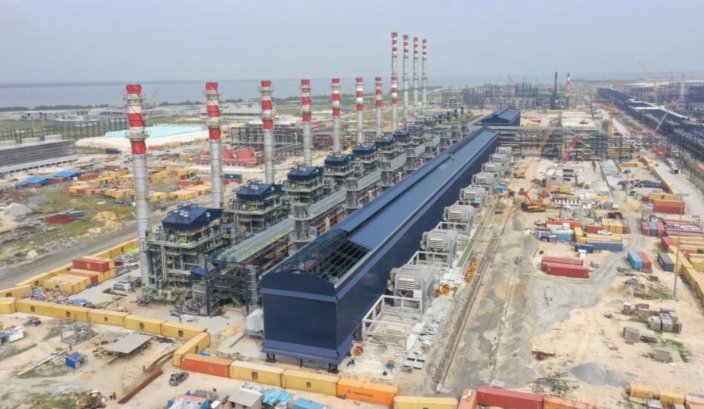
The Ajaokuta–Kaduna–Kano pipeline is one of the most important components of Nigeria’s domestic gas strategy.
The project stretches approximately 614 kilometres from Ajaokuta through Abuja and Kaduna to Kano.
It is designed to transport about 2 billion standard cubic feet of gas per day.
The route connects several economically important areas.
Ajaokuta is associated with Nigeria’s steel and industrial ambitions.
Abuja is a rapidly growing capital city with substantial commercial and power demand.
Kaduna has an established manufacturing base.
Kano is one of northern Nigeria’s largest commercial markets and has a long history in textiles, food processing, trade and light industry.
Reliable gas could improve the economics of industrial projects in each of these locations.
The pipeline could reduce fuel costs, support power generation and attract companies that previously viewed northern Nigeria as too expensive or energy-constrained.
However, the pipeline will not create an industrial boom by itself.
Factories must be connected.
Power plants must be operational.
Gas producers must supply sufficient volumes.
Customers must be capable of paying.
The project’s real success will be measured by commercial utilisation, not only physical completion.
Last-Mile Connections Will Determine Commercial Success
Large transmission pipelines transport gas over long distances.
They do not automatically deliver it to every factory, power plant or commercial customer.
Additional infrastructure will be needed along the AKK corridor.
This may include:
- Lateral pipelines
- Pressure-reduction stations
- Metering systems
- City gas networks
- Industrial connections
- Compression facilities
- Storage
- Customer equipment
These investments create a major opportunity for private companies.
Gas-distribution businesses could develop networks around industrial estates, city centres and large commercial users.
Companies with experience in gas marketing and infrastructure may be well positioned to compete.
Potential participants include:
- NNPC Gas Marketing Limited
- Nigerian Gas Infrastructure Company
- Axxela Limited
- Shell Nigeria Gas
- NIPCO Gas
- HCGDBL
- Other domestic and regional developers
Their involvement will depend on formal procurement, concessions or partnership structures.
Possible models could include joint ventures, public-private partnerships, build-own-operate agreements and long-term transportation contracts.
City Gas Distribution Could Become a Growth Market
City gas systems could supply businesses, residential estates and commercial kitchens in high-density areas.
Instead of each customer relying on cylinders or diesel generators, a distribution company could supply gas through a local network.
This model has been used in several international markets.
For Nigeria, the strongest early opportunities may be located in industrial zones where large customers can provide stable demand.
City gas projects require substantial planning.
Developers must assess:
- Customer concentration
- Pipeline route
- Safety standards
- Tariffs
- Land access
- Metering
- Payment systems
- Maintenance
- Emergency response
The economics work best where customers consume predictable volumes.
Industrial parks may therefore be easier to serve than dispersed households during the early stages.
Compressed Natural Gas Extends the Market
Compressed natural gas could help serve customers that are not immediately connected to the pipeline.
Gas can be compressed at a central location, transported by road and delivered to industrial users or filling stations.
This creates a virtual pipeline.
The system can support:
- Commercial vehicles
- Bus fleets
- Logistics companies
- Small factories
- Remote power plants
- Industrial estates
CNG opportunities may include:
- Compression stations
- Vehicle conversion
- Cylinder storage
- Transport trailers
- Fleet contracts
- Maintenance services
Nigeria has already increased its emphasis on CNG as an alternative to petrol and diesel.
The AKK corridor could provide additional supply for that programme.
However, the market will depend on infrastructure density.
Customers are unlikely to convert vehicles or equipment if refuelling stations are scarce.
Developers must therefore coordinate supply, distribution and user adoption.
Gas-Fired Power Could Anchor Demand
Power generation may become one of the largest sources of gas demand along the pipeline.
Nigeria has several planned or existing power projects around Abuja, Kaduna and Kano.
A reliable pipeline could improve their fuel supply.
Gas-fired plants can also provide stable electricity for industrial parks.
However, Nigeria’s power sector has long faced payment and transmission problems.
Gas producers may supply fuel to generators that are not paid fully by electricity distributors.
This creates financial risk across the value chain.
A bankable gas-to-power project needs:
- Reliable gas supply
- Strong transportation agreements
- Functional generation equipment
- Transmission capacity
- Creditworthy buyers
- Enforceable payment structures
- Cost-reflective tariffs
Without these conditions, gas may be available but power generation may remain constrained.
The most successful projects may involve dedicated industrial customers rather than relying only on the national electricity market.
Fertiliser Investment Could Support Agriculture
Natural gas is a key raw material in fertiliser production.
Nigeria has a large agricultural sector and strong demand for urea and other fertilisers.
Northern Nigeria is especially important because of its farming base.
Building fertiliser plants closer to agricultural markets could reduce transport costs and improve supply reliability.
The AKK pipeline may support such investments if producers can secure long-term gas contracts.
Fertiliser plants are capital intensive.
They require:
- Reliable feedstock
- Large financing
- Export or domestic markets
- Efficient transport
- Skilled operations
- Strong environmental controls
The opportunity is substantial, but investors will require confidence in gas availability and pricing.
Petrochemicals Could Add More Value Locally
Petrochemical development offers another route for converting gas into higher-value products.
Gas components can be used to manufacture:
- Plastics
- Packaging materials
- Solvents
- Industrial chemicals
- Synthetic materials
- Pharmaceutical inputs
- Construction products
Nigeria currently imports many manufactured goods derived from hydrocarbons.
Producing more of these items domestically could reduce imports and support industrial employment.
The strongest petrochemical projects will likely be integrated with gas processing and large industrial clusters.
They may also target export markets across West Africa.
Steel and Cement Could Gain From Reliable Energy
Steel and cement require large amounts of power and heat.
Nigeria’s construction and infrastructure needs create substantial demand for both products.
The AKK pipeline could help reduce fuel costs for existing or future plants.
Ajaokuta is especially relevant because of the long-delayed steel complex located there.
Gas availability could support energy requirements, but it would not automatically resolve the project’s broader operational and financial challenges.
Steel production also requires modern equipment, raw materials, working capital and professional management.
Cement producers could use gas to replace more expensive fuels in certain processes.
Stable energy pricing would improve planning and competitiveness.
Industrial Parks Could Concentrate Investment
Industrial parks may become the most effective way to turn the pipeline into economic activity.
Rather than connecting factories scattered across large areas, developers can build clusters around shared infrastructure.
An industrial park can provide:
- Gas
- Electricity
- Water
- Waste management
- Roads
- Security
- Warehousing
- Customs services
- Maintenance
This reduces setup costs for individual investors.
It also makes gas distribution more efficient because several customers are located within one area.
Potential sectors may include:
- Food processing
- Textiles
- Building materials
- Fertiliser
- Chemicals
- Metal fabrication
- Consumer goods
Abuja, Kaduna and Kano could all support specialised industrial zones.
The choice of location should reflect demand, transport access and available labour.
Northern Nigeria Could Attract New Capital
The AKK corridor could reduce the historic concentration of gas-based industry in southern Nigeria.
Northern states have large consumer markets, agricultural resources and commercial centres.
However, high energy costs have limited industrial growth.
Reliable gas could change investment calculations.
Manufacturers may choose to locate closer to raw materials and customers rather than transporting products from the south.
This could support regional economic diversification.
Possible benefits include:
- Factory investment
- Construction activity
- Logistics growth
- Warehousing
- Skills training
- Local tax revenue
- Employment
- Supplier development
Kano may be particularly well positioned because of its size and trading history.
Kaduna could benefit from its existing industrial infrastructure.
Abuja offers a large commercial market and proximity to government institutions.
Gas as a Transition Fuel
Nigeria views natural gas as a bridge between its oil-dependent economy and a lower-carbon energy system.
The country still faces severe energy poverty.
Businesses and households need reliable electricity while renewable infrastructure continues to expand.
Gas can provide flexible power and replace some diesel use.
However, its climate benefits depend on controlling methane emissions.
Methane leaks during production and transportation can significantly increase the environmental impact of gas.
Nigeria will need stronger systems for:
- Methane detection
- Pipeline maintenance
- Flaring reduction
- Measurement
- Environmental reporting
- Emergency response
Gas investment should also complement solar, hydro and other renewable projects.
It should not prevent the development of cleaner technologies.
What the Strategy Means for Investors
Nigeria offers a large and complex opportunity.
The country has hydrocarbons, infrastructure, technical expertise and domestic demand.
Few African markets provide all four at the same scale.
Upstream investors could gain access to oil and gas acreage.
Midstream companies could build processing, transmission and distribution systems.
Industrial investors could use gas for power and manufacturing.
Financial institutions could fund projects across the value chain.
However, investment risks remain significant.
Security Risk
Onshore petroleum assets have faced theft, sabotage and community disputes.
Companies may need substantial security spending.
Regulatory Risk
Investors need consistent interpretation of the Petroleum Industry Act and related rules.
Unexpected changes can affect project economics.
Currency Risk
Projects may require dollar financing while earning some revenue in naira.
Exchange-rate movements can increase costs.
Payment Risk
Power companies and industrial customers may struggle to meet payment obligations.
Long-term contracts require strong credit protection.
Infrastructure Risk
A project may depend on a pipeline, processing plant or power network controlled by another entity.
Delays elsewhere can affect the investment.
What Nigerian Companies Stand to Gain
Domestic businesses could benefit across the entire energy chain.
Upstream service opportunities may include:
- Drilling
- Engineering
- Fabrication
- Marine logistics
- Environmental services
- Security
- Maintenance
- Data analysis
Midstream companies may participate in:
- Pipeline construction
- Compression
- Metering
- Storage
- Gas distribution
- CNG
- Processing
Manufacturers could benefit from lower energy costs.
Banks and institutional investors could finance infrastructure and industrial projects.
Professional firms may provide legal, tax, technical and advisory services.
This means the economic effect could extend well beyond the petroleum industry.
Policy Conditions for a Successful Investment Cycle
Nigeria must create the right commercial environment if the strategy is to succeed.
Transparent Bidding
The licensing round should use clear criteria, public deadlines and equal access to data.
Strong Bidders
Awards should favour companies capable of investing and developing resources.
Competitive Gas Prices
Prices must reward producers while remaining affordable for industrial customers.
Third-Party Access
Independent companies should be able to access pipelines on transparent terms where capacity exists.
Reliable Contracts
Investors need confidence that agreements will be enforced.
Community Engagement
Local communities should receive clear information and agreed benefits.
Regulatory Coordination
Upstream, midstream and power regulators must work together.
What Success Should Look Like
Nigeria should measure the programme through real economic results.
Important indicators include:
- Wells drilled
- Reserves added
- Production increased
- Gas transported
- Factories connected
- Power generated
- Industrial parks developed
- Jobs created
- Government revenue collected
- Local companies participating
- Flaring reduced
These measures provide a clearer picture than announcements or construction percentages.
A licensing round is successful when blocks enter production.
A pipeline is successful when customers receive gas.
An industrial policy is successful when factories operate competitively.
What Comes Next
Several developments will determine whether the strategy advances.
The first is the official launch of the 2026 licensing round.
Investors will examine the block list, commercial terms and timetable.
The second is the conclusion of the 2025 bidding process.
Efficient completion would strengthen confidence.
The third is the commissioning of the AKK pipeline.
The market will watch for testing, first gas and contracted capacity.
The fourth is the signing of off-take agreements.
Power plants and manufacturers must commit to purchasing gas.
The fifth is the development of distribution networks.
Last-mile infrastructure will determine how many customers benefit.
The sixth is industrial investment.
New plants and industrial parks will provide the strongest evidence that the pipeline is changing the economy.
Expert Analysis
Nigeria’s energy strategy is moving toward a more integrated model.
The country is no longer focusing only on extracting hydrocarbons.
It is attempting to connect production with infrastructure and domestic demand.
That is economically important.
Raw exports generate government revenue, but gas-based industries can create deeper value chains.
A fertiliser plant supports agriculture.
A steel plant supplies construction.
Reliable electricity supports thousands of businesses.
A city gas network can reduce fuel costs.
The AKK pipeline could become the physical backbone of this strategy.
The licensing round could provide the upstream supply.
Yet the two initiatives must be coordinated.
A pipeline without gas supply will be underused.
Gas discoveries without customers will remain undeveloped.
Factories without reliable pricing will not invest.
The greatest risk is not resource scarcity.
It is failure to align producers, infrastructure and users.
Nigeria’s advantage is scale.
Its population creates demand.
Its gas reserves provide supply.
Its cities offer markets.
Its industrial deficit creates opportunity.
If regulations are transparent and projects are executed effectively, the country could attract one of Africa’s largest energy and industrial investment cycles.
Frequently Asked Questions
What are Nigeria’s 2026 energy reforms?
They include the planned upstream licensing round and efforts to expand domestic gas infrastructure and utilisation.
When will the licensing round begin?
The exercise is expected to commence in the third quarter of 2026, subject to approval and publication of final terms.
What is the AKK pipeline?
It is a 614-kilometre gas pipeline connecting Ajaokuta with Abuja, Kaduna and Kano.
How much gas can the pipeline transport?
The project is designed to carry about 2 billion standard cubic feet of gas per day.
Which companies may participate?
Meren Energy has expressed public interest. Other international and Nigerian operators may evaluate the opportunity, but participation remains unconfirmed until formal announcements are made.
Which industries could benefit?
Power, fertiliser, steel, cement, petrochemicals, transport and general manufacturing could benefit from reliable gas supplies.
What are the main investment risks?
Major risks include security, project delays, currency volatility, weak payment systems, uncertain gas pricing and incomplete last-mile infrastructure.
Conclusion
Nigeria energy reforms could mark a shift from a petroleum economy focused on crude exports toward one built around domestic gas and industrial production.
The 2026 licensing round may bring new capital into exploration and field development.
The AKK pipeline could move gas into central and northern markets that have long faced high energy costs.
Together, the initiatives create opportunities for producers, pipeline companies, gas distributors, power developers, manufacturers and financiers.
The strategy could support industrial parks, fertiliser plants, steel production, city gas systems and compressed natural gas networks.
However, the opportunity will depend on execution.
Winning bidders must drill.
The pipeline must deliver gas.
Factories must be connected.
Customers must sign bankable contracts.
Regulators must provide stable and transparent rules.
If Nigeria can align these elements, it could establish a new model for African energy development in which natural resources support domestic production, regional growth and long-term economic diversification.
-ALEX RICHARDSON