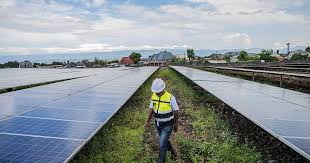
A new wave of community solar projects is democratizing access to clean power across the nation. These initiatives allow multiple participants to benefit from a single, off-site solar array. Consequently, subscribers receive credits on their electricity bills without installing panels on their property. This model is particularly transformative for renters, low-to-moderate income households, and those with unsuitable roofs. The expansion of community solar is a significant trend in the renewable energy sector. Moreover, federal and state incentives are accelerating deployment. Industry analysts report record growth in subscriber numbers over the past fiscal year. Therefore, the traditional barriers to solar adoption are rapidly falling.
How Community Solar Projects Function
The operational model is straightforward. First, a developer installs a medium-to-large-scale solar array in a suitable location. This location could be a capped landfill, a commercial rooftop, or a dedicated field. Then, utility customers within the same geographic area can subscribe to a portion of the array’s output. Importantly, they are not buying the physical panels. Instead, they are purchasing the electricity those panels generate. The local utility company manages the flow of energy and the billing credits. Each subscriber’s share of the power produced is directly subtracted from their monthly utility bill. This process provides immediate savings and requires no long-term commitment from most participants.
Breaking Down Economic and Physical Barriers
Historically, the high upfront cost of rooftop solar placed it out of reach for many families. Community solar directly addresses this financial hurdle. Subscribers typically pay little or no enrollment fee. Additionally, they lock in a discounted rate on the solar portion of their power, leading to predictable savings. For example, a typical household might save between 5% and 15% annually on their electricity costs. Physically, many homes are not viable for rooftop solar due to shading, roof orientation, or structural issues. Multi-tenant buildings also present a unique challenge. By being location-agnostic, community solar projects solve these physical constraints. Essentially, they unlock the potential for anyone with an electricity bill to participate in the clean energy transition.
Policy Drivers and Legislative Support
Government policy remains a primary catalyst for the community solar boom. The federal Investment Tax Credit (ITC) continues to provide a crucial financial foundation for project developers. Simultaneously, state-level legislation is creating fertile ground for growth. Over twenty states have now enacted laws that support or mandate community solar programs. These laws often include provisions for “virtual net metering,” the billing mechanism that makes subscriptions possible. Furthermore, many states are incorporating equity goals into their program designs. For instance, some legislation mandates that a certain percentage of a project’s capacity be reserved for low-income subscribers. This legislative framework ensures that benefits are distributed broadly across the socioeconomic spectrum.
The Role of Utilities and Grid Stability
Initially, some utility companies viewed distributed solar as a threat to their business model. However, perspectives are evolving as the grid transforms. Many utilities now actively partner with community solar developers. They recognize the value of adding localized, predictable generation to the grid, especially during peak demand periods. This diversified generation enhances overall grid resilience. Additionally, community solar farms can be strategically sited to reduce congestion on transmission lines. This siting improves efficiency and defers costly infrastructure upgrades. From a reliability standpoint, distributed resources like community solar create a more robust and less centralized system. Ultimately, this benefits all ratepayers, not just project subscribers.
Future Challenges and Market Evolution
Despite rapid growth, the community solar sector faces several challenges. Interconnection queues, the process of connecting new generation to the grid, are often lengthy and backlogged. Regulatory uncertainty in some states also hinders long-term investment. Additionally, market saturation is a potential concern in early-adopter regions. Nevertheless, innovation continues to drive the industry forward. New financing models are emerging to reduce capital costs further. Also, pairing solar arrays with battery storage is becoming more common. This pairing allows projects to deliver power during evening hours, increasing their value. The next phase of growth will likely focus on integrating these hybrid systems and streamlining the subscriber experience through digital platforms.
Community solar projects represent a pragmatic and inclusive step toward a cleaner energy future. They align economic savings with environmental benefits for a broad demographic. As technology advances and policy support solidifies, their role in the national energy mix will only expand. The model proves that the benefits of renewable energy need not be exclusive to property owners. Instead, they can be shared by entire communities, fostering collective progress toward sustainability goals. The continued success of these initiatives depends on collaborative efforts between developers, utilities, policymakers, and consumers. Their collective action will determine the pace and equity of the renewable energy transition.