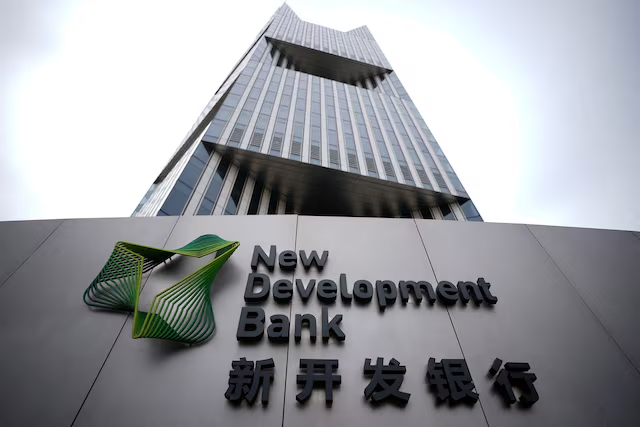
Mumbai — The New Development Bank (NDB), backed by BRICS nations, is preparing to launch its first Indian rupee-denominated bond in the domestic market by the end of March 2026, according to sources familiar with the matter. The move marks a milestone in both India’s push to internationalise the rupee and the broader BRICS agenda of reducing reliance on the U.S. dollar.
The multilateral lender is expected to raise between $400 million and $500 million through 3-5 year bonds in its initial tranche. While final approvals from the Reserve Bank of India (RBI) are pending, NDB executives have confirmed they are working closely with regulators to enable the issuance.
Local currency financing strategy
The rupee bond plan is part of NDB’s 2022–2026 strategy, which commits to providing 30% of financing in member-country currencies. The bank has already tapped Chinese yuan and South African rand markets successfully, raising nearly a third of its $11 billion funding this way. India now becomes the next step in that diversification.
Monale Ratsoma, NDB’s Chief Financial Officer, told Reuters the bank is seeking to provide “local currency finance for Indian projects,” but declined to disclose details of the issuance.
Market experts say the offering could appeal to investors seeking emerging-market exposure and those aligning with the de-dollarisation trend, as global powers like China and India push to elevate their currencies in international trade and finance.
Impact on India’s bond market
Analysts note that the issuance will add depth and liquidity to India’s onshore bond market, already one of Asia’s largest. The move comes as the Indian government and RBI step up reforms, including new rules for foreign funds and a drive to expand investment options for rupee holdings.
“This is both symbolic and practical,” said Vivek Rajpal, Asia strategist at JB Drax Honore. “It boosts India’s credibility as a capital market hub while also aligning with the broader BRICS rupee bond agenda of reducing dollar dependency.”
Strategic timing
NDB had earlier considered entering the rupee market in 2023, but delays in government and central bank clearances pushed the plan back. The renewed push comes amid heightened interest from global investors in alternative currencies and diversification beyond developed markets.
By tapping the rupee market now, NDB is not only bolstering its balance sheet but also signaling confidence in India’s macroeconomic trajectory, with steady growth, improving fiscal stability, and rising global influence.
If successful, the issuance will position India as a key financing hub within BRICS, further strengthening the rupee’s role in international capital markets.