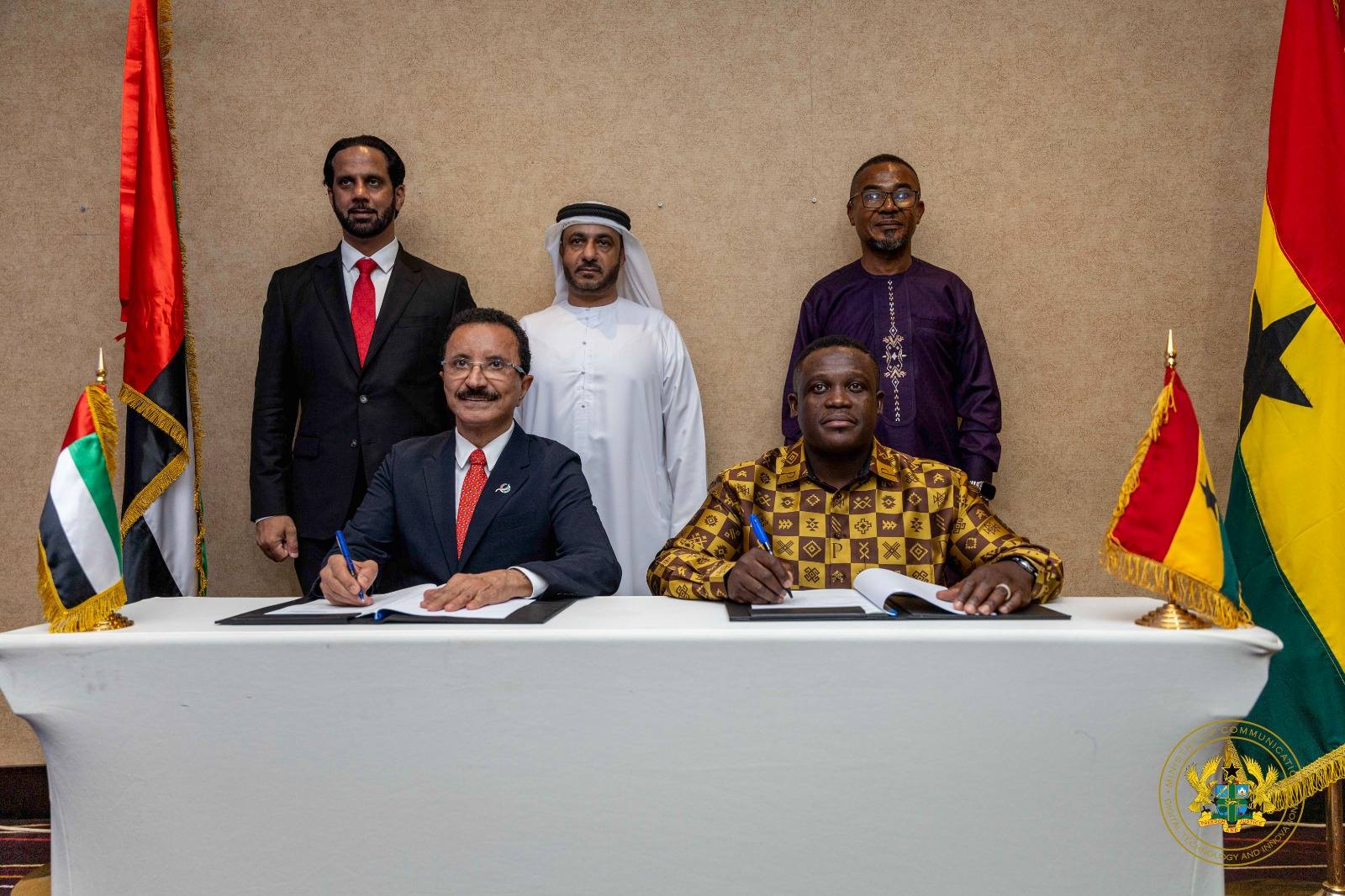
Ghana has signed a landmark $1bn strategic investment agreement with the United Arab Emirates to develop what is being positioned as Africa’s largest integrated innovation and artificial intelligence hub. The ambitious project is designed to transform Ghana into a leading regional technology powerhouse while strengthening Africa’s role in the global digital economy.
The initiative reflects a growing shift toward long-term, infrastructure-led technology investment in Africa, combining artificial intelligence, digital connectivity, startup capital, renewable energy, and skills development into a single, large-scale ecosystem. Once operational, the hub is expected to serve not only Ghana but also West Africa and international markets.
A Long-Term Vision for Ghana’s Digital Economy
The hub will be developed in Ningo–Prampram in Ghana’s Greater Accra Region, with construction scheduled to begin in 2026. Under the agreement, Ghana will provide the land and policy framework, while the UAE will finance, develop, and oversee construction through the Ports, Customs and Free Zone Corporation (PCFC).
Rather than a conventional technology park, the project is conceived as a fully integrated innovation city. It is expected to host artificial intelligence research, advanced computing, startup incubation, digital services, and enterprise operations, while also supporting business process outsourcing and knowledge-based services.
For Ghana, the deal reinforces a long-standing ambition to position itself as a gateway for technology investment in West Africa. The country has already made strides in fintech, digital public services, and startup development, and officials see the hub as a catalyst that can accelerate these trends at scale.
Artificial Intelligence at the Core
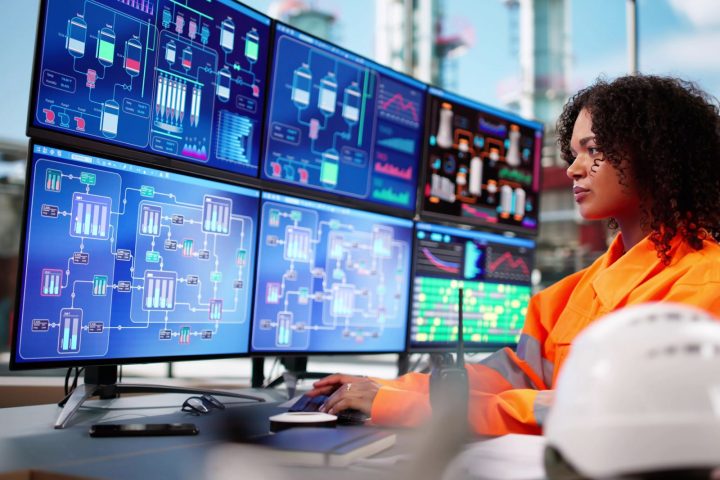
Artificial intelligence is central to the project, with around $400m of the total investment allocated to AI and advanced computing infrastructure. A flagship component is a $180m AI Compute Hub to be developed by G42, a leading Abu Dhabi–based technology group.
The compute hub will provide high-performance infrastructure capable of supporting large-scale AI training, data analytics, and machine-learning workloads. It will be powered by renewable energy and use liquid-cooling systems to reduce energy consumption, aligning with global efforts to make AI infrastructure more sustainable.
Another $100m will fund the development of a national AI-powered digital identity system for Ghana, built using Falcon large language models through AI71. The system is expected to support secure digital services, financial inclusion, and public sector efficiency.
A further $120m will go toward establishing a Ghana AI Startup Studio in partnership with Hub71, with the goal of attracting, incubating, and scaling up to 100 AI-focused startups by 2030.
Expanding Digital and Connectivity Infrastructure
Beyond AI, the agreement places strong emphasis on digital infrastructure, with approximately $350m earmarked for large-scale connectivity and data investments.
Plans include $150m for the deployment of 5G networks in three major urban centres, led by e& UAE. Improved connectivity is expected to support cloud computing, AI services, and digitally enabled industries across Ghana.
Another $120m will be invested in building a Tier IV hyperscale data centre, providing secure, high-availability capacity for government, enterprise, and global technology firms. In parallel, $80m will fund renewable, AI-optimised power systems delivered by Masdar Digital, ensuring reliable and low-carbon energy supply.
The project also includes satellite internet connectivity for rural innovation hubs, a move aimed at reducing the urban–rural digital divide and extending participation in the digital economy beyond major cities.
Building Talent, Capital, and Innovation Ecosystems
To support sustainable growth, $250m has been allocated to talent development, innovation, and capital formation. This includes $75m for a Ghana–UAE AI and Web3 campus supported by the Dubai Future Foundation, focusing on research, training, and collaboration between academia, startups, and industry.
An additional $100m will capitalise a Ghana Startup Fund backed by ADQ and Chimera Capital, providing growth funding for Ghanaian and regional startups. A further $75m will support an annual UAE–Ghana Innovation and AI Summit, known as GAIX, designed to attract global investors, technology leaders, and policymakers.
Attracting Global Technology Players
Officials involved in the project say the hub is intended to attract multinational technology companies seeking an African base for AI, data, and digital services. Firms such as Microsoft, Meta, Oracle, IBM, and Alphabet have been identified as potential participants.
At the same time, the hub is expected to strengthen local enterprise capacity through skills transfer, partnerships, and exposure to global best practices. Thousands of high-value jobs could be created across AI engineering, software development, data science, and digital services.
A Broader Signal for Africa’s Tech Future
The Ghana–UAE agreement highlights Africa’s growing appeal as a destination for large-scale technology investment. For the UAE, the deal aligns with its strategy to expand its global technology footprint through partnerships in emerging markets. For Ghana, it represents one of the largest single technology investments in the country’s history.
With construction set to begin in 2026, the project sends a strong signal of confidence in Ghana’s economic and digital prospects. More broadly, it reflects a belief that Africa can move beyond being a consumer of technology to become a producer of innovation, data, and AI-driven solutions for the world.