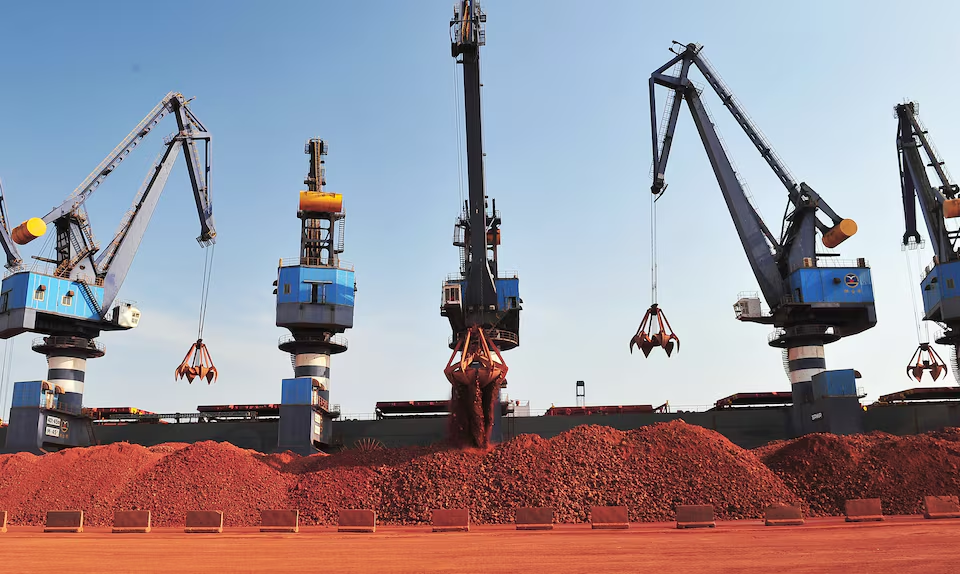
Guinea bauxite exports rose dramatically by 25% in 2025, reaching 182.8 million metric tons. This surge solidifies the West African nation’s position as the world’s dominant supplier of aluminium ore. According to official data reviewed by Reuters, the growth is almost entirely driven by insatiable Chinese industrial demand. Consequently, China received a record 74% of all shipments from Guinea last year. This trend underscores a major shift in global commodity flows and supply chain geopolitics. Moreover, the increased output from Guinea is applying significant downward pressure on global alumina prices. The data reveals that 23 separate companies were responsible for the shipments throughout the year.
China’s Dominant Role in Guinea’s Mining Sector
Chinese firms are the primary engine behind the export boom. China’s aluminium giant Chalco led all shippers, exporting 22.1 million tons of bauxite in 2025. Overall, Chinese customs figures show the country’s total bauxite imports jumped 26.4% to 200.5 million tons, with Guinea as the cornerstone supplier. Analysts at Citi noted that by November, Guinea had supplied China with over 150 million tons. This volume constituted more than 80% of the feedstock required for China’s vast network of aluminium smelters. Therefore, Guinea’s strategic importance to Chinese manufacturing and construction is now undeniable. This relationship extends beyond bauxite, as China also controls major stakes in Guinea’s iron ore, gold, and lithium projects.
Major Players and Export Volume Breakdown
While Chinese entities are prominent, the export landscape features a mix of international consortia and local ventures. Following Chalco, the Compagnie des Bauxites de Guinée (CBG) shipped 17.4 million tons. CBG is majority-owned by a consortium including mining titans Rio Tinto and Alcoa. Significantly, Guinea’s first private bauxite exporter, Société Minière de Boké (SMB), and the Guinean-owned AGB2A/SDM joint venture each exported 17.0 million tons. This distribution indicates a competitive and diversified market within the country. However, exports did show signs of moderating in the second half of the year, though they still climbed 16% to 84 million tons. Weekly data from mid-January 2026 confirms the continued high volume of shipments.
Global Market Impact and Price Dynamics
The sheer scale of Guinea bauxite exports is reshaping global markets. The country officially overtook Australia as the world’s top bauxite exporter in 2023, according to BMI Research. Its persistent double-digit output growth has directly weakened global alumina prices. For instance, Shanghai alumina futures plummeted by 48% in the first ten months of 2025. This price drop occurred alongside Chinese government policies capping domestic aluminium smelting capacity. The increased supply of raw ore, meeting a plateau in processing demand, created a buyer’s market. As a result, profit margins for alumina refiners outside China have been squeezed. This dynamic presents both challenges and opportunities for the global aluminium industry’s supply chain.
Guinea’s Economic Strategy and Future Plans
Guinean authorities are actively planning to capture more value from their mineral wealth. The mines minister told Reuters in November that the government is accelerating plans to build domestic alumina refineries and iron-ore pellet plants. This industrial policy aims to reduce the export of raw, unprocessed ore and develop local job-creating industries. Importantly, the export boom is already improving state finances. Bernabe Sanchez, a principal economist at CPCS, cited Guinea’s budget ministry projections for a 40% rise in state revenues for 2025. He expects strong exports to continue as newer state-associated projects, like the Nimba and Axis Mining operations, ramp up their production phases.
Geopolitical and Infrastructure Considerations
The concentration of Guinea bauxite exports to a single destination raises geopolitical and logistical questions. China’s tightening grip on Guinea’s resources, including its controlling stake in the massive Simandou iron ore project, illustrates a strategic long-term play for resource security. This dependency creates both leverage and vulnerability for Guinea’s economy. Furthermore, maintaining and expanding the export infrastructure is a constant challenge. The sector relies on efficient railways and ports to move millions of tons of ore. Any disruption in this logistics chain could have immediate global repercussions. Observers will watch how Guinea manages its partnerships and infrastructure to ensure stability and potentially diversify its customer base over time.
Guinea’s record-breaking export performance in 2025 highlights its pivotal role in the global aluminium industry. The figures demonstrate a clear and powerful demand signal from Chinese industry. Meanwhile, the Guinean government is navigating how to translate this export volume into sustainable, broad-based economic development. The planned move into domestic refining could alter future trade patterns. For now, the world’s aluminium supply chain runs increasingly through Conakry. The ongoing balance between raw material extraction and value-added processing will define the next chapter for Guinea’s mining sector. Market analysts anticipate exports will remain at elevated levels throughout 2026, barring major geopolitical or economic shocks.