Across West Africa, the quest for industrial growth is increasingly shaped by one defining factor: reliable and affordable energy. As countries seek to expand manufacturing, strengthen regional trade, and lift millions into productive employment, natural gas is emerging as a pragmatic engine of transformation rather than a contradiction to climate ambition.
In Ghana and across the subregion, gas is no longer viewed merely as a by-product of oil production. Instead, it is becoming a strategic asset—one capable of closing energy gaps, lowering production costs, and anchoring long-term industrial competitiveness. Financial institutions, particularly Stanbic Bank Ghana through its Corporate and Investment Banking arm, are playing a central role in turning this potential into reality.
Gas as a Foundation for Industrial Expansion
West Africa’s industrial ambitions depend on power systems that are stable, scalable, and affordable. For many countries in the region, gas offers a realistic pathway to meet these needs. Nations such as Ghana and Nigeria produce significant volumes of natural gas as a by-product of crude oil extraction. When left unused or flared, this gas causes environmental damage and represents lost economic value.
By capturing and utilizing this resource, governments can generate cleaner and cheaper electricity compared to diesel or heavy fuel oil. Gas-fired power plants also provide the flexibility required to support industrial loads, making them well suited for economies transitioning from primary production toward manufacturing and value addition.
As Musah Abdallah, Executive Head of Corporate and Investment Banking at Stanbic Bank Ghana, has noted, gas should be understood as a long-term enabler of growth rather than a temporary fix. Its role is to unlock productivity today while creating the fiscal and industrial base needed for a future shift toward renewables.
Building the Infrastructure That Makes Growth Possible
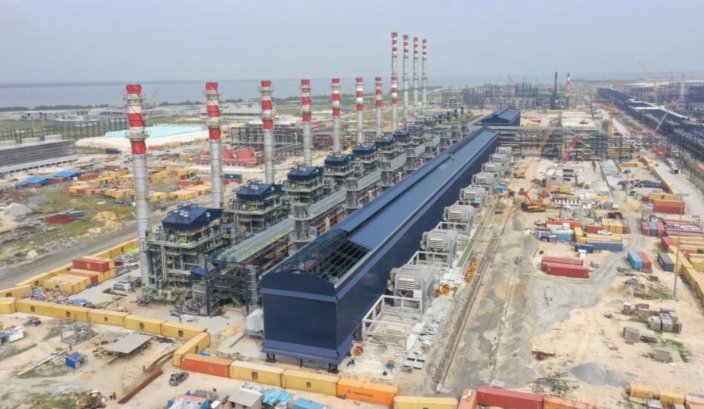
Energy transition is not only about fuel choice—it is fundamentally about infrastructure. Across West Africa, decades of underinvestment have left power systems fragmented and inefficient. Much of the existing infrastructure was originally designed for diesel and heavy fuel oil, but these systems can be upgraded into dual-fuel plants capable of running on gas.
Stanbic Bank has been instrumental in supporting this transition by financing gas pipelines, processing facilities, and the dualization of thermal power plants. In Ghana, most thermal plants are now capable of switching between fuels, with gas increasingly becoming the preferred option. Around 70 percent of the country’s power generation already relies on gas, reflecting a steady move toward cleaner and more cost-efficient energy.
Support for companies such as Genser Energy has enabled the construction of pipelines that deliver gas directly to power producers. These investments reduce reliance on imported fuels, stabilize electricity supply, and lower costs for industries ranging from mining to manufacturing.
Powering Industry Beyond National Borders
The implications of gas infrastructure extend beyond national economies. West Africa’s energy deficit remains significant, and regional integration offers an opportunity to maximize the value of existing resources. Gas can be used to generate electricity locally or transported across borders through established systems such as the West African Gas Pipeline.
Ghana has already begun exporting gas-generated electricity to neighboring countries, including Côte d’Ivoire, under structured trade agreements. These arrangements strengthen regional cooperation, improve energy security, and create new revenue streams. They also position West Africa as a more credible participant in global industrial supply chains.
However, cross-border energy trade is not without challenges. Transmission losses, regulatory differences, and political instability can complicate regional projects. Addressing these risks requires strong institutions, long-term planning, and financiers capable of structuring resilient solutions across multiple jurisdictions.
Gas as a Bridge, Not the Destination
While gas is playing a critical role today, policymakers and financiers increasingly emphasize that it is not the final destination. Instead, it serves as a bridge toward a lower-carbon future. Ghana’s policy direction underscores this thinking. The transformation of the Ministry of Energy into the Ministry of Energy and Green Transition signals a commitment to decarbonization alongside growth.
Major national initiatives, including plans for accelerated infrastructure investment and a 24-hour economy, depend on stable electricity supply. Gas-powered infrastructure provides the reliability needed to make these ambitions viable, while renewable capacity is expanded in parallel.
This sequencing matters. A rushed transition risks energy shortages, job losses, and stalled industrialization. A gradual approach anchored in gas allows economies to grow first, then reinvest in cleaner technologies as resilience improves.
Financing the Transition Responsibly
The role of finance is central to this strategy. Guided by ESG principles, Stanbic Bank aims to achieve net-zero emissions across its lending portfolio by 2050. To do so, it is developing transition-finance frameworks that support gas infrastructure today while paving the way for renewable investments tomorrow.
Innovative instruments such as green bonds, blended finance, and public-private partnerships help de-risk projects and attract global capital. Interest from international investors—including South African, American, and Chinese institutions—is growing, supported by Standard Bank’s broader global relationships, including ties with Industrial and Commercial Bank of China.
These partnerships expand access to long-term capital, enabling West African countries to finance the infrastructure needed for sustained industrial growth.
Laying the Groundwork for Long-Term Prosperity
For Ghana and its neighbors, investing in gas is not a retreat from climate responsibility, nor is it a delay tactic. It is a strategic choice rooted in current realities—energy poverty, industrial underdevelopment, and fiscal constraints. By using gas to stabilize power systems and support manufacturing, countries can build the economic foundations required for a successful green transition.
With targeted infrastructure investment, regional cooperation, and disciplined financing, gas is helping West Africa move from energy scarcity toward industrial competitiveness. Supported by institutions like Stanbic Bank, the region is positioning itself not just to grow, but to grow with purpose—laying the groundwork for a more resilient, diversified, and sustainable economic future.