ABUJA: Nigeria’s headline consumer inflation slowed marginally in February, reaching 15.06 percent year-on-year from 15.10 percent in January. The National Bureau of Statistics released the data on Monday, confirming the 11th consecutive monthly slowdown for the Nigeria inflation rate. However, the declines in January and February were marginal compared to previous months. The statistics agency recently adopted a revamped methodology for its calculations, now using a 12-month reference period instead of a single month.
The central bank resumed monetary policy easing last month with a small interest rate cut. It expects inflation to continue falling throughout the year. Officials cite the lagged transmission of previous monetary tightening, exchange rate stability, and enhanced food supply as key factors helping to bring down prices. The marginal nature of the latest decline suggests the disinflation process may be losing momentum.
Food Inflation Picks Up Sharply
Food inflation, which has been the main driver of headline inflation in Africa’s most populous country, accelerated significantly in February. The rate jumped to 12.12 percent year-on-year from 8.89 percent in January, according to the NBS. This sharp increase highlights ongoing pressures in the food supply chain despite government efforts to boost agricultural production.
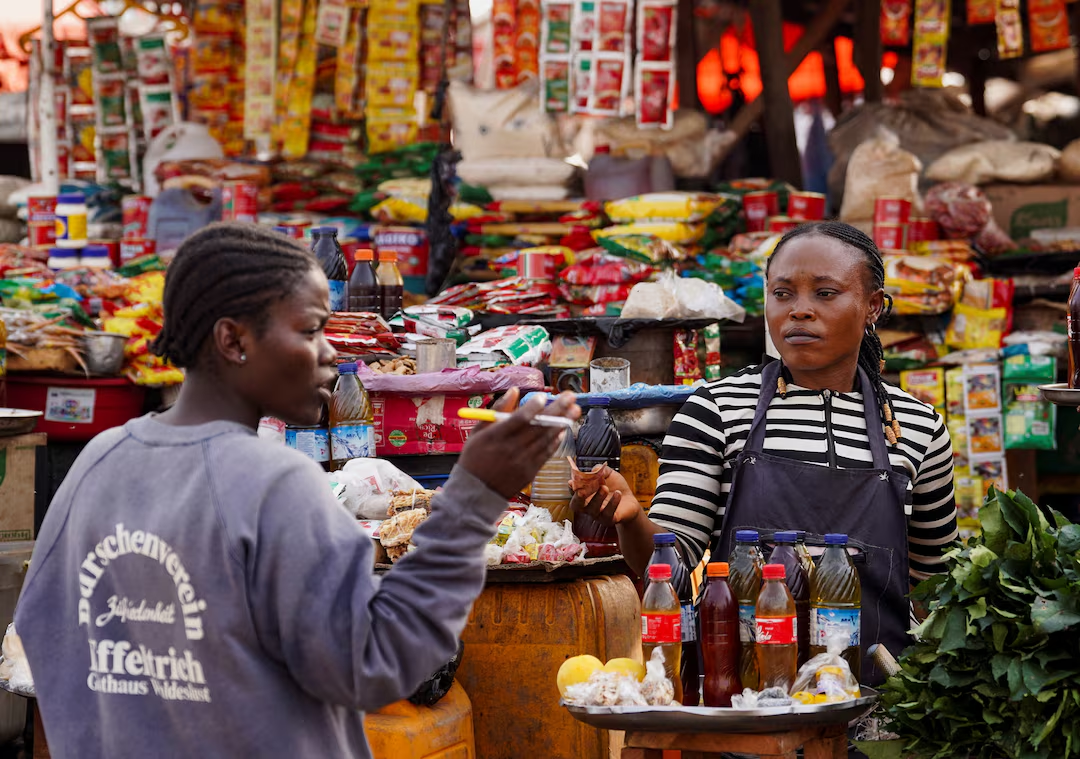
Food vendors at markets across the country report mixed trading conditions. At the Gwari market in Minna, Niger State, transactions continued but many customers purchased smaller quantities. The food component carries significant weight in the consumer price index calculation. Its acceleration raises questions about the sustainability of the overall disinflation trend. Analysts will watch closely to see if this represents a temporary blip or a more lasting reversal.
Central Bank Policy Response
The Monetary Policy Committee last month reduced the benchmark interest rate for the first time in several years. The move signaled confidence that the Nigeria inflation rate was on a firm downward path. Policymakers judged that previous aggressive tightening had worked through the system sufficiently to allow for a modest easing.
Central bank officials emphasize that exchange rate stability has played a crucial role in the inflation slowdown. The naira has remained relatively stable in recent months after a period of significant volatility. This stability helps reduce imported inflation, particularly for food items and manufactured goods that Nigeria brings in from abroad. The bank expects this trend to continue supporting the disinflation process.
Methodological Changes Affect Comparisons
The National Bureau of Statistics recently updated its methodology for calculating consumer prices. The new approach uses a 12-month reference period rather than a single month. This change aims to smooth out seasonal fluctuations and provide a more accurate picture of underlying inflation trends.
The methodological shift means direct comparisons with historical data require careful interpretation. The NBS has provided guidance on how to understand the new series. The February figure represents the second release using the updated methodology. Analysts are still calibrating their models to the new data series.
Economic Outlook and Consumer Impact
Despite the marginal slowdown, the Nigeria inflation rate remains elevated relative to historical norms and the central bank’s target range. Consumers continue to feel the pinch of high prices, particularly for essential goods and services. The modest decline offers some relief but does not signal a return to price stability.
The approaching planting season will be critical for food inflation trends. Favorable weather and improved security in farming areas could boost agricultural output and moderate food prices. Conversely, disruptions to farming activities could exacerbate the food inflation spike seen in February. The central bank maintains its forecast for continued disinflation but acknowledges risks remain tilted to the upside.
Regional Context and Comparisons
Nigeria’s inflation trajectory contrasts with trends in some other major African economies. While Nigeria sees marginal declines, several neighbors continue to grapple with accelerating prices. Currency pressures, fiscal challenges, and supply chain disruptions affect the region unevenly.
The West African region faces particular challenges from security issues affecting agricultural production. Conflict in parts of the Sahel and Lake Chad basin disrupts farming and trade routes. These factors contribute to food price pressures that monetary policy alone cannot easily address. Coordinated regional policy responses may be necessary to tackle structural drivers of inflation.