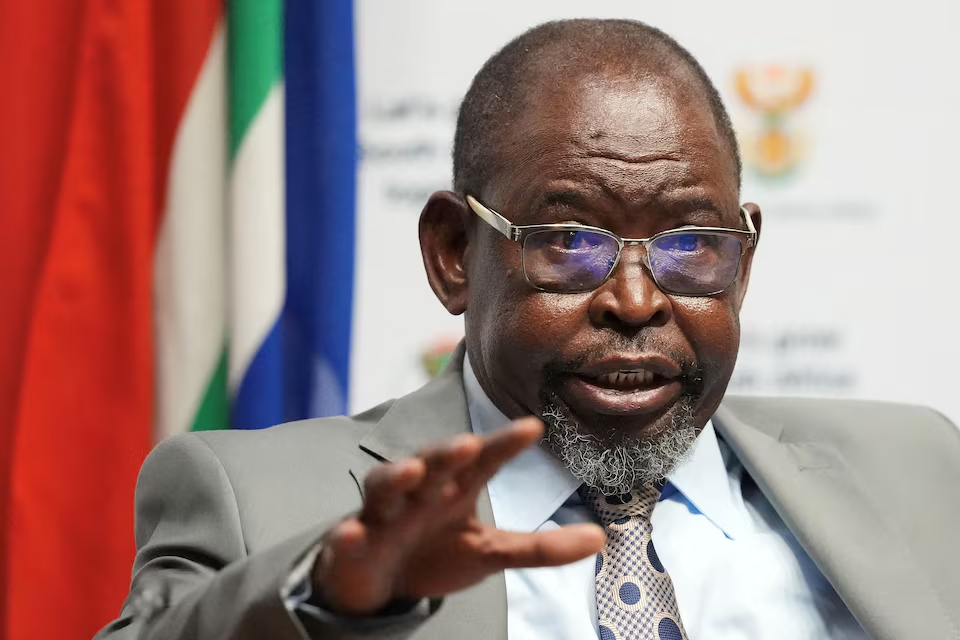
South African Finance Minister Enoch Godongwana will present the 2026 budget bill to lawmakers on Wednesday. Investors are watching closely to see how Treasury manages improved revenues. The South Africa 2026 budget arrives amid rising prices for gold and other metals exports. These windfalls have boosted government coffers significantly in recent months.
The budget address comes at a critical moment for Africa’s most industrialized economy. Treasury must balance debt stabilization with avoiding fresh tax shocks. Political pressures limit options for revenue raising through new levies. Meanwhile, spending demands continue to grow across multiple sectors. Godongwana faces the delicate task of satisfying competing interests.
Deficit, Primary Surplus and Debt Peak Signals
Morgan Stanley economist Andrea Masia offered an optimistic assessment. She suggested this “could be one of the most bullish budget documents prepared by National Treasury in many a year.” The revenue strength raises questions about durability and how much Treasury will include in the baseline. These decisions will shape fiscal trajectory for years ahead.
Goldman Sachs projects a slight narrowing of this year’s fiscal deficit. The forecast moves from 4.5 percent to 4.4 percent of GDP. In primary terms, excluding debt interest payments, this amounts to a surplus of 1.0 percent of GDP. These figures suggest improving fiscal health compared to recent years. However, structural challenges remain significant.
Investors will scrutinize the debt peak projections carefully. Treasury has previously forecast debt stabilizing in the medium term. Higher revenues could accelerate this timeline or reduce the ultimate peak level. Bond markets have already rallied in anticipation of positive news. Long-dated debt yields dropped to 10-year lows on optimism over rising revenues.
Tax Plan Under Scrutiny in South Africa 2026 Budget
Surging metals prices and stronger household consumption have boosted tax collections. However, political realities limit the government’s ability to increase taxes further. The ruling coalition faces pressure from multiple constituencies. Raising taxes could prove politically costly in the current environment.
BNP Paribas analysts expect “little-to-no debate on tax rises yet.” This suggests Treasury will avoid major tax announcements in this budget. However, smaller adjustments could still generate additional revenue. Markets will scan for changes to personal income tax brackets. Adjustments to medical credits and excise duties also merit attention. These modifications could raise revenues even if headline rates remain unchanged.
Nedbank noted that the tax windfall creates some flexibility. Treasury could adjust pay-as-you-earn tax brackets that were not indexed for inflation in the past two years. Such an adjustment would benefit workers while costing government revenue. The decision reflects trade-offs between competing priorities. Supporting household consumption versus maintaining fiscal discipline.
Fiscal Rule or Anchor Considerations
The South Africa 2026 budget could introduce new fiscal frameworks. An expenditure-capping mechanism might anchor spending to revenue growth. Such rules aim to prevent pro-cyclical spending during good times. They create automatic constraints that outlast the current political cycle.
The International Monetary Fund recently addressed this issue. In its annual economic assessment, the IMF noted that spending ceilings introduced in 2012 have not prevented debt from rising. The Fund urged clearer and more binding limits. These constraints would need to survive beyond the current administration. Credible fiscal rules enhance investor confidence over the long term.
Godongwana must decide whether to propose new rules or continue existing frameworks. Binding commitments carry both advantages and risks. They constrain future governments but provide certainty to markets. The choice reflects the Treasury’s confidence in its forecasting abilities.
Fixed-Rate Local Bond Issuance Outlook
Local bonds have rallied impressively in recent weeks. Investors anticipate improved fiscal metrics from the budget. However, borrowing tables and auction guidance will receive intense scrutiny. These details determine actual market impact regardless of headline promises.
JPMorgan analysts expect “an over 50% chance of another fixed-rate South African government bond issuance cut.” The bank suggests potential reduction to 2.5 billion rand weekly from the current 3 billion rand. Such a cut would signal confidence in reduced borrowing needs. It would also support bond prices by reducing supply.
The bond market reaction depends on the full picture. Lower issuance expectations must align with deficit projections. If deficits narrow less than anticipated, markets could react negatively. Consistency across all elements matters for credibility.
GFECRA and Foreign Bond Considerations
The Gold and Foreign Exchange Contingency Reserve Account offers another tool. This account captures gains or losses on foreign exchange holdings. Current gold price increases have boosted the account’s value. Treasury could utilize these funds to limit borrowing requirements.
Nedbank also expects Treasury to issue more foreign bonds. The government faces $4.3 billion of external maturities in FY27. Advance planning through foreign issuance would manage refinancing risk. International market conditions currently appear favorable for such issuance. Godongwana may announce a strategy for meeting these obligations.
The South Africa 2026 budget thus addresses multiple interconnected challenges. Revenue windfalls create opportunity but also expectations. Treasury must balance short-term political pressures with long-term fiscal sustainability. Markets will judge whether the budget achieves this balance effectively.
Political Context and Coalition Dynamics
The budget arrives during the coalition government’s first full year. The African National Congress lost its parliamentary majority in recent elections. Governing now requires cooperation with multiple opposition parties. This dynamic influences every aspect of fiscal policy.
Coalition partners hold differing views on taxation and spending. Negotiating a budget that satisfies all parties proves challenging. Godongwana must navigate these political realities while maintaining market confidence. The South Africa 2026 budget reflects both economic and political calculations.
Previous budgets under coalition governments have required last-minute adjustments. Tensions sometimes emerge publicly during parliamentary debates. Investors watch for signs of stability or dysfunction in the governing arrangement. A smooth budget process signals political maturity and policy predictability.
Long-Term Fiscal Outlook
Beyond immediate questions lies the longer-term trajectory. South Africa faces structural challenges including high unemployment and slow growth. These factors constrain revenue potential while driving social spending demands. The budget must address immediate pressures while building toward sustainable growth.
Infrastructure investment remains crucial for economic expansion. Education and health spending affect human capital development. Debt service costs consume resources that could otherwise fund development. Reducing these costs through lower debt creates fiscal space for productive spending.
The South Africa 2026 budget represents one step in a longer journey. Wednesday’s announcements will set the direction for coming years. Markets, businesses and citizens all await Godongwana’s address with keen interest. The numbers matter, but so does the vision they reflect.