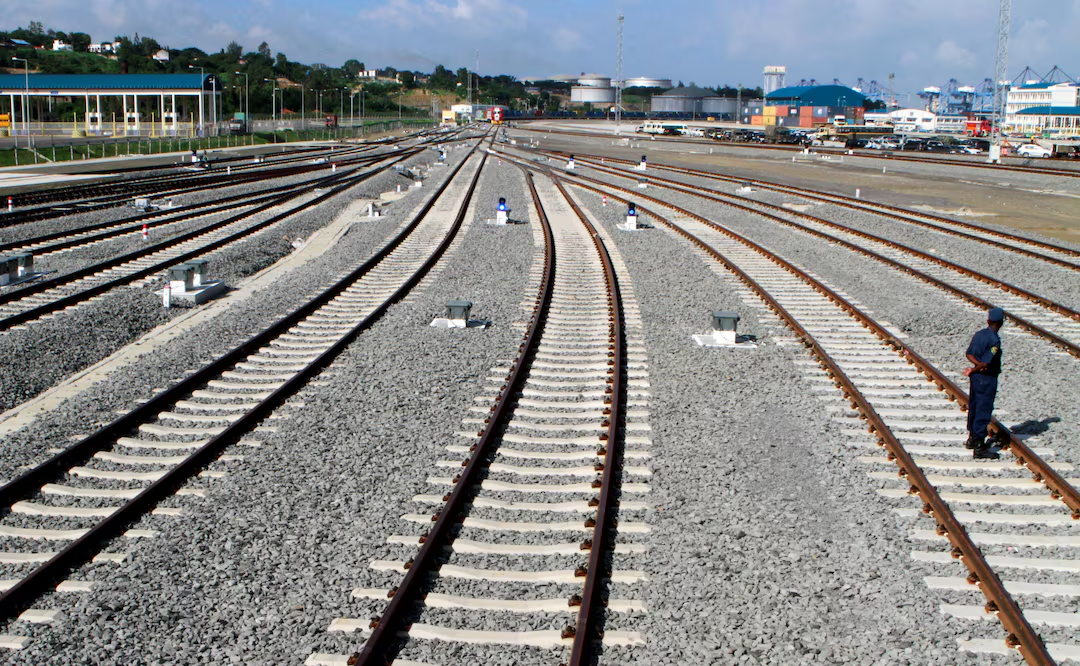
Uganda plans to connect its new standard gauge railway to a line under construction in neighboring Tanzania. A government document seen by Reuters reveals this strategic shift in transport policy. The Uganda railway link would open a new export route for minerals including gold, copper and iron ore. This marks a significant expansion of the country’s infrastructure ambitions.
Uganda currently sends most of its commodity exports through the Kenyan port of Mombasa. The country has long announced plans to link its railway project to Kenya’s network. That initiative remains in progress with ongoing diplomatic and technical discussions. However, Uganda had not previously disclosed intentions to also connect with Tanzania’s system. The new revelation adds a southern dimension to the country’s transport strategy.
Railway Would Connect Mineral-Rich Regions to Dar es Salaam
The Ugandan Ministry of Works and Transport document outlines a comprehensive vision. The railway would run from the Tanzanian border through southern and southwestern Uganda. It would terminate at Mpondwe town on the border with Democratic Republic of Congo. This positioning would serve multiple countries and regions simultaneously.
“The main objective of the project is to connect the vast and mineral-rich regions of both countries to the port of Dar es Salaam,” the document states. Officials emphasize that the line would save time and transportation costs for exporters. The Uganda railway link thus represents an economic efficiency measure as much as an infrastructure project.
The timing proves significant as East African nations compete for trade routes. Tanzania’s port at Dar es Salaam offers an alternative to Mombasa, which currently handles the bulk of regional traffic. Competition between the two ports could lower shipping costs for landlocked countries. Uganda stands to benefit from having multiple export options.
African Development Bank Considers Funding
The document indicates that the African Development Bank could potentially fund the project. The AfDB has a strong track record of supporting infrastructure in the region. Bank officials confirmed to Reuters that they are considering the request. The initial phase would fund preparation activities for the rail project.
Epifanio Carvalho de Melo, an AfDB official, provided details on the bank’s position. “The bank may consider financing the project, depending on the outcomes of the studies,” he stated. “If the project is found to be bankable, we will proceed.” This conditional commitment requires Uganda to complete feasibility studies and demonstrate economic viability.
The document also notes that Democratic Republic of Congo could seek to link to the line later. Congo’s mineral-rich eastern regions would benefit enormously from rail access. Current transport options remain limited and expensive in the area. A rail connection through Uganda to Dar es Salaam would transform Congo’s trade logistics.
Strategic Implications for Regional Trade
The Uganda railway link would reshape East African trade patterns. Landlocked countries currently depend heavily on northern corridors through Kenya. A southern route through Tanzania creates redundancy and competition. Exporters could choose between ports based on cost, efficiency and congestion levels.
Uganda’s mineral wealth makes efficient transport particularly important. Gold exports have grown significantly in recent years. Copper and iron ore deposits remain underdeveloped partly due to transport challenges. Reliable rail access could unlock investment in mining operations. Processed minerals would reach international markets more competitively.
The railway also positions Uganda as a regional transit hub. Connecting to both Kenya and Tanzania would make Kampala a central node. Goods moving from Congo to the coast would pass through Ugandan territory. This generates revenue and creates economic opportunities along the route.
Competition Between Mombasa and Dar es Salaam Ports
Kenya has invested heavily in its standard gauge railway in recent years. A Chinese-built line now connects Mombasa to Nairobi and continues toward the Ugandan border. Kenya expects this network to capture regional traffic for decades. The Tanzania option introduces competition that could benefit all parties.
Tanzania is also constructing its own standard gauge railway network. The line aims to connect Dar es Salaam to landlocked neighbors including Uganda, Rwanda and Burundi. A direct Uganda railway link would realize this vision more completely. It would give Tanzania access to Ugandan markets and beyond to Congo.
Port efficiency becomes crucial as rail options multiply. Mombasa has historically handled more regional cargo than Dar es Salaam. However, Tanzania has invested in port modernization and expansion. The competition could drive improvements at both facilities as they vie for customers.
Technical and Financial Challenges Ahead
Standard gauge railway construction requires massive capital investment. Uganda already seeks funding for its link to Kenya. Adding a southern connection doubles the financial challenge. The government must secure commitments from development banks and potential private partners. The AfDB’s interest provides a promising start but full funding remains uncertain.
The terrain between Uganda and Tanzania presents engineering challenges. The route passes through varied topography requiring bridges and tunnels. Construction costs could escalate beyond initial estimates. Uganda must carefully manage these risks to maintain project viability.
Regional coordination adds another layer of complexity. Tanzania must agree to connection points and operational protocols. The two countries need harmonized technical standards for seamless operation. Customs and border procedures require streamlining to capture efficiency gains. These diplomatic negotiations proceed alongside technical planning.
Long-Term Economic Development Potential
Rail infrastructure supports economic transformation over decades. Countries with efficient transport networks attract more investment. Uganda’s strategic location offers natural advantages that railways can amplify. The Uganda railway link to Tanzania represents forward-thinking development planning.
The project aligns with broader East African Community integration goals. Member states have long discussed interconnected infrastructure. Realizing these visions requires sustained political will and financial commitment. Uganda’s initiative pushes the region closer to integrated transport networks.
For now, Ugandan officials continue discussions with multiple partners. The Kenya link remains a priority while the Tanzania option gains momentum. Both projects would serve the country’s long-term interests. A connected Uganda with two export corridors would enjoy significant economic advantages. The government’s document reveals ambitious thinking about the country’s infrastructure future. Implementation will determine whether vision becomes reality.