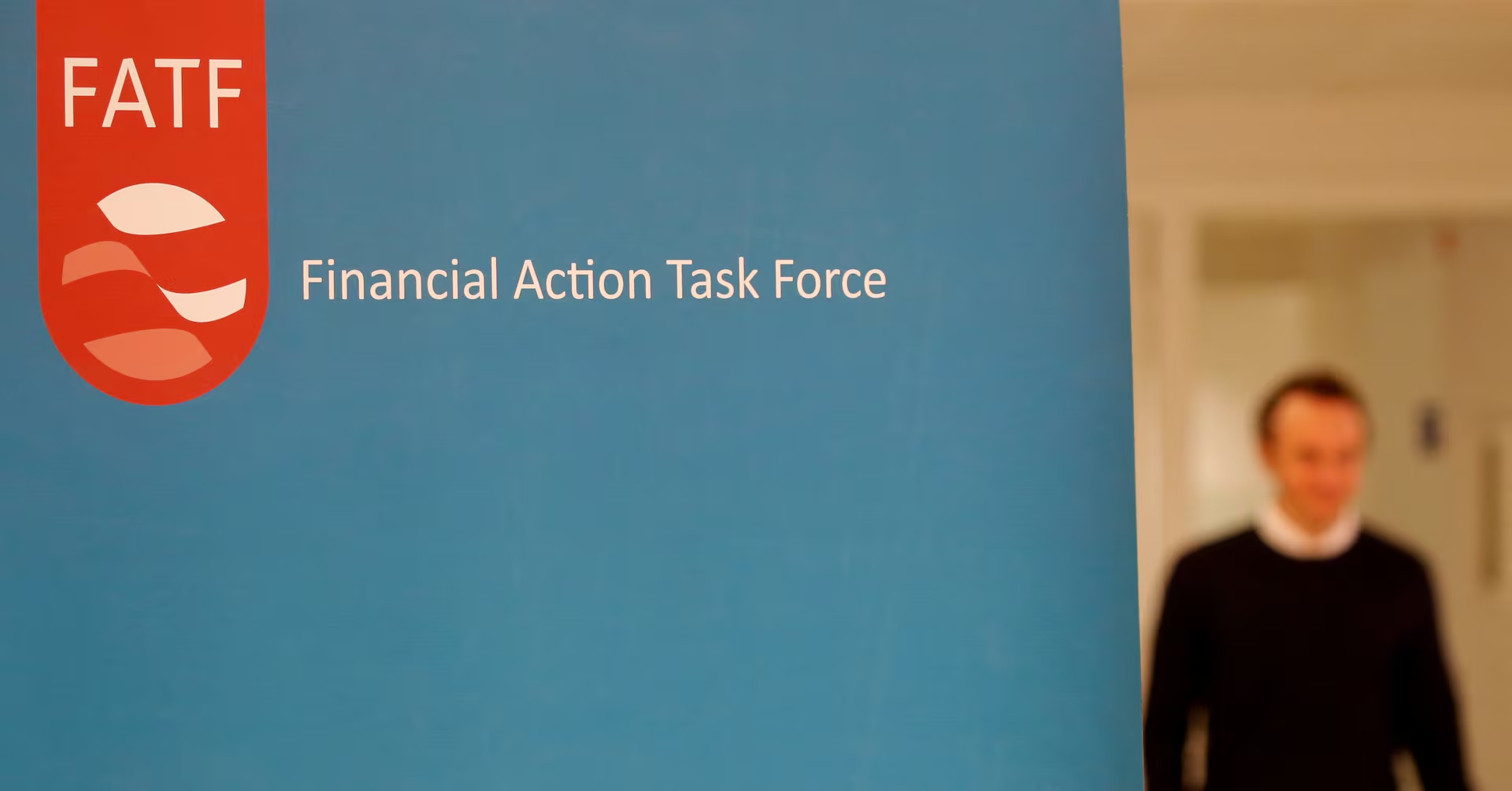
October 24, 2025 — The Paris-based Financial Action Task Force (FATF) announced that four African countries — Nigeria, South Africa, Mozambique, and Burkina Faso — have been officially removed from its “grey list” of jurisdictions under increased monitoring for anti-money-laundering (AML) and counter-terrorism-financing (CTF) weaknesses.
The decision marks a turning point for the continent’s financial credibility. According to FATF, each nation has made “tangible progress” in fulfilling its action plans, addressing regulatory deficiencies, and demonstrating consistent cooperation during on-site reviews.
What Is the FATF Grey List?
The FATF’s “grey list” — formally known as the list of jurisdictions under increased monitoring — includes countries that show strategic deficiencies in preventing money laundering and terrorist financing but commit to corrective actions.
Being grey-listed does not amount to direct sanctions. However, it brings heightened scrutiny from international banks, investors, and financial institutions. Businesses in such countries often experience higher transaction costs, tighter compliance checks, and slower cross-border payments. Economists estimate that being on the grey list can reduce foreign capital inflows by up to 7.6% of GDP.
Hence, removal from the list sends a powerful signal to global markets — affirming that a country has strengthened its oversight, improved transparency, and lowered systemic financial risks.
How the Four Countries Earned Delisting
Each of the four nations followed unique reform trajectories, addressing issues identified during FATF evaluations.
Nigeria:
Added to the grey list in early 2023, Nigeria prioritized inter-agency coordination among financial regulators, law enforcement, and intelligence agencies. It also improved the beneficial ownership transparency of companies, tightened oversight of banks and non-bank institutions, and updated its national risk assessment. (Sputnik Africa) These measures significantly enhanced its reputation for AML/CTF compliance and enforcement.
South Africa:
Listed in 2023, South Africa faced global scrutiny due to weak prosecution of financial crimes and gaps in beneficial ownership reporting. In response, it enacted comprehensive reforms, enhanced its Financial Intelligence Centre’s capabilities, and adopted risk-based supervision for both private and public sectors. The government also advanced reforms in investigative capacity and improved sanction mechanisms.
Mozambique:
Mozambique, listed in 2022, implemented cross-border information-sharing frameworks among its Financial Intelligence Units (FIUs). It also improved the monitoring of large transactions and increased regulatory vigilance over the non-bank sector, such as real estate and casinos.
Burkina Faso:
Since joining the list in 2021, Burkina Faso made remarkable progress despite internal challenges. It strengthened its legal framework, expanded AML supervision to cover designated non-financial businesses, and improved institutional coordination across ministries and regulators.
FATF President Elisa de Anda Madrazo called the development “a positive story for the continent of Africa,” adding that the four countries’ progress “demonstrates Africa’s growing commitment to combating illicit finance.”
Why the Decision Matters for Africa
1. Boost to Investment and Trade
Delisting from the grey list is likely to enhance investor confidence and ease access to global financial systems. Banks can now expand correspondent relationships, trade financing may become cheaper, and remittance channels could operate more efficiently. In Nigeria’s case, experts predict lower borrowing costs and smoother banking operations.
2. Restoring Financial Reputation
For South Africa, a major financial hub, the move strengthens its reputation as a trusted jurisdiction for regional and international investors. Nigeria’s exit, too, signals a renewed commitment to institutional reform and governance. The overall effect enhances Africa’s global standing in the fight against financial crimes.
3. Inspiration for Other African States
Four countries exiting simultaneously marks a milestone for the continent. It is expected to motivate other grey-listed countries such as Kenya, Côte d’Ivoire, and Angola to fast-track their AML/CTF reforms. The successful reforms of these four nations serve as a roadmap for policy alignment and technical improvements across Africa.
Ongoing Risks and Challenges
While delisting is an achievement, experts warn that maintaining compliance will require sustained effort.
- Continuous Monitoring: FATF stressed that delisting is a “milestone, not the finish line.” Countries must continue enforcement to avoid being re-listed.
- Institutional Weaknesses: Many African jurisdictions still lack strong enforcement capacity, skilled investigators, or digital financial tracking systems.
- Investor Caution: Market perceptions often take time to adjust, so investors may remain wary despite the formal removal.
- Informal Economies: A large share of African financial flows occur outside regulated systems, especially in cash-based or cross-border informal sectors. These remain challenging to monitor.
- Geopolitical Risks: Political instability and corruption can reverse progress if not managed carefully.
What Happens Next
Experts and international observers will now track whether reforms lead to real-world outcomes — such as:
- Increased Prosecutions: Are governments successfully investigating and punishing financial crimes?
- Market Reaction: Do banks reopen correspondent channels and reduce compliance costs?
- Peer Reforms: Will other African nations accelerate progress to join the list of compliant states?
These indicators will determine whether the delisting leads to lasting economic and governance improvements.
Country Snapshots
Nigeria:
Nigeria’s exit eliminates a key obstacle to its banking and oil-exporting sectors. However, enforcement must remain robust to prevent backsliding.
South Africa:
The delisting restores global credibility after years of reputational damage from corruption scandals. Its task now is to institutionalize transparency across all provinces and sectors.
Mozambique:
Stronger compliance frameworks will help Mozambique protect its growing resource economy, ensuring revenues from gas and mining are shielded from illicit outflows.
Burkina Faso:
Despite ongoing security issues, the country’s delisting highlights a significant governance turnaround. Yet, maintaining stability and financial oversight will be essential.
Conclusion
The removal of Nigeria, South Africa, Mozambique, and Burkina Faso from the FATF grey list is a historic milestone for Africa’s financial evolution. It reflects growing awareness among governments about the importance of financial transparency, institutional accountability, and international cooperation.
For investors, the move signals reduced risk and greater stability across key African economies. For policymakers, it reinforces that reform and collaboration yield tangible rewards.
However, the challenge ahead lies in turning compliance into culture — ensuring that AML/CTF measures are not just checkboxes for global approval but living systems embedded in national financial architecture.
If these nations sustain their momentum, Africa could gradually shift its global image from a “high-risk region” to a trusted and integrated player in the international financial ecosystem — one driven by integrity, growth, and resilience.