On an otherwise ordinary parliamentary morning in Accra, something striking happened. The familiar palette of charcoal suits, muted ties, and polished leather shoes gave way to bold stripes, flowing cotton, and handwoven textures. Ghana’s Parliament was suddenly awash in colour and heritage as lawmakers across party lines arrived dressed not in Western formalwear, but in the traditional Northern smock known locally as the fugu.
This was no ceremonial coincidence, nor a state-mandated cultural celebration. Instead, it was a deliberate act of symbolism—one sparked by an online controversy that began hundreds of kilometres away and quickly grew into a wider conversation about identity, dignity, and African self-expression.
A Garment at the Centre of a Digital Firestorm
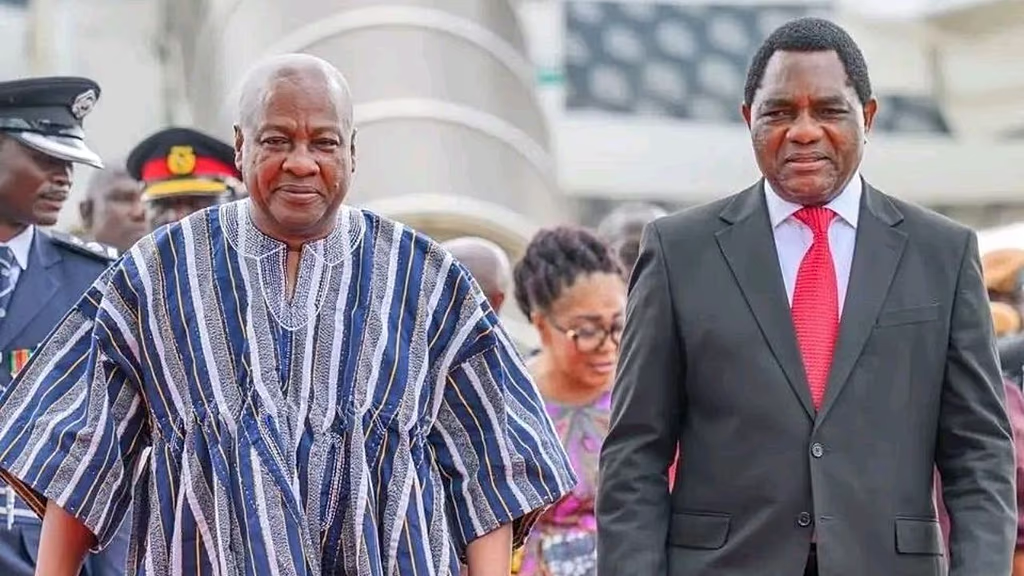
The chain of events began earlier in the week during a state visit to Zambia by John Dramani Mahama. When the Ghanaian leader arrived in Lusaka wearing a ceremonial fugu, images of the moment spread rapidly online. While many admired the bold display of traditional attire, some Zambian social media users reacted with ridicule.
Unfamiliar with the smock’s wide cut, heavy embroidery, and flowing design, critics mocked the outfit, dismissing it as a “blouse” or “dress” and questioning why a visiting head of state would choose indigenous attire over a Western suit.
What may have been intended as light-hearted mockery quickly took on a sharper edge, striking a nerve in Ghana, where the fugu carries deep historical and cultural meaning.
From Online Backlash to Political Solidarity
The response in Ghana was immediate and emphatic. Social media users, cultural commentators, and public figures rallied behind the garment, reframing it not as a fashion choice but as a symbol of heritage, resilience, and pride. What began as online rebuttals soon crossed into the political arena.
By Thursday morning, lawmakers from across Ghana’s political spectrum had turned up to the Parliament of Ghana wearing the same traditional attire. The coordinated appearance sent a clear message: Ghana’s identity is not defined by Western norms of formality, and its leaders will not apologise for showcasing indigenous culture on the global stage.
Several MPs described the move as a cultural stand rather than a protest. It was, they said, a reminder that African traditions deserve the same respect as European tailoring in diplomatic and official settings.
The Fugu: More Than Fabric
The Northern smock is far more than an article of clothing. Originating from Ghana’s northern regions, it has long been associated with leadership, strength, and ceremonial importance. Traditionally worn by chiefs, elders, and warriors, the garment reflects centuries of craftsmanship, social hierarchy, and cultural continuity.
Each smock is handwoven, often taking days or weeks to complete. The patterns and colours vary, carrying meanings tied to community, status, and occasion. In recent decades, the fugu has also become a national symbol, worn by politicians and cultural ambassadors as an assertion of Ghanaian identity.
By wearing it in Parliament, lawmakers were elevating the garment from tradition to political language.
A Broader Conversation on African Identity
The episode has reignited a familiar debate across the continent: why Western dress codes still dominate formal spaces in Africa, even decades after independence. Many commentators argue that African leaders are often judged by European standards of respectability, with suits and ties treated as universal markers of seriousness and authority.
The parliamentary display challenged that assumption head-on. By replacing suits with smocks, Ghanaian MPs questioned why indigenous attire is still treated as informal or symbolic rather than appropriate for governance.
The reaction also highlighted the power of social media in shaping political moments. What started as online mockery evolved into a coordinated national response, transforming a viral controversy into a teachable moment about history, respect, and self-definition.
Diplomacy Beyond Protocol
While the incident involved Ghana and Zambia, officials in both countries were quick to downplay any diplomatic tension. The focus, they noted, was cultural rather than political. Still, the episode revealed how symbols—especially clothing—can carry diplomatic weight in an era where images travel faster than official statements.
For Ghana, the message was unmistakable: African leaders do not need to conform to imported aesthetics to command respect. For many observers, the moment marked a subtle but powerful shift in how authority and identity are expressed in African political spaces.
A Statement That Resonated
As the parliamentary session unfolded beneath the bright patterns of woven cotton, one thing became clear. This was not about fashion for fashion’s sake. It was about reclaiming narrative control and asserting pride in African heritage.
In choosing the fugu over the suit, Ghana’s lawmakers reminded the continent—and the world—that culture is not something to be explained away or modernised into obscurity. It is something to be worn, defended, and celebrated, even in the most formal halls of power.
What began as a fleeting social media moment has now entered the broader cultural conversation, leaving behind an enduring image: a parliament dressed not just for governance, but for identity.