What Happened
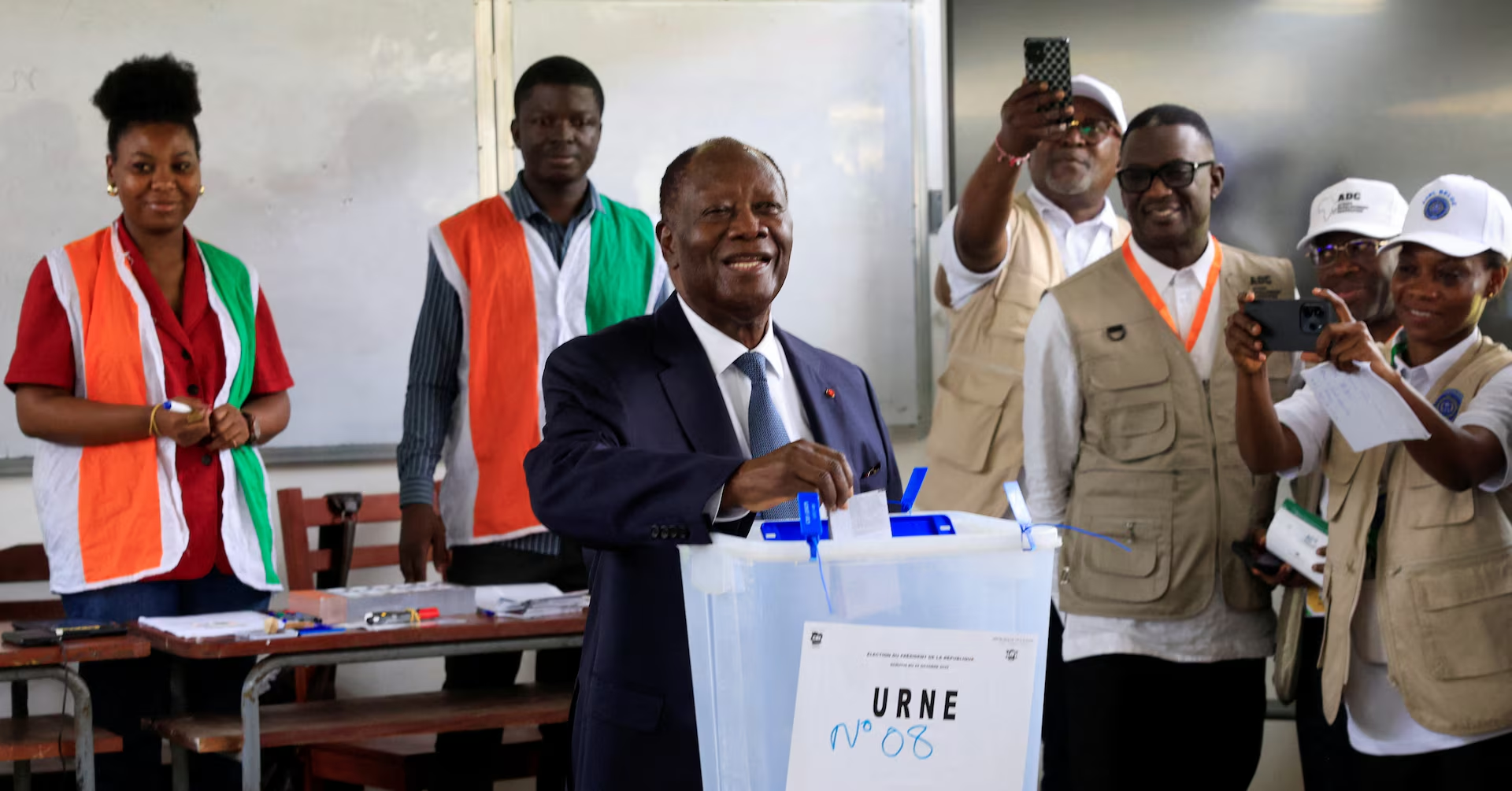
Ivory Coast held its presidential election on October 25, 2025, marking another pivotal moment in the nation’s political history. According to the Independent Electoral Commission, incumbent President Alassane Ouattara secured a commanding 89.77% of the vote, while voter turnout hovered around 50%, significantly lower than in previous elections.
The announcement came on October 27, sparking both celebrations and criticism. The Reuters and AP News reports confirmed that the ruling Rally of Houphouëtists for Democracy and Peace (RHDP) dominated the polls, while the fragmented opposition struggled to mount a unified challenge.
Notably, several major opposition figures were barred from contesting. Former President Laurent Gbagbo was disqualified due to criminal convictions, and ex-banker Tidjane Thiam was excluded over his dual nationality. This left voters with fewer options and, as critics argued, limited the competitiveness of the race.
Former commerce minister Jean-Louis Billon, one of the few recognized opposition candidates, conceded defeat early. He admitted that the president’s lead was insurmountable and urged supporters to remain calm.
If the Constitutional Council confirms the results, Ouattara will lead the country until 2030—a milestone that reinforces his long-standing grip on power.
Why It Matters
This election carries deep significance for both Ivory Coast and West Africa as a region.
1. Democratic Precedent and Political Legitimacy
Ouattara’s overwhelming victory raises questions about how competitive the election truly was. Many analysts argue that the exclusion of prominent challengers and the low voter turnout cast doubt on the legitimacy of the outcome. Critics also fear that the Ivorian democracy, once considered one of the region’s most stable, might be backsliding toward a system where genuine political contestation is rare.
2. Economic Continuity and Governance
Ivory Coast remains a powerhouse in West Africa’s economy, particularly as the world’s largest cocoa producer. Supporters of Ouattara believe his reelection ensures economic stability and continued investment in infrastructure. However, others worry that extended rule could centralize power further and stifle policy innovation.
3. Institutional Trust and Leadership Succession
At 83 years old, Ouattara has hinted that this may be his final term. Yet, he has not designated a clear successor. This uncertainty fuels speculation about potential political instability in the years to come. Many Ivorians fear that the absence of a transition plan could lead to internal party struggles or unrest when the time for leadership change eventually arrives.
4. Regional and Democratic Implications
In a region where leaders in Senegal, Guinea, and Cameroon have also extended their rule, Ouattara’s victory reflects a broader pattern of constitutional resetting—a trend where term limits are revised or reinterpreted to maintain power. Political scientists warn that this could weaken democratic norms across West Africa and embolden other incumbents to follow suit.
Election Details and Data
The Independent Electoral Commission officially declared Ouattara the winner with 89.77% of votes. Opposition figures Billon and Simone Gbagbo, the former first lady, garnered 3% and 2.4%, respectively.
Observers described the election as mostly peaceful, a positive contrast to the violent clashes that marred earlier polls. However, the subdued atmosphere and low turnout, particularly in urban centers, reflected a sense of voter fatigue and disillusionment.
Many citizens expressed disappointment with the lack of real alternatives, saying the political environment offered “choice without change.”
Reactions and Criticism
From the Government
Ouattara’s campaign team celebrated the victory as a mandate for stability and progress. They highlighted his achievements in growing the economy, reducing inflation, and improving roads, energy access, and housing. Supporters argue that Ivorians value peace and predictability after decades of political unrest.
From the Opposition
Opposition leaders, however, painted a different picture. Tidjane Thiam called the vote “an election without competition,” while several civic groups claimed that restrictions on rallies and arrests before the vote discouraged participation.
Civil society organizations also condemned pre-election crackdowns on dissent and questioned whether the process met international democratic standards. They warned that shrinking civic space could hinder future reforms and youth engagement.
From International Observers
International monitors from ECOWAS and the African Union welcomed the peaceful nature of the polls but noted uneven political conditions. Some observers argued that the limited competition undermines long-term democratic credibility.
Nevertheless, the absence of post-election violence was widely praised, suggesting that Ivorians are weary of returning to the divisive conflicts that marked the early 2010s.
Ouattara’s Legacy and the Divided Opposition
Ouattara first came to power in 2011 after a disputed 2010 election that plunged the country into civil war. His leadership since then has emphasized economic modernization, attracting foreign investment and rebuilding infrastructure destroyed by conflict.
Still, critics point to constitutional amendments and referendums that have extended his political lifespan. A 2016 reform reset term limits, allowing him to run again. This move sparked outrage among opposition groups, who accused him of consolidating power.
The opposition, deeply divided and weakened by internal rivalries, failed to present a united front in 2025. The exclusion of figures like Gbagbo and Thiam effectively handed Ouattara an easy path to reelection. Political analysts say rebuilding a viable opposition will be critical for the country’s future.
What Lies Ahead
Validation and Transition
The Constitutional Council is expected to finalize results soon. Once confirmed, Ouattara will begin another five-year term. Many expect him to use this period to strengthen institutions and perhaps prepare a successor within his party.
Governance Priorities
Ouattara has promised to focus on economic diversification, job creation, and infrastructure expansion. He also plans to support education reform and digital innovation to attract young entrepreneurs. Yet, the lack of a clear succession strategy could overshadow these goals.
Youth and Inequality
Although Ivory Coast’s economy has grown steadily, income inequality and youth unemployment persist. Many citizens want to see more inclusive policies that extend benefits beyond major cities. The success of Ouattara’s new term may depend on whether he can bridge the gap between growth statistics and everyday realities.
Security and Regional Cooperation
Given the spread of jihadist activity from neighboring Burkina Faso and Mali, Ouattara has prioritized national security and regional defense partnerships. His government will likely deepen cooperation with international allies to counter extremism and maintain border stability.
Why It’s a Turning Point
The 2025 election symbolizes both progress and paradox. On one hand, Ivory Coast maintained peace during a major national vote — a sign of maturity since its civil conflict years. On the other, the overwhelming victory for an aging incumbent highlights the fragility of democratic renewal.
It also underscores the generational divide: while older Ivorians value stability, younger voters increasingly demand accountability and change. Bridging these perspectives will shape the nation’s future political evolution.
Conclusion
President Alassane Ouattara’s fourth-term victory cements his position as one of West Africa’s longest-serving leaders. His track record of economic transformation and relative stability has earned him praise at home and abroad. Yet, beneath the success story lies a pressing question about the future of democracy in Ivory Coast.
Will Ouattara use this mandate to strengthen institutions and prepare a peaceful transition, or will his long rule deepen fatigue and disillusionment?
The answer will determine not only the direction of Ivory Coast’s next five years but also its legacy as a model — or warning — for African democracy.