Dar es Salaam, Tanzania – October 2025:
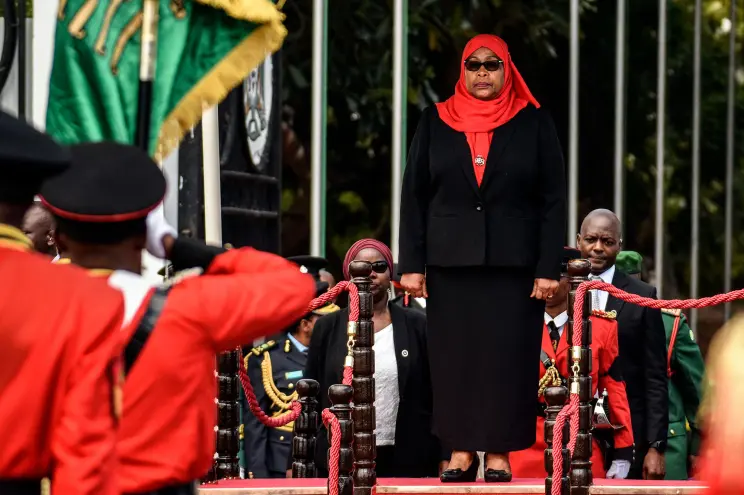
Tanzania’s general election, set for October 29, increasingly appears to be a coronation for President Samia Suluhu Hassan rather than a competitive race. The incumbent leader, who took office in 2021 after the death of John Magufuli, is running for her first full elected term. However, with her major rivals sidelined and institutions firmly in the hands of the ruling party, the election’s outcome seems largely predetermined.
The Political Field: One Leader, Few Rivals
In August 2025, the electoral commission officially approved Samia Suluhu’s candidacy and confirmed Emmanuel Nchimbi as her running mate. Meanwhile, key opposition parties were excluded. The main opposition group, CHADEMA, was barred from participating, and its leader Tundu Lissu remains in custody on treason charges.
With major contenders removed, voters face limited options. As one Financial Times headline noted, the vote “feels like a coronation, not a contest.”
Why It Feels Like a Coronation
Several factors explain why this election appears one-sided.
Minimal Opposition Presence:
With CHADEMA and other credible rivals sidelined by legal rulings, President Samia faces only minor candidates with limited resources and reach.
Media and Civil-Space Constraints:
Over recent months, authorities have imposed new restrictions on journalists and civil groups. Press freedom remains narrow, and dissenting voices face legal threats or shutdowns.
Institutional Control:
The ruling Chama Cha Mapinduzi (CCM) party, in power since independence, continues to dominate public institutions. The same electoral system that approved Samia’s candidacy rejected her strongest challengers.
Uneven Campaign Conditions:
The campaign environment is unbalanced. With opposition parties fragmented, state resources appear to support the incumbent, leaving many to view the process as a formality rather than a fair race.
President Samia Suluhu’s Profile and Platform
President Samia Suluhu made history as Tanzania’s first female president and the first leader born in Zanzibar to hold the post. She earned praise early in her tenure for easing strict policies, reopening media outlets, and re-engaging with global health programs previously suspended.
Her campaign focuses on the “4 Rs” — Reconciliation, Reform, Rebuilding, and Resilience — and promotes her slogan, “Work & Dignity.” These themes appeal to Tanzania’s youth, private-sector leaders, and investors seeking economic diversification.
However, critics argue that many of her promised reforms have stalled. Human-rights groups claim that recent arrests of activists and journalists mark a return to hard-line practices.
Key Issues at Play
1. Democratic Credibility
Tanzania formally maintains a democratic system, yet many observers believe the election lacks genuine competition. Legal and procedural barriers have effectively eliminated viable challengers. Independent monitors have voiced concern that such measures erode public trust in the process.
2. Human Rights and Civil Liberties
Rights organizations continue to highlight cases of arbitrary arrests, enforced disappearances, and restrictions on protest. The reported disappearance of a former diplomat and over 200 detentions since 2019 alarmed UN experts. These incidents deepen public skepticism and reinforce the view that the election is about consolidation, not choice.
3. Economic and Youth Expectations
Tanzania’s economy has remained stable and continues to attract foreign investment. Yet unemployment, especially among young people, remains high. Agriculture still faces climate-related challenges, and structural reforms have been slow. The president’s promises of new rural programs and job creation offer hope, but progress on the ground remains limited.
4. Regional and Geopolitical Context
The election matters beyond Tanzania’s borders. East Africa’s stability depends partly on how Dar es Salaam manages political transitions. A credible, peaceful vote could enhance Tanzania’s regional influence. However, if the process is seen as unfair, it may weaken confidence in East Africa’s democratic standards and deter investors.
What to Watch During and After the Vote
Voter Turnout:
A high turnout could signal confidence in the process, while low participation might reveal frustration or silent protest.
Media Freedom:
The ability of journalists and observers to report freely will influence global perceptions. Transparency in coverage will be a key test.
Post-Election Transition:
If results are released promptly and monitored independently, Tanzania might gain international approval. However, if reports of irregularities or rights abuses emerge, both domestic and global criticism could intensify.
Opposition Reaction:
Whether opposition leaders choose boycotts, protests, or legal action will shape post-election stability. A peaceful response could protect national unity; unrest could damage economic prospects.
Investor Sentiment:
Businesses will look for signs of consistency in economic policy. The government’s ability to maintain stability and investor confidence after the election will be crucial for sustaining growth.
Implications and Risks
Stability vs. Stagnation
Tanzania enjoys relative peace compared to some regional neighbors. The ruling CCM has provided continuity and avoided major internal conflict. This predictability attracts investors. Yet long-term stability requires accountability and reform. Without open competition, innovation and civic trust could decline.
International Perception
Foreign governments and global lenders increasingly tie their engagement to governance performance. An election lacking legitimacy may reduce Tanzania’s credibility and limit its access to international funding or partnerships.
Future of Democracy
This election could define Tanzania’s democratic direction. If the process strengthens participation and transparency, it may encourage gradual reform. But if it reinforces one-party dominance, it could entrench a system where elections exist without meaningful choice.
Conclusion
As Tanzanians prepare to vote on October 29, the atmosphere feels calm yet certain. President Samia Suluhu Hassan stands as the clear frontrunner, buoyed by institutional control and weakened opposition.
If the election proceeds peacefully, Tanzania may retain its image as one of East Africa’s most stable nations. However, stability alone will not ensure progress. True democratic legitimacy requires competition, open debate, and accountability.
The coming weeks will show whether Tanzania’s promise of reform translates into genuine political renewal — or whether this election becomes another carefully managed transition under the CCM’s long shadow.
Ultimately, Samia Suluhu’s likely victory may extend her leadership. Yet the deeper question remains: Can Tanzania’s democracy grow stronger when the race itself is already decided?