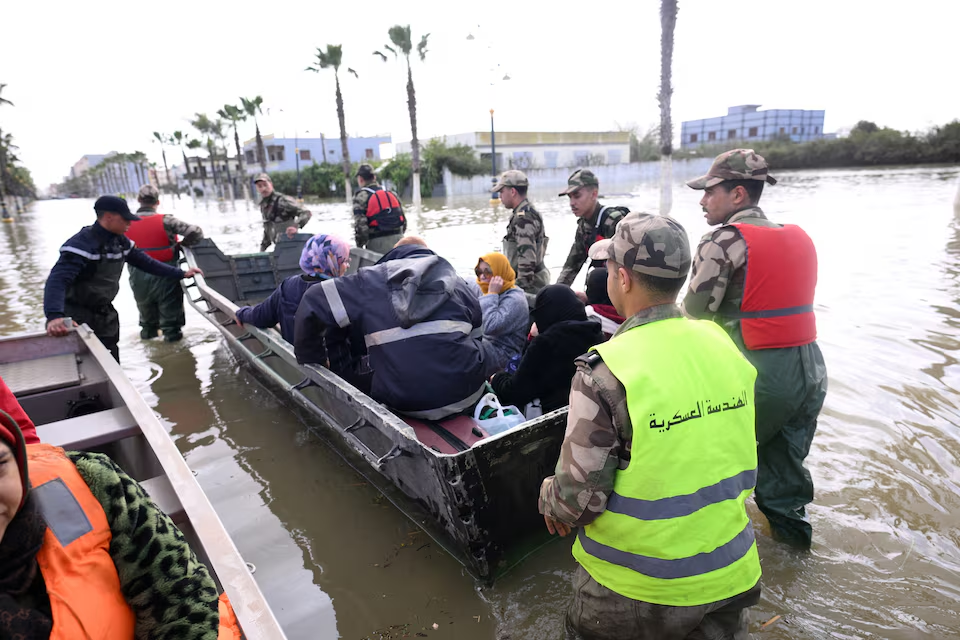
Moroccan authorities have begun organizing the gradual return of residents to the city of Ksar El Kebir and other flood-hit northwestern areas. Weather conditions have improved significantly, allowing the repatriation effort to commence, state media reported on Monday. The development marks a turning point for thousands displaced by record flooding.
Authorities, backed by the Royal Armed Forces, helped evacuate 188,000 people since early February. The operation protected residents from overflowing river waters that swept across 110,000 hectares in the northwest region. The interior ministry confirmed on Monday that most residents of Ksar El Kebir, located 213 kilometers north of Rabat, can now return home. Officials have excluded a few neighborhoods from the return order due to persistent risks.
The moment when Morocco flood victims return home represents a major logistical operation. State television showed authorities offering free train and bus rides to help transport residents. Many had sought shelter with relatives in other cities during the crisis. Others stayed in centers and camps that authorities rapidly established during the peak of the flooding.
Infrastructure Investment Announced
The return comes as the government mobilizes significant resources for recovery. The prime minister’s office announced last week a plan to spend 3 billion dirhams, equivalent to $330 million, on infrastructure upgrades. The funds will support flood-affected residents, farmers, and shop-owners in the inundated areas. The government has also declared the hardest-hit municipalities as disaster areas.
The flooding originated from exceptional pressures on regional water infrastructure. The Oued Makhazine dam reached 160 percent of its capacity during the peak of the storm system. Operators were forced to gradually release water downstream after recording exceptional inflows. This release led to rising water levels in the Loukkos River, which subsequently inundated Ksar El Kebir and the surrounding plains.
Meteorological data explains the scale of the event. Rainfall this winter measured 35 percent above the average recorded since the 1990s. The precipitation totals reached three times higher than last year’s figures, according to official data. This dramatic increase transformed the region’s hydrological situation entirely.
Water Management Transformation
The floods have paradoxically resolved another national concern. Morocco’s national dam-filling rate rose to nearly 70 percent from just 27 percent a year earlier. Several large dams are now being partially emptied to absorb new inflows safely. Water resource managers must balance flood protection against the benefits of increased reservoir storage.
For the evacuees now returning, the focus shifts to recovery and reconstruction. Many homes suffered water damage during the inundation. Agricultural lands remain covered with sediment and debris. Farmers face the loss of crops planted during the winter growing season. Shop-owners confront ruined inventory and damaged commercial spaces.
Local authorities are coordinating the return process carefully. Teams are assessing which neighborhoods remain unsafe for habitation. Engineers are inspecting infrastructure for hidden damage. Health officials are monitoring for waterborne disease risks. The gradual approach aims to prevent secondary crises after the initial emergency passes.
The Royal Armed Forces continue to support civilian authorities during the transition. Military resources that assisted with evacuations now help with cleanup operations. Heavy equipment moves into affected areas to clear debris and restore access routes. Military engineers assess damaged bridges and roads for repair priority.
Community Response and Recovery
Residents express relief at being able to return, mixed with anxiety about what they will find. Many have had limited information about the condition of their properties during the evacuation. The free transportation initiative helps reduce the financial burden on families already stressed by displacement.
Shop owners face particular challenges in the recovery period. Their businesses may require extensive renovation before reopening. Stock losses may not be fully covered by insurance. Customer traffic will take time to return to normal levels. The government support package aims to address these specific commercial needs.
Agricultural recovery presents longer-term challenges. Fields covered by floodwaters require assessment for replanting viability. Soil may need treatment for contaminants or salinity. Irrigation infrastructure may have sustained damage. The timing of the flood, during the winter season, affects which crops can still be planted for the coming harvest.
The disaster has highlighted infrastructure vulnerabilities in the region. Urban planning in flood-prone areas will face renewed scrutiny. Building codes and land use regulations may require updates. Early warning systems proved effective in enabling mass evacuations. Further investments could enhance this protective capacity.
As Morocco flood victims return to their communities, the national focus expands from emergency response to long-term resilience. The $330 million investment plan signals government commitment to rebuilding better. The coming weeks will reveal how effectively these resources translate into restored lives and livelihoods for the affected population.