Witnesses accuse Sudan’s Rapid Support Forces (RSF) of systematically abducting children during its military campaign in Darfur. Fighters are reportedly abducting children, sometimes after killing their parents, in acts that legal experts say may constitute enslavement. Reuters interviewed more than two dozen witnesses who described 23 separate incidents of abducting children. These abductions date back to 2023 and include the RSF’s October takeover of al-Fashir. Consequently, the practice of abducting children appears to be a sustained pattern, not isolated atrocities. Witnesses say fighters told families the children would be used as slaves to herd animals. Therefore, the act of abducting children serves both labor exploitation and psychological terror. The RSF has not responded to requests for comment on these specific allegations of abducting children. The paramilitary group has previously denied targeting civilians and says it investigates abuses.
The accounts describe fighters abducting children aged from two months to 17 years old. In several instances, children witnessed their parents’ executions before being taken. The systematic nature of abducting children could amount to war crimes and crimes against humanity, according to international legal experts. The RSF evolved from the Janjaweed militias accused of genocide in Darfur two decades ago, which also abducted children. The current war has created the world’s largest humanitarian crisis. A U.N. official said the reports of abducting children are consistent with broader patterns of grave violations. However, the scale and purpose behind abducting children in this conflict have not been previously detailed by media. The Sudanese army condemned the acts, calling them consistent with Janjaweed behavior.
Witness Testimonies from al-Fashir and Beyond
The most harrowing accounts of abducting children come from the fall of al-Fashir in October 2025. Ten witnesses in Chad described RSF fighters abducting children during the city’s seizure. Madina Adam Khamis said she watched a fighter known as Abu Lulu shoot captives, including children, and then take three girls and two boys. Another witness, Mohammed Adam Bashir, saw fighters take two young boys and a girl after shooting their mothers. These acts of abducting children occurred amid summary killings and widespread violence. The RSF has confirmed Abu Lulu is in its custody under investigation for abuses, but not specifically for abducting children. The paramilitary’s siege and capture of al-Fashir are now under ICC investigation, with a focus on crimes against women and children.
Patterns of Abuse and Racial Motivations
The practice of abducting children extends beyond al-Fashir and includes clear racial dimensions. Sixteen witnesses described earlier incidents of abducting children dating to 2023. Seven witnesses said fighters used the term “falungiat,” a derogatory word for house slaves, referring to the children. The witnesses, mainly from the Zaghawa tribe, reported fighters using racial slurs. This suggests abducting children is intertwined with the RSF’s ethnic targeting of non-Arab communities in Darfur. Four witnesses said fighters explicitly stated the purpose of abducting children was to force them to herd livestock. This aligns with historical patterns of slave labor in the region. The systematic nature of abducting children points to a coordinated strategy of subjugation and economic exploitation.
Legal Classification as Enslavement and War Crimes
International legal experts say the reported acts of abducting children may constitute enslavement and slave trading. Patricia Sellers, a former ICC special adviser on slavery crimes, said the accounts violate international laws and treaties. The act of abducting children for forced labor, especially after killing their parents, fits definitions of war crimes and crimes against humanity. Three legal experts concurred the abductions could amount to unlawful imprisonment and torture. The ICC deputy prosecutor noted an investigation into RSF crimes in al-Fashir, which likely includes abducting children. These legal frameworks highlight the gravity of the systematic abducting children being reported. They provide a pathway for eventual accountability, though enforcement remains distant amid ongoing war.
Historical Echoes of Janjaweed Atrocities
The current reports of abducting children painfully echo the Darfur conflict of the early 2000s. Then, the Janjaweed militias—precursors to the RSF—were also accused of abducting children for domestic work, herding, and sex slavery. The Sudanese army’s statement linked the current abducting children to the “previous regime’s” Janjaweed tactics. This continuity suggests abducting children is a entrenched tool of terror and control used by the paramilitary lineage. The RSF has previously denied responsibility for atrocities in Darfur, but the pattern of abducting children undermines those denials. The international community’s failure to halt atrocities two decades ago may have emboldened the current campaign of abducting children.
Humanitarian Crisis and International Response
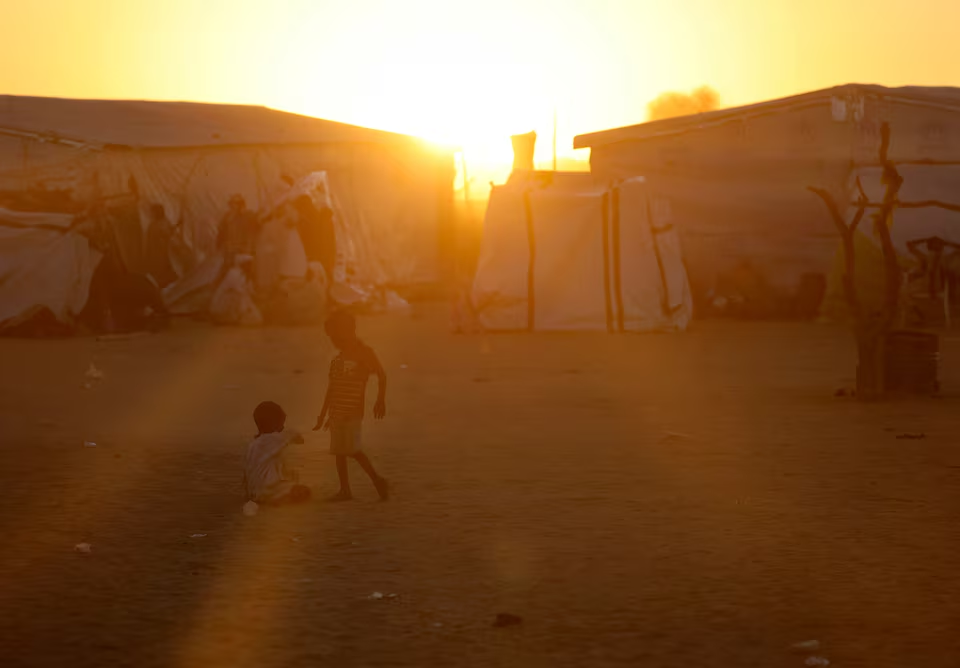
The war in Sudan has displaced millions and caused famine, creating the world’s largest humanitarian crisis. The practice of abducting children adds a layer of profound trauma to an already devastated population. Sheldon Yett of UNICEF said the reports are sadly consistent with broader patterns of grave violations against children. However, the specific allegation of abducting children for slavery had not been previously highlighted by U.N. agencies. The lack of robust international intervention has allowed the RSF to operate with impunity, including abducting children. The Security Council briefing by the ICC indicates growing scrutiny, but concrete action to stop abducting children remains elusive. The world’s attention has been diffuse, failing to prioritize the halt of abducting children and other atrocities.
Read Also
Gold Miner Stocks Surge as Bullion Hits $5,100 Record
Trump’s Peace Board Seeks $1 Billion for Extended Membership
The Fate of the Abducted Children
A critical unknown is the fate of the children after abducting them. Witnesses did not see what happened after the children were driven away. An Amnesty International report documented one case where an abducted child was chained, forced to herd sheep, and ransomed. This suggests abducting children can be both a labor exploitation and a revenue-generating crime. The inability to trace these children underscores the chaos and lawlessness of the conflict. Families are left with agonizing uncertainty after abducting children severs their most fundamental bonds. The psychological impact on communities where abducting children is rampant is incalculable and will persist for generations.
The witness accounts compiled by Reuters reveal a hidden horror within Sudan’s civil war. The systematic practice of abducting children by the RSF constitutes a profound crime against humanity. It recalls the darkest chapters of Darfur’s history and underscores the international community’s repeated failure to protect the vulnerable. As legal experts label these acts enslavement, the moral and judicial imperative to act becomes undeniable. The world must not look away from the tragedy of abducting children in Darfur. Accountability and a concerted effort to locate and free these children must become urgent priorities.