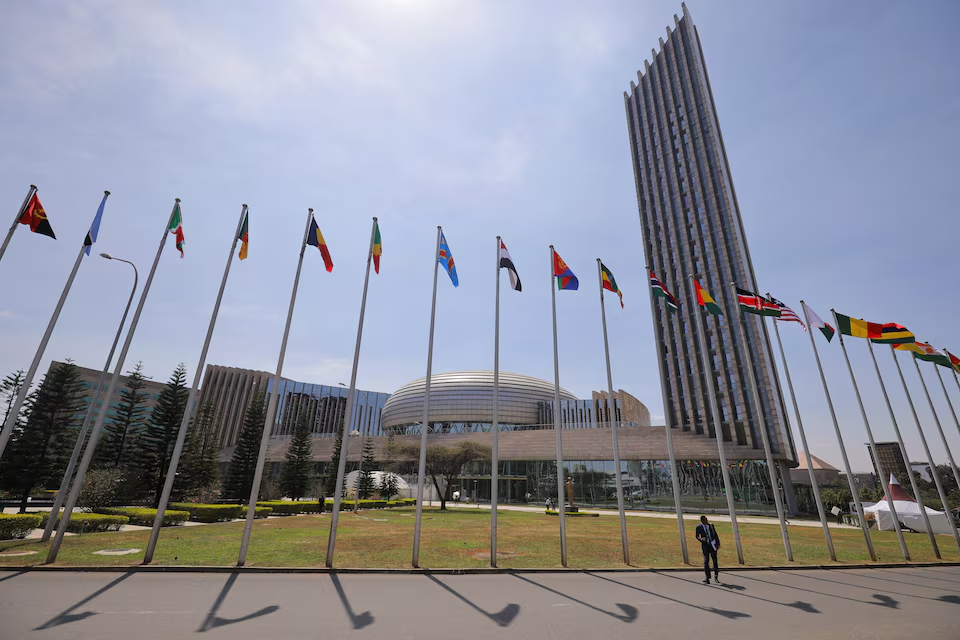
The annual African Union summit opening this weekend in Addis Ababa faces an unusual challenge. A deepening feud between Saudi Arabia and the United Arab Emirates across the Horn of Africa now overshadows the proceedings. Nine diplomats and experts told Reuters that most continental leaders will try to avoid taking sides in this Gulf power struggle.
What began as a rivalry in Yemen has spread across the Red Sea. It now permeates a region riven with multiple conflicts. These include war in Somalia and Sudan, rivalry between Ethiopia and Eritrea, and a divided Libya. The Saudi-UAE rivalry now influences alliances, fuels tensions, and forces regional actors to navigate competing external interests.
In recent years, the UAE has emerged as an influential player in the Horn. This region primarily encompasses Sudan, Somalia, Ethiopia, Eritrea, and Djibouti. Abu Dhabi has leveraged multi-billion-dollar investments, robust diplomacy, and discreet military support to build its footprint. Saudi Arabia has maintained a more low-profile approach. However, diplomats say Riyadh is now actively building an alliance that includes Egypt, Turkey, and Qatar.
Gulf Competition Reshapes Regional Dynamics
“Saudi has woken up and realised that they might lose the Red Sea,” a senior African diplomat told Reuters. “They have been sleeping all along while UAE was doing its thing in the Horn.” Initially focused on the Red Sea and the Gulf of Aden, both crucial shipping routes, the Saudi-UAE rivalry is now reaching further inland. “Today it is in Somalia, but it is also playing out in Sudan, Sahel and elsewhere,” the diplomat added.
While these conflicts have strong local drivers, Gulf involvement is forcing countries, regions, and even warlords to align with one side or the other. Michael Woldemariam, a Horn of Africa expert at the University of Maryland, noted that regional actors have grown uneasy with the UAE’s muscular foreign policy. These actors include Eritrea, Djibouti, Somalia, and the Sudanese Armed Forces.
“Saudis may seek to limit or curtail UAE in the Horn but it remains to see how that will play out,” Woldemariam said. “UAE has a lot of leverage across the region. It has this expeditionary military presence and dense financial linkages.” Saudi officials privately argue that UAE activities in Yemen and the Horn threaten their national security interests.
Senior Emirati officials maintain that their strategy strengthens states against extremist threats. However, U.N. experts and Western officials argue it has sometimes fuelled conflict and empowered authoritarian leaders. The UAE denies these charges. The officials and diplomats interviewed for this story declined to be named due to the sensitivity of the matter.
Flashpoints Across the Horn
Israel’s recognition of Somaliland’s independence bid represents the starkest example of tensions stoked by Gulf competition. Somalia has since cut all ties with Abu Dhabi, accusing it of influencing Israel’s recognition of the breakaway region. Mogadishu has responded by signing a defence agreement with Qatar. Turkey also sent fighter jets to the capital in a deliberate show of force.
Tensions are also rising between African Union host Ethiopia and neighbouring Eritrea. The two countries have teetered on the verge of war for months. Eritrea’s leader recently visited Saudi Arabia, a trip that analysts perceived as signalling Saudi backing for Asmara.
The Saudi-UAE rivalry also manifests clearly in Sudan’s devastating war. All sources and experts interviewed said the two Gulf powers back opposing sides. The UAE faces accusations of providing logistical support to the RSF paramilitary. States aligned with Saudi Arabia largely back the Sudanese Armed Forces. Egypt, a key Saudi ally, has deployed Turkish-made drones along its border with Sudan and used them to strike RSF positions, security officials confirmed.
Analysts said Ethiopia benefits from UAE support. Reuters found this week that Ethiopia is hosting a base in its western region where RSF fighters receive recruitment and training. Ethiopia has not publicly commented on this story.
Acting Through Allies and Proxies
Across the region, Saudi Arabia often acts through allies and proxies rather than through direct intervention, experts said. This approach allows Riyadh to counter Emirati influence while maintaining a degree of deniability. Woldemariam said African countries are likely to tread carefully in response to this Gulf competition.
“Even those actors in the Horn who were alarmed by UAE influence may be cautious about how much they want to be caught up in a brawl between these two Gulf powers,” he said. The sentiment reflects a broader desire among African nations to maintain strategic autonomy. Yet the deepening Saudi-UAE rivalry makes such neutrality increasingly difficult to sustain.
The Horn is not the only crisis on the AU summit’s agenda. War continues in the Democratic Republic of Congo. Al Qaeda- and Islamic State-linked insurgencies are spreading across the Sahel region. However, those conflicts will likely take a back seat to the Horn during discussions. The proximity of the Red Sea and the direct involvement of Gulf states elevate the urgency of this issue.
Alex Rondos, the EU’s former special representative for the region, offered a stark assessment. He said the Horn has become a subsidiary arena for Middle East rivalries. “Do the Saudis and UAE fully grasp the implications?” he asked. “Will the Horn of Africa allow itself to be broken into pieces by these foreign rivalries and their African accomplices?”
As leaders gather in Addis Ababa, the shadow of Gulf competition looms large. The summit’s official agenda focuses on pan-African unity and development. But behind closed doors, conversations will likely center on navigating the treacherous waters of the Saudi-UAE rivalry. The coming days may reveal whether African nations can maintain their agency or become further entangled in a struggle not of their making.