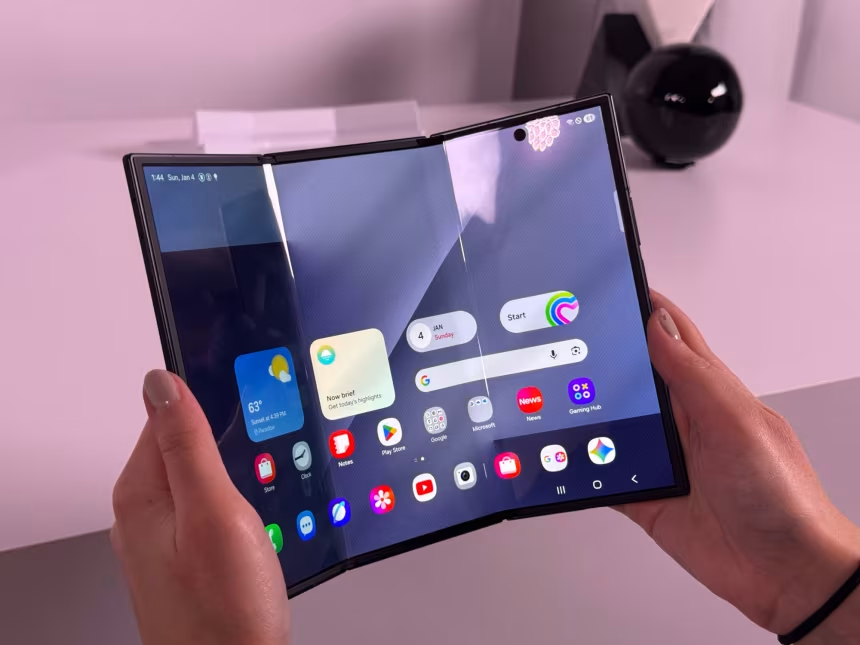
Samsung’s new Galaxy Z TriFold could be the phone that redefines the way we interact with our devices, but is it the future of smartphones, or simply another flashy piece of tech? Revealed at CES 2026 in Las Vegas, the Galaxy Z TriFold folds in two places—much like a brochure—to bring an iPad-sized screen into your pocket. This new foldable promises both a bigger display when you need it and a smaller, more portable form factor when you’re on the go.
The Bold Concept Behind the TriFold
For years, sci-fi movies have portrayed futuristic devices with shapeshifting screens that could fold, expand, or adapt to different needs. Now, Samsung is turning this vision into a reality with its Galaxy Z TriFold. With its 10-inch screen that folds twice, the device is far larger than previous foldables, like the Galaxy Z Fold 7, which has an 8-inch display that folds in half. This innovation isn’t just about creating a gadget that folds—it’s about combining flexibility with productivity.
Samsung is betting that users, especially those who rely on their phones for work and productivity, will appreciate the option of a bigger screen in their pocket. The phone’s design allows for split-screen functionality, making multitasking easier. Plus, when paired with a Bluetooth keyboard and mouse, the TriFold could serve as a portable mini-laptop alternative for professionals on the move. Add in Google’s Gemini assistant, which can help manage apps on screen, and it’s clear that Samsung is aiming to enhance productivity in a way that traditional smartphones can’t.
The Downsides of the TriFold: A Promise with Some Compromises
While the Galaxy Z TriFold brings a lot to the table, it’s not without its challenges. One of the most glaring issues is the phone’s form factor when closed. Despite being impressively thin when opened, the TriFold becomes almost clunky when folded, resembling two smartphones stacked on top of each other. The bulkiness of the device when it’s in its compact state could be a dealbreaker for some, especially those who value portability.
Additionally, while the phone boasts impressive cameras—similar to the ones found on Samsung’s flagship Galaxy S25 Ultra—there are still two noticeable creases running down the screen, which can detract from the overall aesthetic. However, the creases aren’t as distracting as they were in earlier foldable phones, and Samsung has worked hard to minimize their impact.
Despite these minor drawbacks, the TriFold is clearly a step forward for Samsung’s foldable technology, and it’s more functional than earlier devices in the foldable category. But Samsung still faces an uphill battle in convincing consumers that foldable screens are a must-have feature rather than just a gimmick.
Price Tag and Market Considerations: Will It Be Worth the Investment?
The biggest question surrounding the Galaxy Z TriFold is its price. While Samsung has yet to reveal the exact cost of the device, it’s expected to be expensive. The Galaxy Z Fold 7, for instance, starts at $2,000, and given the advanced technology of the TriFold, it’s likely that this new model will come with a similar price tag—or possibly even higher. For many consumers, this high price point could be a barrier to adoption, especially when foldable phones still only represent a small portion of the broader smartphone market.
The foldable phone trend has been slow to catch on, with most consumers opting for more affordable, traditional smartphones. Samsung hopes that by continuing to push the envelope with innovative designs, like the TriFold, it will be able to convince people that the next-generation smartphone doesn’t have to be a flat, rectangular device. However, the success of the TriFold, like its predecessors, will largely depend on whether the technology resonates with a wider audience.
Samsung’s Bigger Vision: The Evolution of Foldable Phones
Samsung’s approach to the Galaxy Z TriFold is part of a broader strategy to experiment with different smartphone designs and see which ones stick. The TriFold is likely a “strategic pilot,” according to Liz Lee, an associate director at Counterpoint Research, and it may not be aimed at mass adoption right away. Rather, Samsung is testing the waters to see how the new form factor lands with consumers and whether the foldable category can evolve further.
While the price may deter some, Samsung’s leadership in the foldable phone space is undeniable. With nearly every major Android brand following in its footsteps, foldable phones are clearly here to stay. In fact, Apple is expected to release its first foldable device later this year, signaling that the market for foldable phones may finally be ready to take off.
For now, Samsung is pushing the boundaries, and the Galaxy Z TriFold could be the beginning of a new chapter in smartphone design. Whether or not it will become the mainstream device of the future remains to be seen, but Samsung’s investment in this technology shows that the foldable revolution isn’t going anywhere anytime soon.
Is the Galaxy Z TriFold Worth the Hype?
The Galaxy Z TriFold is a bold experiment that combines the portability of a smartphone with the productivity capabilities of a tablet. While it’s a promising concept, its bulky design and likely high price tag may deter mainstream consumers. However, for tech enthusiasts and early adopters, the TriFold offers a glimpse into the future of smartphones. Whether it will become a must-have device or remain a niche product is still uncertain, but Samsung’s continued innovation in foldable phones shows that the future of smartphones is far from settled.