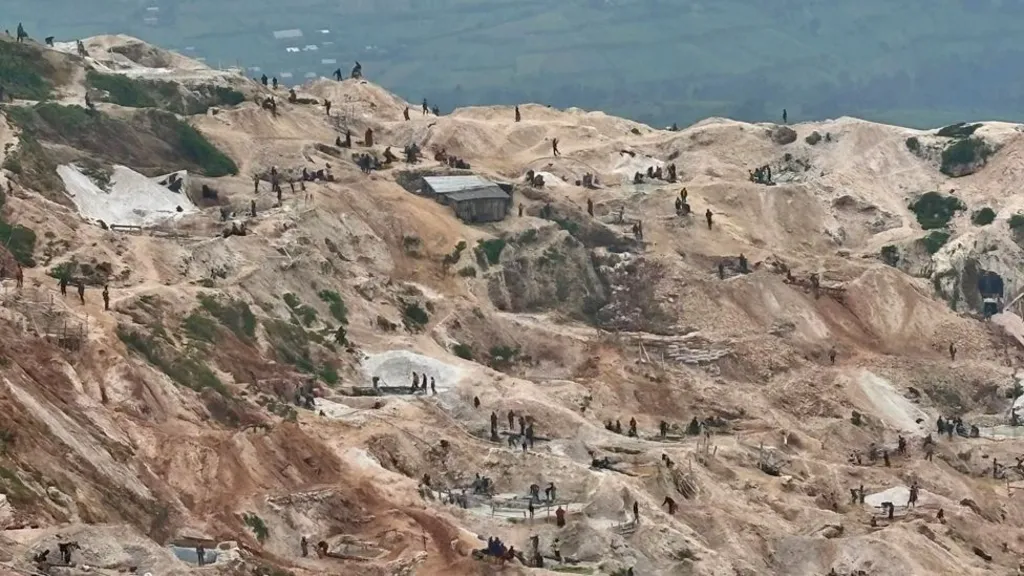
In a devastating tragedy in the Democratic Republic of Congo (DRC), more than 200 people were killed after a mine in the town of Rubaya collapsed due to heavy rains. The collapse occurred on Wednesday, and while the immediate death toll remained unclear, sources confirmed that a large number of artisanal miners, including women and children, were caught in the disaster. The mine, which is under the control of rebel forces in the region, has been poorly maintained, which may have contributed to the fatal accident and hindered rescue efforts.
This collapse underscores the continuing dangers faced by those working in DRC’s informal mining sector, which is rife with unsafe conditions and lacking proper oversight. Despite the government’s efforts to ban mining in certain areas, these regions remain largely under rebel control, and illegal mining continues unabated, often putting civilians in harm’s way.
A Deadly Collapse in Rubaya
Rubaya, a town located in the volatile North Kivu province of the DRC, has long been a site of intense mining activity, primarily centered around coltan, a crucial mineral used in the production of electronics like smartphones and computers. The collapse occurred as a result of heavy rainfall that weakened the structure of the mine. At the time of the accident, numerous miners, including women and children, were at work digging for coltan. These miners, many of whom work informally and are unregulated, were caught off guard when the ground gave way, burying them under tons of debris.
According to Lumumba Kambere Muyisa, a spokesperson for the North Kivu region’s rebel governor, the mine had been poorly maintained. The fragile nature of the terrain, combined with the lack of proper safety measures, made the situation more perilous. This collapse is not the first of its kind in the DRC, where similar mining accidents have claimed the lives of hundreds of people over the years.
The Impact on Families and Communities
Among those trapped in the mine were women, children, and artisanal miners, many of whom were working to provide for their families. These miners, who often work without any formal employment contracts or safety regulations, are vulnerable to the dangers of poorly constructed and unstable mining sites. Many of the victims were involved in coltan mining, a high-risk occupation that plays a significant role in global supply chains for electronic devices.
One grieving family member, whose cousin was among the deceased, expressed shock and sorrow, recalling how he had always dreamed of providing a better life for his family. “I didn’t believe he could pass away in such circumstances,” the relative said, describing the victim as a “courageous” and “ambitious” man. The victim had been trying to make ends meet for his wife and two children when tragedy struck. His body was discovered hours after the accident, but his family had held out hope that he might be among the survivors.
The DRC’s government has blamed the rebels for failing to enforce safety standards at the mines, and for permitting illegal mining activities that put the lives of local communities at risk. The government has maintained that mining in the area had been banned the previous year, but the rebels had already seized control of the mines by that time.
Rebel Control and the Battle for Coltan
The collapse has once again highlighted the ongoing conflict in North Kivu, where the M23 rebels have maintained control over Rubaya and other towns in the region since 2024. These rebels, whose activities have drawn international condemnation, are accused of exploiting the region’s rich mineral resources for their own benefit. Coltan, a mineral crucial for the production of electronic capacitors, is in high demand globally, and the DRC holds approximately 15% of the world’s total supply.
In addition to the tragedy of the mine collapse, the M23 rebels are also accused of imposing taxes on the mining operations, further exacerbating the hardships faced by local workers. This control over mineral-rich areas has prompted concerns about the exploitation of the DRC’s resources and the role of neighboring countries in fueling the ongoing violence. The UN and human rights organizations have raised alarm about the exploitation of natural resources in conflict zones, often by armed groups, and the role that international markets play in fueling such exploitation.
The DRC government has repeatedly accused neighboring Rwanda of supporting the M23 rebels, using the group to facilitate the looting of Congolese minerals. While Rwanda denies these accusations, the international community continues to scrutinize the connections between armed groups in the region and the illegal trade in natural resources.
A History of Mining Accidents
This tragic collapse is far from an isolated incident. Artisanal mining, which involves individuals or small groups mining minerals in an informal and unregulated manner, is widespread throughout the DRC. While these miners contribute significantly to the country’s economy, they do so under dangerous and exploitative conditions. Many of the mines in the DRC are poorly maintained, with little to no oversight or regulation.
In addition to the human toll, these mining accidents have a broader impact on the country’s development. The DRC is rich in natural resources, including coltan, gold, and diamonds, yet it remains one of the poorest countries in the world. The exploitation of these resources, coupled with the ongoing political instability and lack of infrastructure, continues to impede the country’s economic growth.
International Concern and the Role of Global Markets
The collapse of the Rubaya mine has sparked renewed calls for greater oversight of the DRC’s mining industry, especially the artisanal mining sector, which is estimated to involve millions of people across the country. While the government has attempted to regulate mining operations, the control exerted by armed groups, such as the M23, complicates efforts to enforce safety standards and prevent illegal mining activities.
The international community has expressed concern about the role of global markets in sustaining the illegal trade of minerals from conflict zones. Many companies in the electronics and technology industries rely on minerals like coltan for their products, but these resources are often mined under exploitative and hazardous conditions. Calls have grown for companies to ensure that the minerals they source are not linked to human rights abuses or environmental degradation.
The Path Forward: Addressing the Root Causes
As the DRC grapples with the aftermath of the Rubaya mine collapse, it is clear that addressing the root causes of such disasters requires a multifaceted approach. This includes improving safety standards in mining operations, providing support to local communities, and ensuring that natural resources are managed in a way that benefits the people of the DRC, rather than fueling conflict and exploitation.
International pressure will also be key in addressing the role of external actors, such as foreign governments and multinational companies, in the DRC’s mining sector. If progress is to be made, the global community must work together to promote ethical sourcing practices and hold those responsible for human rights violations accountable.
The Rubaya mine collapse is a stark reminder of the dangers faced by millions of miners in the DRC and the ongoing need for reforms in the country’s mining industry. While the DRC’s rich mineral resources hold the potential for economic growth, it is crucial that this wealth is managed sustainably, with the safety and well-being of miners and local communities at the forefront.