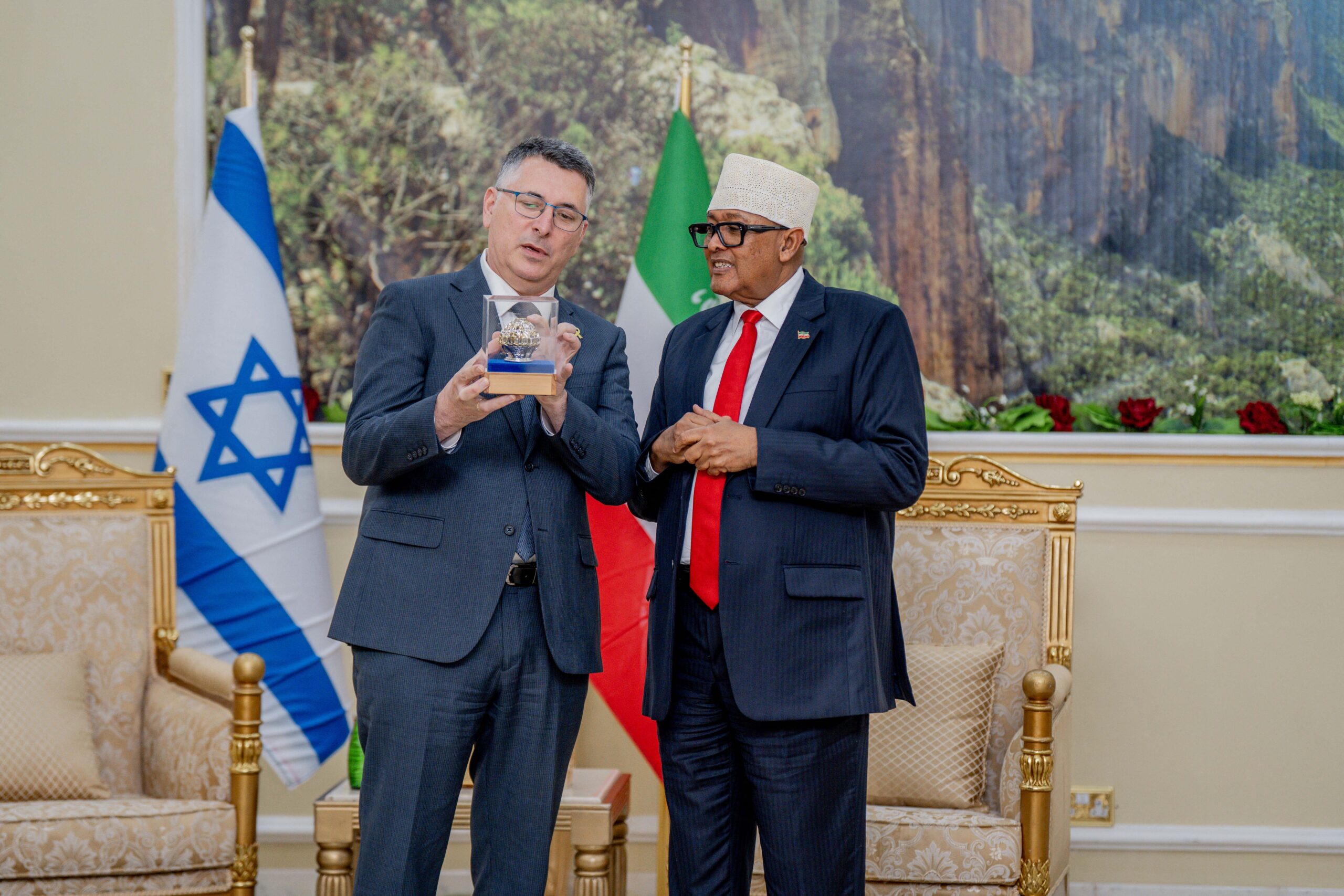
In a groundbreaking move in December 2025, Israel became the first country to officially recognize Somaliland as an independent sovereign state, sending ripples through the Horn of Africa. This decision, which marks a turning point in the region’s geopolitical dynamics, has triggered intense reactions. While Somaliland has expressed gratitude, viewing the recognition as a potential gateway to global integration, Somalia has vehemently condemned the move, accusing Israel of infringing on Somali sovereignty.
As tensions simmer, Israel’s decision appears to be motivated by both strategic imperatives in the broader Middle East and Africa, as well as a desire to engage more deeply with emerging African economies. The ramifications of this recognition could reshape the political and economic landscape of the Horn of Africa, affecting everything from foreign investments to regional stability.
Somaliland’s Struggle for International Recognition
Since its declaration of independence from Somalia in 1991, Somaliland has functioned as a de facto independent entity, maintaining its own government, security forces, and economy. Despite its stability and relative prosperity compared to Somalia, Somaliland has struggled to gain international recognition. It remains unacknowledged by the United Nations and most member states, which continue to view it as part of Somalia, despite its clear political and administrative separation.
Somaliland’s lack of recognition has been a major barrier to its development. The region has faced challenges in accessing international markets, receiving foreign investment, and participating in global economic organizations. While some businesses, like Dubai-based DP World, have made significant investments in the region—such as in the Port of Berbera—Somaliland’s limited diplomatic recognition has meant that these investments remain the exception rather than the rule.
Somaliland’s leadership has long sought international recognition to unlock the full potential of its economy. The recent recognition by Israel represents a historic breakthrough, one that Somaliland hopes will attract more global attention and lead to the lifting of some of the economic and diplomatic barriers it has faced.
Israel’s Strategic Interests in Somaliland: A Complex Calculus
Israel’s recognition of Somaliland is not solely based on humanitarian or diplomatic goodwill; it is driven by a complex set of strategic and geopolitical calculations. One key factor in Israel’s decision is its desire to strengthen its position in the Horn of Africa and the broader Middle East, particularly in relation to the Houthi movement in Yemen.
The port of Berbera, located on the Gulf of Aden, is a crucial strategic asset. It lies just a few hundred miles from Houthi-controlled areas in Yemen, making it a potential base for Israel to monitor and counter the Houthi threat. The Houthis have become a significant player in the region, particularly in the context of the ongoing Israeli-Hamas conflict. Israel’s interest in securing a foothold in the Horn of Africa, through its recognition of Somaliland, can be seen as part of a broader effort to gain a strategic advantage over the Houthis and other regional threats.
Additionally, the recognition of Somaliland by Israel may align with broader political and diplomatic strategies, including a potential quid pro quo arrangement with Ethiopia. Israel has been encouraging Ethiopia to play a role in resolving the Gaza conflict, and the recognition of Somaliland could be seen as part of a diplomatic triangulation that also strengthens Israel’s ties with Ethiopia.
Shiri Fein-Grossman, CEO of the Israel-Africa Relations Institute, emphasized that Israel’s recognition of Somaliland is primarily driven by its need for a strategic location in the Horn of Africa, which offers a vantage point from which to address regional security concerns. The geopolitical importance of the region, coupled with Somaliland’s strategic location, makes it an attractive ally for Israel, particularly in its ongoing efforts to counteract regional instability.
Somalia’s Furious Response: A Crisis of Sovereignty
The reaction from Somalia has been swift and furious. Somalia’s President, Hassan Sheikh Mohamud, condemned Israel’s recognition of Somaliland as a “naked invasion” and an unprecedented violation of Somali sovereignty. He described it as the “greatest abuse” of Somali sovereignty in the country’s history. Somali lawmakers quickly passed a symbolic motion declaring the recognition “null and void,” signaling their strong opposition to Israel’s actions.
Somalia’s government has long maintained that Somaliland is an integral part of its territory and has sought to prevent any moves toward international recognition of its independence. The recognition by Israel represents a significant setback for Somalia’s efforts to retain control over Somaliland, and it has prompted diplomatic protests to Israel and other international actors.
The African Union (AU) also weighed in, condemning the recognition of Somaliland and reiterating its stance on Somalia’s territorial integrity. The AU’s Political Affairs, Peace and Security Council issued a statement strongly denouncing Israel’s move, emphasizing that the situation in Somaliland should be addressed through dialogue and regional cooperation, not unilateral decisions by external actors.
Somaliland’s Hopes for Global Integration and Economic Growth
Despite the backlash from Somalia and regional powers, Somaliland has warmly welcomed Israel’s recognition, viewing it as a significant step toward achieving broader international acceptance. Somaliland’s leadership hopes that this recognition will pave the way for formal ties with other global powers, including the United States and the European Union.
For Somaliland’s business community, this recognition is seen as a potential game-changer. Liban Osman, the vice minister of Somaliland’s Ministry of Health, pointed out that while the region has maintained relatively stable economic conditions, its lack of international recognition has severely hampered its growth prospects. The absence of diplomatic recognition means that Somaliland cannot participate in regional economic organizations like the East African Community (EAC), and its citizens face difficulties in obtaining travel documents that are accepted internationally.
The recognition of Somaliland by Israel could signal the start of greater foreign investment in the region. Hana Kaise, co-founder of Bilow Capital, a venture capital firm based in Hargeisa, expressed optimism that recognition would unlock investment in Somaliland’s growing tech sector and entrepreneurial ecosystem. She believes that international recognition would increase investor confidence, reduce perceived risks, and provide access to trade finance and cross-border partnerships that have previously been out of reach.
Risks of Increased Tensions and Retaliation
While the recognition of Somaliland by Israel could boost the region’s economic prospects, it also carries risks. Somalia’s government has made it clear that it will not tolerate any move that undermines its territorial integrity, and Somalia’s terrorist organization, Al-Shabaab, has threatened violent retaliation against Somaliland. The group has vowed to resist any attempts to claim or use parts of Somaliland, and their rhetoric suggests that they could escalate their attacks on the region.
However, analysts like Menzi Ndhlovu, senior analyst at Signal Risk, suggest that the ability of Al-Shabaab to retaliate effectively is limited. Somaliland has developed its own security apparatus and has been functioning as a de facto independent state for over three decades. Ndhlovu believes that while Somalia may issue symbolic statements, it is unlikely that the Somali government or Al-Shabaab can effectively challenge Somaliland’s status or retaliate in a meaningful way.
The Path Ahead: A Long Road to Global Integration
The recognition of Somaliland by Israel represents a critical turning point in the region’s political and economic trajectory. While the decision has already created diplomatic friction and heightened tensions, it could also serve as the catalyst for Somaliland’s full integration into the global community. For now, the region’s future remains uncertain, with international recognition likely to come gradually and incrementally, if at all.
Somaliland’s path to full recognition will require broader support from major powers, most notably the United States. Despite Israel’s recognition, the U.S. and other global players have maintained their stance on Somalia’s territorial integrity, and it remains to be seen whether the international community will follow Israel’s lead.
In the meantime, Somaliland’s leadership and business community will continue to push for recognition, hoping that Israel’s move will inspire further diplomatic breakthroughs and bring much-needed economic opportunities to the region. Whether this marks the beginning of Somaliland’s official recognition or remains a historical footnote in the Horn of Africa’s complex geopolitics, it is a significant moment that will shape the region’s future for years to come.