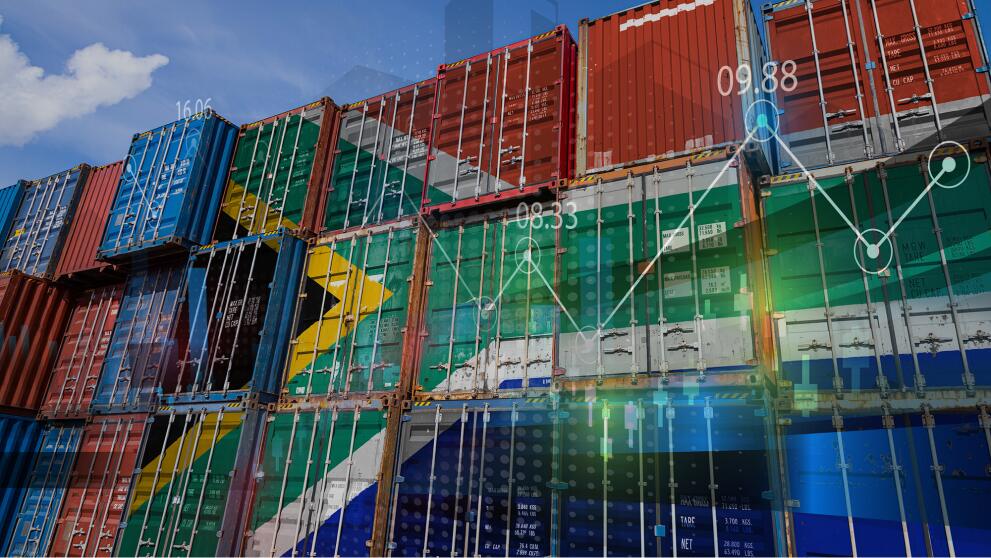
South Africa Exports are under pressure as the ongoing Middle East conflict threatens key agricultural trade routes ahead of the citrus export season. Industry leaders now warn that exporters must act quickly to secure alternative markets or risk significant losses.
The warning comes from Wandile Sihlobo, chief economist at Agricultural Business Chamber of South Africa. He notes that uncertainty remains high weeks into the conflict. The duration of the war, the scale of infrastructure damage, and the pace of recovery all remain unclear. This uncertainty creates real risks for exporters who depend on stable trade channels.
Sihlobo emphasizes that businesses cannot afford to wait. Instead, they must begin planning for alternative destinations where exports can continue with minimal disruption. He urges exporters to work closely with government institutions such as the Department of Agriculture, the Department of Trade, Industry and Competition, and the Department of International Relations and Cooperation. This coordination is critical for identifying markets that can absorb excess produce.
South Africa is entering a crucial period for its agricultural calendar. The citrus export season is about to begin, and volumes are expected to be strong. However, this strength presents a challenge if traditional markets become unreliable. Exporters may face oversupply if shipments to the Middle East slow down or stop altogether.
The situation becomes more complex due to rising global competition. Brazil’s agricultural sector is recovering, and its citrus output is increasing. This means South African producers will face stronger competition not only in the Middle East but also in other international markets. As a result, South Africa Exports may struggle to maintain pricing power and market share.
The Middle East has not been the largest destination for South African agriculture. According to trade data, the region accounted for about 8 percent of the country’s agricultural exports, which totaled $15.1 billion in 2025. Still, this share remains significant enough to cause disruption if access becomes limited. Even a partial loss of this market could create ripple effects across the supply chain.
Sihlobo explains that the challenge goes beyond the Middle East itself. When South American producers increase supply, global markets become more competitive. Countries that once relied on South Africa during shortages may now have more options. This shift reduces South Africa’s ability to redirect exports easily.
To manage this risk, the industry must take a proactive approach. Exporters should identify markets where trade relationships already exist or where entry barriers are low. These insights must then be shared with policymakers. Government agencies can use this information to open negotiations and support market access.
South Africa’s diplomatic network also plays a role. Economic analysts in South African missions abroad can assess opportunities in their regions. They can identify short-term openings for agricultural exports and support businesses in entering those markets. This approach strengthens economic diplomacy while protecting domestic industries.
The broader issue highlighted by this crisis is the need for diversification. Sihlobo argues that South Africa Exports must expand beyond a limited number of markets. Relying heavily on specific regions increases vulnerability to geopolitical shocks. By opening new markets, the country can reduce risk and create more stable growth.
This strategy becomes even more important as South Africa looks to expand agricultural production. Plans to utilize underused government-owned land could significantly increase output. While this expansion supports economic growth, it also creates pressure to find buyers for the additional produce.
Without new export destinations, increased production could lead to oversupply. This would push prices down and reduce profitability for farmers. In the long term, such a situation could threaten the sustainability of the agricultural sector.
Sihlobo makes it clear that the Middle East remains important. The current situation is not a reason to abandon the region. Instead, it highlights the need for flexibility and resilience. South Africa must continue building long-term relationships while preparing for short-term disruptions.
For now, the focus is on immediate action. Exporters must adapt quickly, explore new opportunities, and work closely with government partners. The success of this response will determine whether South Africa Exports can withstand the current crisis and remain competitive in global markets.
As global trade becomes more unpredictable, the ability to pivot will define success. South Africa’s agricultural sector now faces a test of strategy, coordination, and resilience. The outcome will shape not only this season but the future of its export economy.