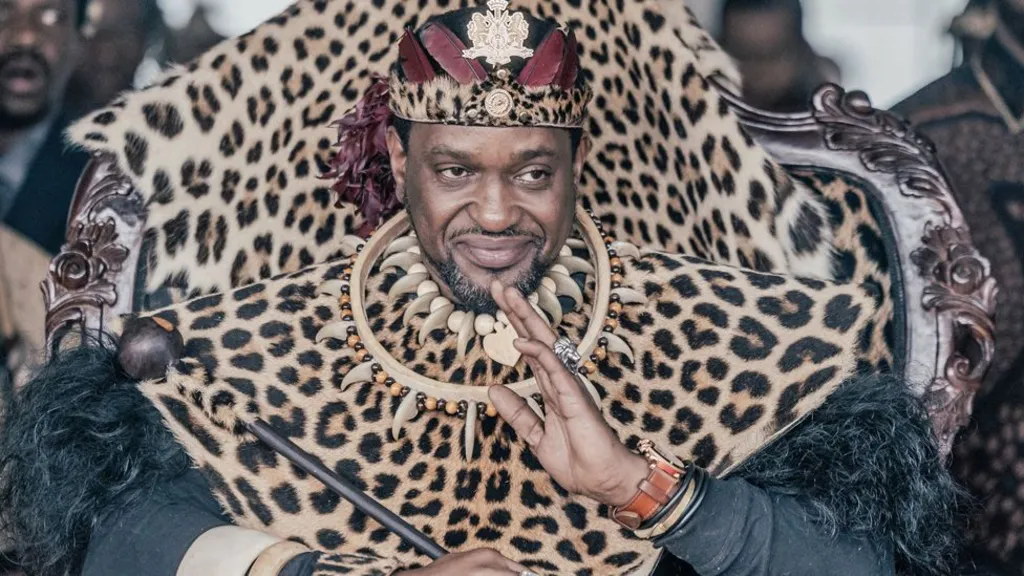
The recent speech by South Africa’s Zulu king, Misuzulu kaZwelithini, has sent shockwaves through the nation and beyond. What was intended as a statement aimed at addressing concerns about anti-migrant sentiment in KwaZulu-Natal instead raised eyebrows and stirred controversy, especially with his derogatory remarks about foreigners. The monarch’s words have prompted mixed reactions, especially from the large foreigner community residing in South Africa and advocacy groups fighting for migrant rights. The speech touched on several sensitive topics, including xenophobia, political tensions, and identity, all of which resonate deeply within South Africa’s complex social fabric.
A Royal Speech That Ignited Debate
King Misuzulu delivered his controversial remarks during a speech to his supporters in KwaZulu-Natal, a region with a significant Zulu population. His words, meant to calm anti-migrant sentiments, instead escalated tensions by using a derogatory term, kwerekwere, to refer to migrants from neighboring African countries. The king’s rhetoric essentially called for all migrants, even those in relationships with South Africans or with children born in the country, to “pack their bags and leave.” While the king’s comments did not advocate for violence, the harshness of the language used was enough to stir fear and concern among human rights activists and foreign nationals.
The backdrop of the speech was symbolic—the king spoke from the location of the historic Battle of Isandlwana, where 20,000 Zulu warriors famously defeated a British contingent of 1,800 soldiers. For the Zulu people, this victory represents a moment of pride, a triumph against foreign invaders. But this history of fighting colonial powers is now being redirected towards migrants—often accused of “stealing jobs” and resources—by those who see them as modern-day invaders.
The Irony of Royal Xenophobia
One of the most striking aspects of the king’s speech was the irony embedded within it. Misuzulu’s own background reflects a more inclusive narrative, as his mother was from Eswatini (formerly Swaziland), and one of his wives is also from the neighboring kingdom. Critics have pointed out this paradox, given that the monarch himself has foreign heritage yet is calling for the removal of other African nationals. This apparent contradiction has not gone unnoticed, sparking discussions on the nature of identity, citizenship, and belonging in South Africa.
This rhetoric is reminiscent of that of King Misuzulu’s late father, Goodwill Zwelithini, who also made inflammatory remarks about migrants, calling for them to “pack their bags” back in 2015. Although his father later backtracked, claiming that he had been misquoted, the damage had already been done. Those comments were deemed by the South African Human Rights Commission as harmful and xenophobic, and the same concerns are now being echoed in the wake of Misuzulu’s recent speech.
Xenophobia in South Africa: A Growing Crisis
South Africa has long struggled with xenophobic sentiment, particularly against migrants from neighboring countries such as Zimbabwe, Mozambique, and Lesotho. According to official statistics, nearly 2.4 million migrants reside in the country, making up about 4% of the population. As unemployment rates in South Africa remain staggeringly high, reaching approximately 33%, many citizens feel threatened by the influx of foreign workers, whom they blame for taking up jobs and resources.
The perception that foreigners are stealing jobs has given rise to anti-migrant political movements, and Misuzulu’s speech plays directly into this narrative. The king’s comments came at a time when the political landscape is already charged with populist rhetoric, with parties like uMkhonto weSizwe (MK), led by former President Jacob Zuma, voicing support for policies that seek to expel undocumented migrants. These sentiments are amplified by vigilante groups such as Operation Dudula, which has garnered attention for its anti-migrant activism, including recent campaigns that have targeted migrants’ access to public services and schools.
The Operation Dudula Movement: Vigilante Activism
One of the most disturbing manifestations of rising xenophobia in South Africa is the growth of vigilante groups like Operation Dudula. The Zulu word “Dudula” means “to remove something by force,” which reflects the aggressive tactics these groups employ in their anti-migrant campaigns. Recently, they have organized protests, such as the one outside Addington Primary School in Durban, where they accused the school of admitting too many children of migrants. The demonstration led to fears for student safety, forcing parents to collect their children early from school.
Such protests are not isolated incidents. The rise of vigilante anti-migrant activism signals a deeper problem within South African society, where political leaders and influential figures like King Misuzulu can inadvertently (or intentionally) fuel discriminatory attitudes. This has led to increasing tension between local communities and the migrant population, with tragic consequences.
The Legal and Social Backdrop: A Multicultural South Africa
While the legal framework in South Africa theoretically protects the rights of all individuals, including migrants, the reality is more complicated. The country’s Constitution guarantees the right to education for all children, regardless of nationality. However, the perception that migrants are overwhelming public services continues to exacerbate tensions.
In fact, a report from South Africa’s education department revealed that migrant children make up a small percentage of the country’s public school population. Out of the 253,618 foreign students enrolled in public schools, only 14,929 are in KwaZulu-Natal. Despite this, protests like the one at Addington Primary School, fueled by misinformation, continue to stoke resentment against migrants.
Furthermore, King Misuzulu’s call to remove “Natal” from the name of KwaZulu-Natal, to revert it to simply “KwaZulu,” is another contentious issue that adds fuel to the fire. The historical context of this proposal is also fraught, as the province’s name is a reminder of the country’s apartheid past. Many South Africans, including cultural experts, warn that renaming the province could reignite tensions, especially given the country’s complex ethnic and cultural makeup.
A Dangerous Precedent: Incitement to Violence?
King Misuzulu’s words are concerning not only because of the xenophobic content but also because of the potential they hold for inciting violence. As Dr. Vusumusi Sibanda, a human rights lawyer, pointed out, the king holds a considerable amount of influence in the country, particularly among the Zulu people. His words carry weight and can encourage ordinary citizens to take matters into their own hands, leading to further violence and division.
Lizette Lancaster from the Institute for Security Studies echoed this sentiment, stressing that the king’s remarks could exacerbate xenophobic sentiments and should be condemned. The involvement of vigilante groups like Operation Dudula and the legal battles they face only highlight the urgency of addressing the root causes of xenophobia and the role that political figures play in shaping public opinion.
The Role of Leadership in Fostering Unity
South Africa’s leadership must understand the profound impact their words and actions have on the national discourse, especially in a country as diverse and divided as South Africa. King Misuzulu’s remarks, whether intentional or not, have sparked fears of heightened violence, discrimination, and division within the country. If left unchecked, these sentiments could destabilize an already fragile political environment.
To move forward, it is essential for South Africa’s leaders, from political figures to traditional monarchs, to foster unity, inclusivity, and a shared sense of identity. Xenophobia, while entrenched in South African history, must not be allowed to define its future. By embracing multiculturalism and prioritizing the rights of all citizens—native and foreign alike—the country can build a more prosperous, harmonious society that truly lives up to its democratic ideals.