U.S. Central Command (CENTCOM) confirmed on January 10, 2026 that the U.S. military had conducted large-scale airstrikes against multiple ISIS targets across Syria. The strikes were part of Operation Hawkeye, a series of retaliatory actions launched after a deadly ISIS ambush in Palmyra, Syria, on December 13, 2025. The ambush led to the deaths of two U.S. soldiers from the Iowa National Guard and a U.S. civilian interpreter, sparking a swift military response.
The airstrikes, which targeted at least 35 ISIS positions, involved more than 90 precision-guided munitions fired from over 20 aircraft. The operation underscores the U.S. military’s commitment to rooting out terrorism in the region, specifically ISIS, and to protecting American and coalition forces from future attacks.
This strike marks a significant escalation in the ongoing fight against ISIS, which has continued to operate in Syria despite years of counterterrorism efforts. Here’s an in-depth look at the context of the attack, the military response, and the broader implications for the region.
Background: The December 13 ISIS Attack in Palmyra
The Tragic Ambush
On December 13, 2025, a lone ISIS gunman ambushed a convoy of U.S. and coalition personnel in Palmyra, a city in central Syria that has been a hotspot for ISIS operations in recent years. The ambush resulted in the deaths of Sgt. William Howard and Sgt. Edgar Torres Tovar, both of the Iowa National Guard, as well as Ayad Mansoor Sakat, a U.S. civilian interpreter who was working with the U.S. military. The attack also left three other U.S. soldiers wounded.
The attack came at a time when the U.S.-led coalition had been working closely with local forces to combat ISIS remnants in the region. The ambush sent shockwaves through the U.S. military and prompted President Donald Trump to vow “very serious retaliation” against ISIS for the attack. This promise was quickly followed by a series of airstrikes on December 19, 2025, in which the U.S. military targeted 70 ISIS positions in Syria, marking the first wave of retaliation.
The Significance of Palmyra
Palmyra holds strategic importance in Syria and has been a key focus for ISIS in its attempts to exert control over key cities and routes. The ancient city has witnessed significant conflict over the years, particularly during the rise of ISIS in 2015, when the group captured the city and destroyed numerous historical sites. While the city has been liberated by Syrian forces and coalition partners, it remains a critical area for military operations against ISIS.
The ambush in December highlighted the continued vulnerability of U.S. and coalition personnel in Syria, as ISIS remnants continue to operate in rural and isolated areas. Despite the loss of territorial control, ISIS has managed to maintain a presence in parts of Syria, launching guerrilla attacks and ambushes against both military and civilian targets.
Operation Hawkeye: A Retaliatory Strike Against ISIS
The Scale of the Strikes
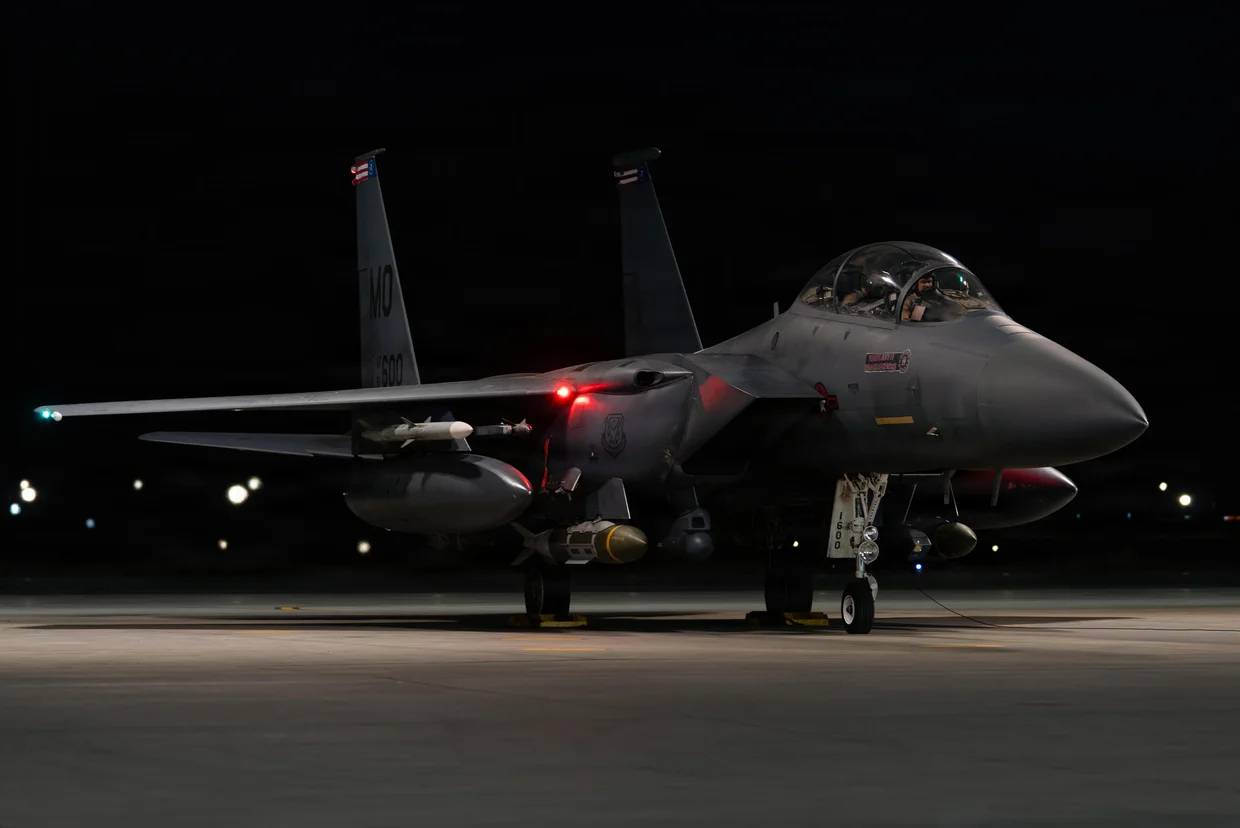
In response to the December attack, the U.S. military launched Operation Hawkeye, a large-scale military operation targeting ISIS positions across Syria. On January 10, 2026, U.S. Central Command announced that the strikes had involved more than 20 aircraft, including F-15Es, A-10s, AC-130Js, MQ-9 Reapers, and Jordanian F-16s. The precision of these strikes was underscored by the fact that over 90 munitions were used to target at least 35 locations throughout Syria.
The operation was designed not only to retaliate for the ambush but also to send a strong message to ISIS that the U.S. military would continue to target and eliminate their forces wherever they operate. The strikes were intended to degrade ISIS capabilities, destroy infrastructure, and dismantle command-and-control structures used by the terrorist group.
The Message: Justice for U.S. Forces
U.S. officials were clear in their messaging after the airstrikes, emphasizing that the strikes were part of the broader mission to protect American forces and hold those responsible for attacks against U.S. personnel accountable. CENTCOM posted on social media, stating, “If you harm our warfighters, we will find you and kill you anywhere in the world, no matter how hard you try to evade justice.”
The retaliation also underscored the commitment of the U.S. military and its coalition partners to continue the fight against ISIS and other terrorist organizations that pose a threat to regional stability and U.S. security interests. This message of resolve was echoed by U.S. Secretary of Defense Pete Hegseth, who posted on social media, “We will never forget, and never relent.”
U.S. Military Strategy in Syria: Ongoing Efforts to Combat ISIS
The Continued Threat of ISIS
Although ISIS lost much of its territorial holdings in Syria and Iraq by 2019, the group continues to present a significant threat in the region. While the U.S.-led coalition has made major strides in dismantling ISIS’ leadership and infrastructure, the group still operates in small cells and continues to launch guerrilla attacks. This makes the fight against ISIS a long-term effort that requires sustained military pressure.
The U.S. has maintained a military presence in Syria as part of the broader counterterrorism effort. This includes airstrikes, special forces operations, and intelligence gathering to target and neutralize ISIS remnants. The January 10 airstrikes are just one part of this ongoing strategy, which is designed to disrupt ISIS operations and prevent the group from regrouping and launching large-scale attacks.
The Role of Local Forces and Regional Partnerships
One of the key elements of the U.S. strategy in Syria has been the support of local forces, including Syrian Democratic Forces (SDF) and Syrian Arab Coalition (SAC), which have been instrumental in the fight against ISIS. The U.S. has provided training, air support, and intelligence to these groups, helping them secure key areas and weaken ISIS’ hold on the region.
Jordan, which has been a strong partner in the U.S.-led coalition, contributed F-16 fighters to the January 10 strikes, highlighting the regional collaboration necessary to address the ISIS threat in Syria. These partnerships are essential in the ongoing efforts to maintain security in the region, as ISIS continues to exploit gaps in control and launch terrorist activities.
The Long-Term Impact of U.S. Strikes on ISIS
While the January 10 airstrikes and the previous retaliatory strikes in December send a strong message to ISIS, experts caution that the group’s threat will not be eradicated overnight. The resilience of ISIS and its ability to regenerate in certain areas makes it a long-term challenge. However, the targeted nature of these strikes, alongside intelligence-sharing and collaborative military operations, will continue to limit ISIS’ capacity to operate effectively.
The Broader Regional Context: U.S. Relations with Iran and Russia
The U.S. military strikes against ISIS in Syria come amid a broader geopolitical context in the Middle East, where U.S. relations with Iran and Russia remain tense. Iran, which has been heavily involved in supporting the Syrian government and Shiite militias, is seen as a key player in the region’s complex dynamics. The U.S. has frequently expressed concern about Iranian influence in Syria, particularly in the Golan Heights and areas near Israel.
Similarly, Russia’s involvement in Syria, which includes direct military support for the Syrian government, adds another layer of complexity to the U.S. military’s operations. The presence of both U.S. and Russian forces in Syria requires careful coordination to avoid conflict and to ensure that the fight against ISIS remains the central priority.
The Fight Against ISIS Continues
The January 10 airstrikes in Syria represent the ongoing commitment of the U.S. military to counterterrorism efforts in the region, particularly in Syria, where ISIS and other terrorist organizations continue to pose a significant threat to regional security and U.S. interests. While the strikes were a direct response to the December ambush that killed U.S. soldiers and a civilian interpreter, they also serve as part of the broader effort to weaken ISIS and prevent future attacks.
As the U.S. military continues its operations in the region, the ongoing coalition efforts and intelligence-sharing will remain crucial in dismantling ISIS’ network and ensuring the safety of U.S. personnel in Syria. The retaliatory strikes demonstrate that the U.S. will not hesitate to act when American lives are at risk and reinforces the commitment to combating terrorism globally.
The broader implications of these airstrikes extend beyond Syria, as the Middle East remains a strategic battleground where regional powers, global actors, and terrorist groups continue to vie for influence. The fight against ISIS is far from over, and the U.S. military, along with its international partners, remains dedicated to eradicating the threat posed by this extremist group.