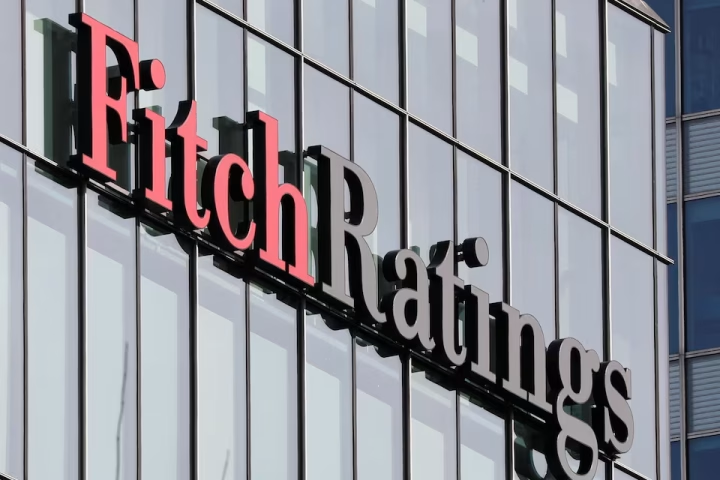
In a bold move, Afreximbank has officially terminated its credit rating relationship with Fitch Ratings, following controversy surrounding a significant downgrade earlier this year. The bank’s decision comes amid growing concerns about the way African multilateral financial institutions are assessed by global credit rating agencies and underscores the push for greater rating sovereignty in Africa.
Afreximbank, a key institution in facilitating trade across Africa, has long been critical of the methodologies used by international credit rating agencies, arguing that these methods do not adequately reflect the unique structural, legal, and strategic elements that define its operations. The termination of the relationship with Fitch signals Afreximbank’s commitment to pursuing more context-appropriate, Africa-focused financial assessments.
A Disputed Downgrade: The Catalyst for Change
The decision to sever ties with Fitch follows the agency’s controversial downgrade of Afreximbank’s credit rating in June 2025. Fitch lowered Afreximbank’s Long-Term Issuer Default Rating (IDR) to BBB- with a negative outlook, citing an increased ratio of non-performing loans (NPLs) and concerns over the bank’s risk management policies. Specifically, Fitch highlighted that Afreximbank’s NPL ratio had exceeded 6%, a threshold it considered “high risk.”
However, Afreximbank vehemently disagreed with Fitch’s assessment. The bank argued that the downgrade was based on an inaccurate interpretation of its financial position, particularly with regard to its approach to loan classification and non-performing loans. Afreximbank maintains that its methodology, which is based on forward-looking information and is in full compliance with the International Financial Reporting Standards (IFRS), differs significantly from Fitch’s methodology. Furthermore, Afreximbank points to the legal protections embedded in its Establishment Agreement, which is signed and ratified by its member states, ensuring repayment obligations even in the case of sovereign exposures.
In a formal response, Afreximbank characterized Fitch’s downgrade as “analytically and legally flawed” and argued that the agency’s assessment failed to consider the bank’s treaty-based protections. According to Afreximbank, its NPL classification differs from Fitch’s as it focuses on future risk, not just historical data. This stance is central to Afreximbank’s broader critique of how global credit rating agencies evaluate African financial institutions, which it believes leads to inaccurate and overly punitive assessments.
A Call for Rating Sovereignty and Africa-Centric Assessments
The termination of its relationship with Fitch marks a turning point in Afreximbank’s stance on credit ratings, with the institution increasingly vocal about the need for more localized and context-sensitive assessments. The bank has made it clear that it no longer sees Fitch’s methodology as aligned with its operational realities and the legal structure that governs its activities.
Afreximbank President, George Elombi, has been outspoken on this issue. At the Intra-African Trade Fair (IATF) in Algiers in September 2025, he expressed the bank’s dissatisfaction with the methodologies used by Fitch and similar agencies, asserting that these agencies fail to consider the African context, particularly the treaty-based frameworks that govern institutions like Afreximbank. He further questioned why Fitch should be concerned that African governments want to protect their own financial institutions, emphasizing the growing importance of Afreximbank and other regional multilateral organizations to the governments they serve.
Elombi’s comments reflect a broader sentiment in the African financial community. There is increasing momentum across the continent to establish a more independent and contextually relevant credit rating system that takes into account Africa’s unique political, economic, and social dynamics. Afreximbank’s departure from Fitch is seen as part of this larger movement toward financial sovereignty, which seeks to reduce Africa’s dependence on Western credit rating agencies.
The Road to Establishing an African Credit Rating Agency
The call for an African credit rating agency has been gaining traction for years. African leaders and financial experts have repeatedly criticized the global credit rating agencies for their perceived bias and lack of understanding of the complexities of African economies. In the aftermath of Afreximbank’s decision, there is renewed focus on the idea of an Africa-based credit rating agency that would be more in tune with the continent’s needs and challenges.
Afreximbank’s stance on this issue aligns with the broader push for an African financial ecosystem that is less reliant on external agencies and more capable of self-regulation. As African economies continue to grow and integrate more deeply into global markets, the need for a more nuanced and localized approach to credit ratings becomes even more pressing. Afreximbank’s bold move to sever ties with Fitch may serve as a catalyst for the creation of such an agency, providing African nations with the ability to assess their own financial health in a way that is better suited to their specific circumstances.
The Broader Debate: African Multilaterals and Global Rating Practices
Afreximbank’s termination of its relationship with Fitch is not an isolated incident. It is part of a larger, ongoing debate about how African financial institutions and sovereign entities are rated by global credit agencies. Critics argue that international rating agencies apply a one-size-fits-all approach that fails to account for the distinct legal and economic environments in African countries. This is particularly problematic for African multilateral institutions, which are governed by treaties that provide a level of protection not considered by external agencies.
The criticism of global credit rating agencies is not new. For years, African countries have highlighted the negative impact that skewed credit ratings have on their economies, particularly when it comes to borrowing costs. High ratings often result in lower borrowing costs, while low ratings push up interest rates, making it more expensive for African nations to access capital. This has created a barrier to investment, deterring private capital inflows and increasing the cost of financing for key infrastructure projects.
As Mushtak Parker noted in his article for African Business in August 2025, the sovereign risk rating crisis is disproportionately affecting low- and middle-income African countries. These nations often struggle with higher borrowing costs, which in turn makes it harder to attract investment and crowd in the private capital necessary for economic growth. In many cases, the punitive surcharges imposed by credit rating agencies only deepen the financial challenges faced by African countries and institutions.
Implications for Afreximbank and the African Financial Landscape
Afreximbank’s decision to end its relationship with Fitch is more than just a protest against a single downgrade—it is a challenge to the entire framework that governs how African institutions are assessed by international rating agencies. By rejecting Fitch’s downgrade and terminating the relationship, Afreximbank is asserting its right to be evaluated on terms that reflect its unique legal framework and mandate.
This decision could have significant ramifications for the African financial landscape. As Afreximbank continues to push for greater financial sovereignty, other African institutions may follow suit, demanding more context-sensitive and fair assessments. Moreover, as the continent’s financial integration deepens, the need for a unified approach to credit ratings that reflects Africa’s unique circumstances becomes ever more urgent.
Looking Ahead: A More Independent and Fair Financial Future for Africa
Afreximbank’s move represents a pivotal moment in the ongoing conversation about Africa’s financial future. By taking a stand against global credit rating practices that are seen as unjust and inadequate, the bank is helping to catalyze a movement toward a more independent and self-reliant financial ecosystem on the continent. Whether or not other African institutions follow Afreximbank’s lead, the broader push for rating sovereignty and more context-sensitive financial assessments is likely to continue.
As Africa moves forward, it is clear that the future of credit ratings on the continent lies in more localized, Africa-centric systems that account for the unique realities and legal frameworks of African nations and institutions. Afreximbank’s decision to sever ties with Fitch may be just the beginning of a larger transformation in the way African financial institutions are assessed, and it could pave the way for a more equitable and sustainable financial future for the continent.