Since independence in 1960, Nigeria has played a prominent role in international peacekeeping, consistently contributing troops, police, and support personnel to missions led by the United Nations (UN), the African Union (AU), and the Economic Community of West African States (ECOWAS). The Nigerian military’s peacekeeping engagements have shaped regional security, helped restore stability in conflict‑affected nations, and reflected Nigeria’s commitment to global peace and security.
A Long Legacy of Peacekeeping
Nigeria’s involvement in peace operations dates back to its early years as a nation. Nigerian forces first participated in a United Nations peacekeeping mission during the United Nations Operation in the Congo (ONUC) shortly after independence. Since then, Nigeria has been a steady contributor to peace support operations, reflecting a foreign policy rooted in collective security and regional leadership.
Over the decades, Nigeria has contributed to more than 41 peacekeeping operations under the UN, AU, and ECOWAS, with over 200,000 Nigerian troops, police, and civilian personnel deployed worldwide. These contributions span hotspots across Africa and beyond, making the Nigerian military one of the most significant African participants in global peace efforts.
United Nations Peacekeeping

As a major contributor to UN peacekeeping missions, the Nigerian military has served in numerous theatres, including Liberia, Sierra Leone, Darfur, and more recently in missions across Africa. In Liberia, for example, Nigerian troops provided backbone support to the United Nations Mission in Liberia (UNMIL), helping stabilise the country following years of brutal civil war. Nigerian personnel have served as commanders and key leaders in several missions, highlighting their experience and professionalism in complex peace support environments.
The Nigerian contingent also includes police units that support law and order in host countries, bolster local security institutions, and assist in Disarmament, Demobilisation, and Reintegration (DDR) processes, which are critical components of sustainable peace.
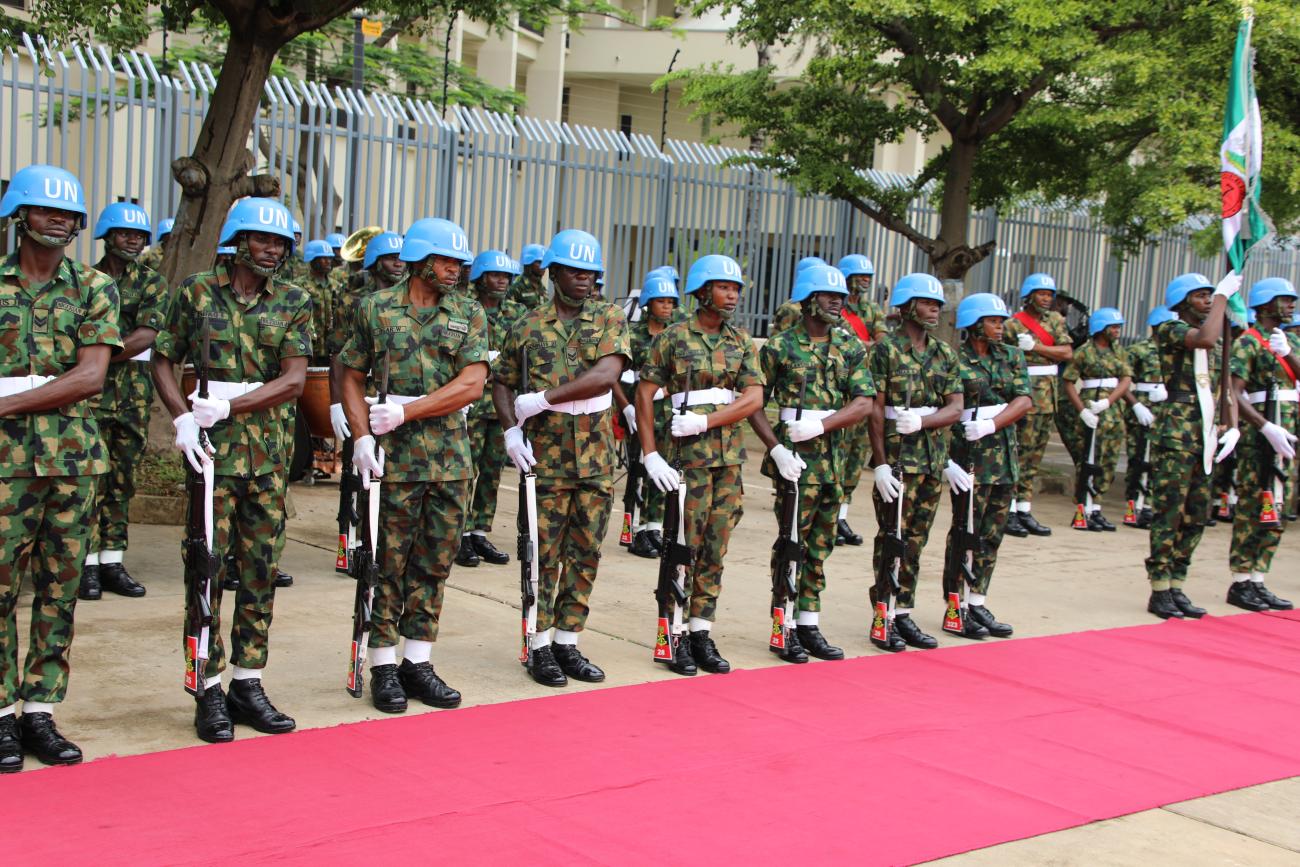
Regional and Continental Peace Efforts
Beyond the UN, Nigeria has been active in regional peacekeeping through ECOWAS and African Union initiatives. In the 1990s, Nigerian‑led forces under the ECOWAS Cease‑fire Monitoring Group (ECOMOG) played a decisive role in ending unrest in Liberia and Sierra Leone, restoring constitutional rule, and containing conflict in West Africa. These missions underscored Nigeria’s leadership in regional security, even amid significant logistical, political, and human costs.
Nigeria has also supported other regional operations such as missions in Gambia and contributions to the Multinational Joint Task Force (MNJTF) against shared threats like Boko Haram across the Lake Chad Basin. The country’s participation in these missions reinforces cooperative security mechanisms and promotes stability across neighbouring states.
Roles and Responsibilities in Peacekeeping Missions
In peacekeeping operations, the Nigerian military serves in a variety of roles:
Infantry and patrol units: These troops maintain security in volatile areas, protect civilians, and enforce ceasefires.
Command and leadership roles: Nigerian officers have served as force commanders and senior leaders within multinational missions, guiding strategic and operational decisions.
Training and mentoring: Nigerian units often help train local security forces to build sustainable peace and law‑enforcement capacity.
Police and civil affairs: Alongside military personnel, Nigerian police support rule of law, protect human rights, and assist in democratic processes like elections.
Impact on Host Nations and International Peace
The presence of Nigerian peacekeepers has had profound effects on conflict‑affected communities, contributing to reduced violence, protection of civilians, and creation of safe environments for humanitarian work. The operational experience gained through peacekeeping has enhanced Nigeria’s military professionalism, reinforcing its capability to handle complex missions both abroad and at home.
In addition, the visibility and performance of Nigerian peacekeepers have earned commendations from international partners, with recognition of their dedication to global peace and security. High‑ranking Nigerian officers have also been entrusted with senior roles, reflecting confidence in Nigeria’s contribution to peace operations.
Challenges and Lessons Learned
While Nigeria’s peacekeeping legacy is notable, participation has not been without challenges. Deployments often strain national budgets, require extensive logistical planning, and expose troops to high‑risk environments. Historical interventions, particularly under ECOWAS in the 1990s, drew criticism over issues such as command coordination, mandate clarity, and civilian protection — highlighting the need for robust oversight and clear rules of engagement.
These lessons have informed improvements in training, mission preparedness, and civil‑military cooperation, ensuring that future deployments better align with international standards and ethical peacekeeping principles.
The Future of Nigerian Peacekeeping Engagement
Looking ahead, Nigeria remains committed to peace support as a core aspect of its defence and foreign policy. At international forums such as the United Nations Peacekeeping Ministerial, Nigerian leadership has reaffirmed commitment to enhancing global peace and security, underlining its responsibility as a major contributor to peace operations.
Enhanced cooperation with partner nations and organisations continues to strengthen Nigeria’s capacity, while evolving peacekeeping doctrines aim to address emerging threats such as terrorism, sectarian violence, and post‑conflict reconstruction challenges.
The Nigerian military’s role in peacekeeping missions is a testament to the country’s long‑standing commitment to global and regional stability. Through participation in UN, AU, and ECOWAS operations, Nigeria has contributed significantly to restoring peace, protecting civilians, and building institutional capacity in conflict‑affected regions. While challenges persist, the experience, leadership, and sacrifices of Nigerian troops continue to shape peacekeeping efforts and reinforce Nigeria’s strategic influence in international peace and security arenas.